Artwork
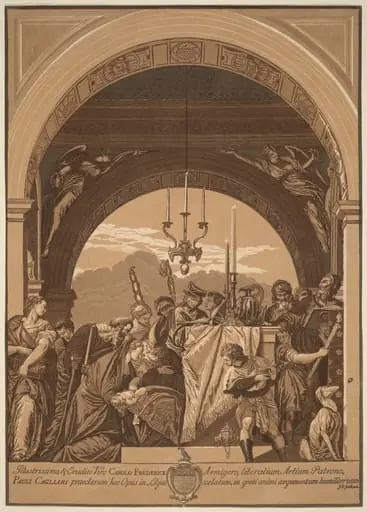
The Presentation in the Temple
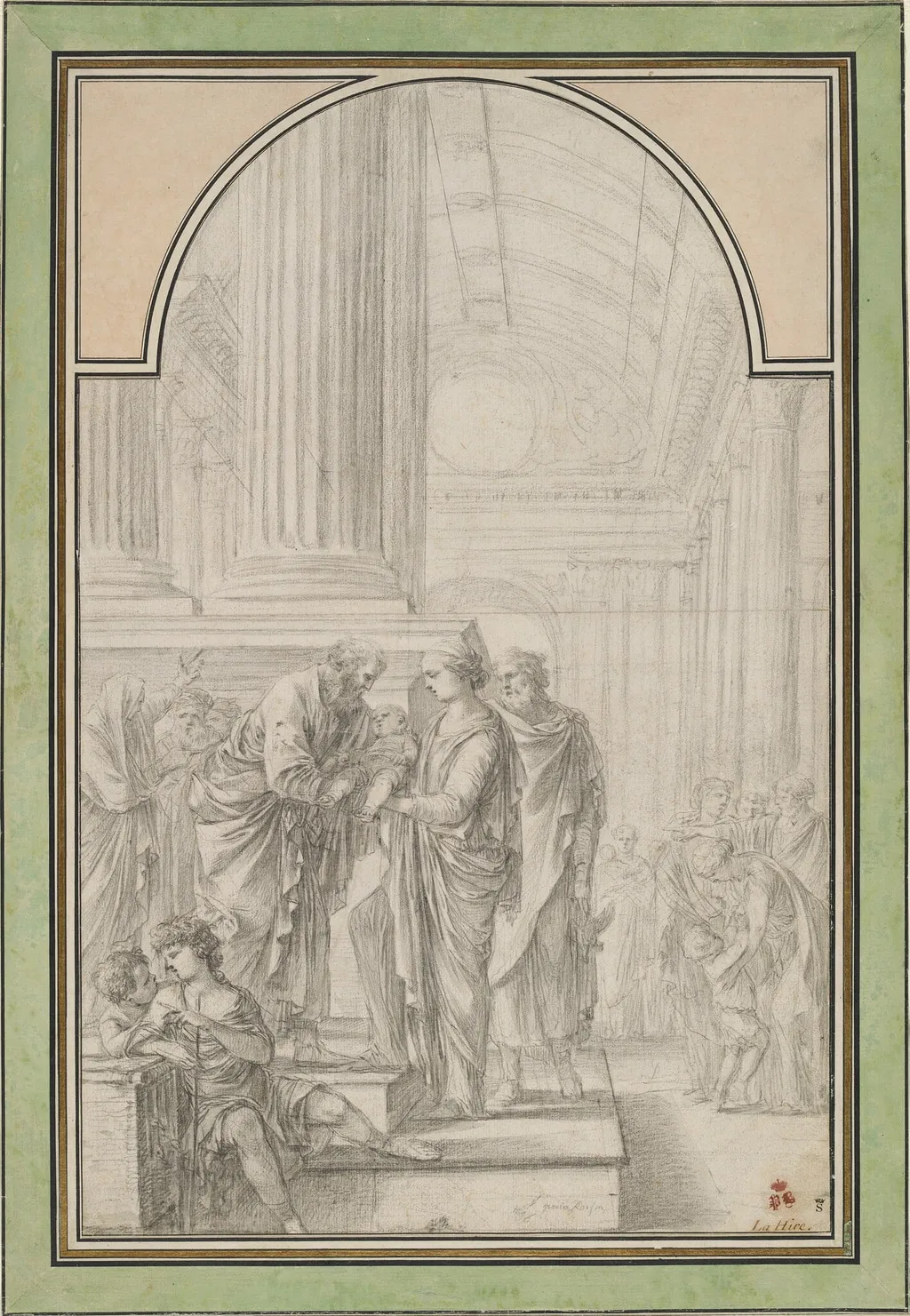
The Presentation in the Temple is a chalk drawing by the Baroque artist Laurent de La Hyre. It dates from 1648 and is held in the collection of the National Gallery of Art.
About this work
Overview
Laurent de La Hyre's *The Presentation in the Temple* (c. 1648) is a drawing executed in black chalk and gray wash on laid paper, later framed with a black ink border. The work embodies the restrained classical style of the Parisian Atticism movement.
Subject & Meaning
Contrary to the suggested visual note, the actual subject is a biblical scene depicting the Presentation in the Temple, not a group around a statue. The scene likely conveys themes of reverence and solemnity, characteristic of religious Baroque art.
Technique & Style
La Hyre's use of black chalk and gray wash achieves soft, nuanced shading and textures, particularly in drapery and facial features. The style is marked by classical restraint, aligning with the Atticism movement's emphasis on refinement.
History & Provenance
Created around 1648 by Laurent de La Hyre (1606-1672), a Paris-born artist associated with Parisian Atticism. A later addition is the framing line in black ink.
Context
Produced during the mid-17th century, this drawing reflects the aesthetic preferences of the time, balancing Baroque elements with the neoclassical leanings of Atticism, prevalent among Parisian artists.
Legacy
As part of La Hyre's oeuvre, *The Presentation in the Temple* contributes to the understanding of Parisian Atticism's influence on Baroque art, though its specific impact or notable exhibitions are not detailed here.
Artist & collection
Artist
Laurent de La Hyre (French pronunciation: ; 27 February 1606 – 28 December 1656) was a French Baroque painter, born in Paris. He was a leading exponent of the neoclassical style of Parisian Atticism.

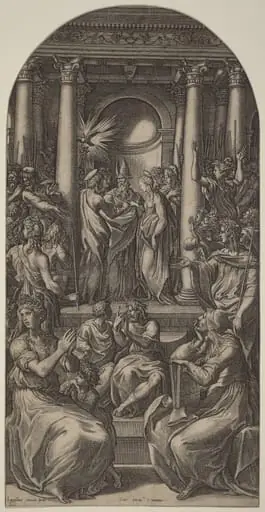 The Marriage of the Virgin
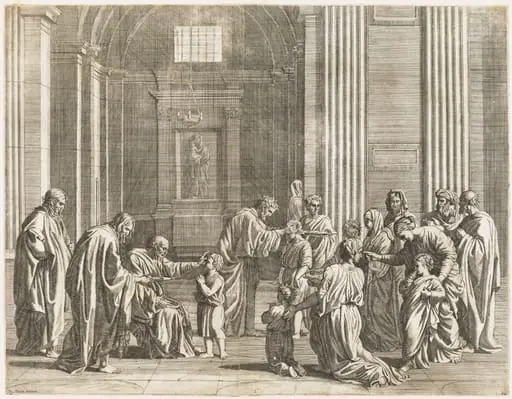 Confirmation
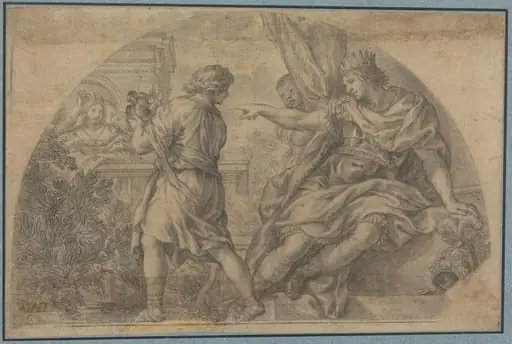 Masinissa and Sophonisba
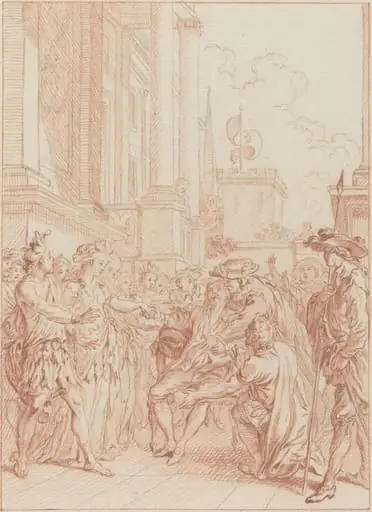 Quoi donc, les vrais Chrétiens auraient tant de vertu
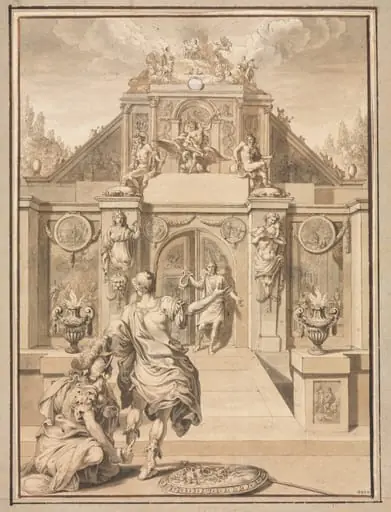 Perseus and Minerva before a Temple
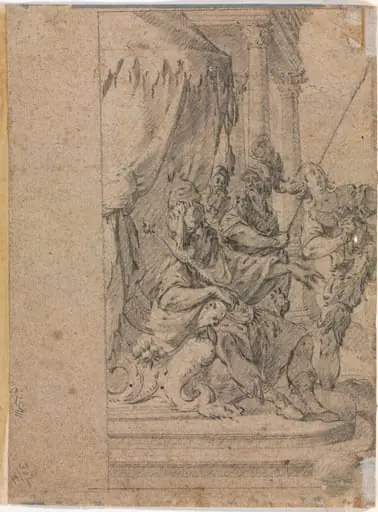 Panthea before Cyrus? (verso)
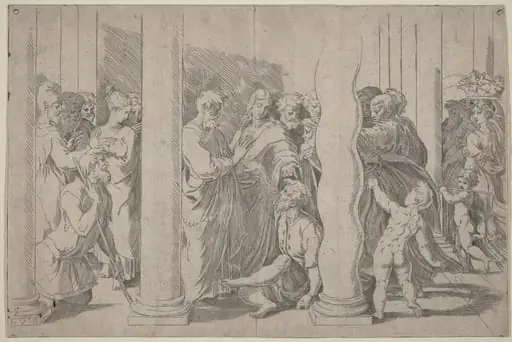 Saints Peter and John Healing the Lame Man at the Golden Gate
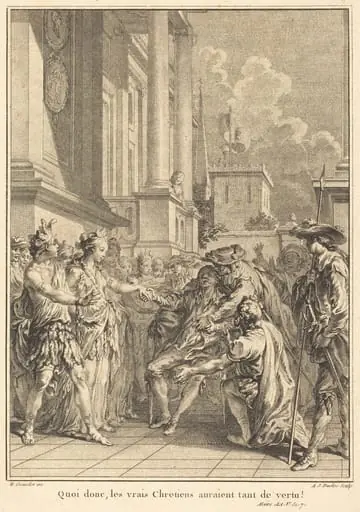 Quoi donc, les vrais Chretiens auraient tant de vertu!
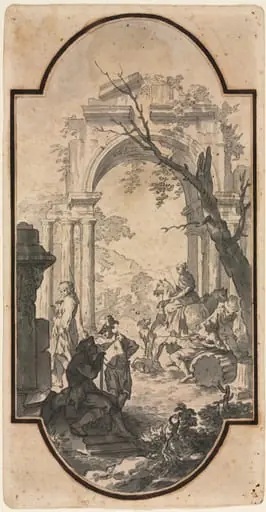 Triumphal Arch and Figures
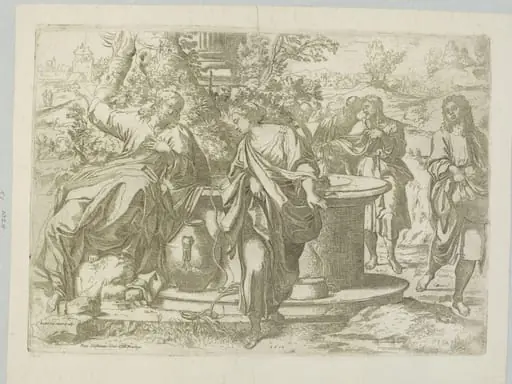 Christ and the Woman of Samaria
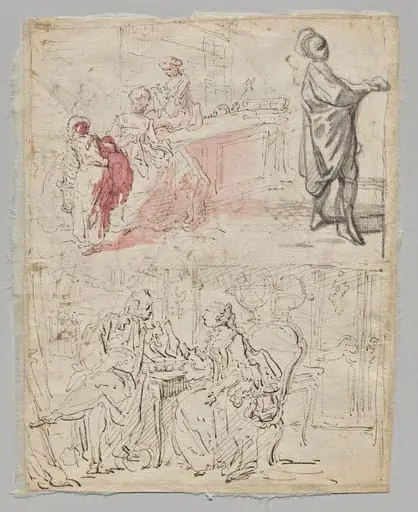 Theatre Scene (recto)
 The Presentation in the Temple