Artwork
Untitled
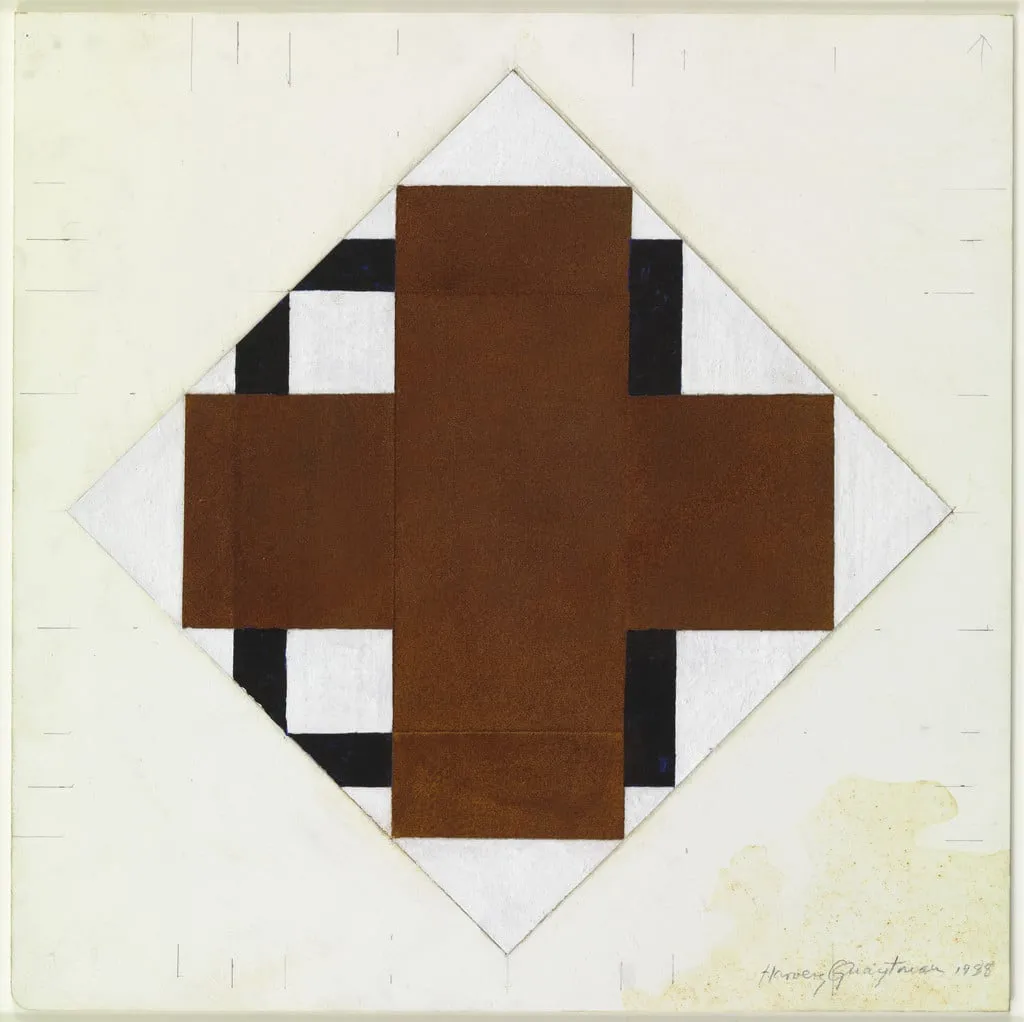
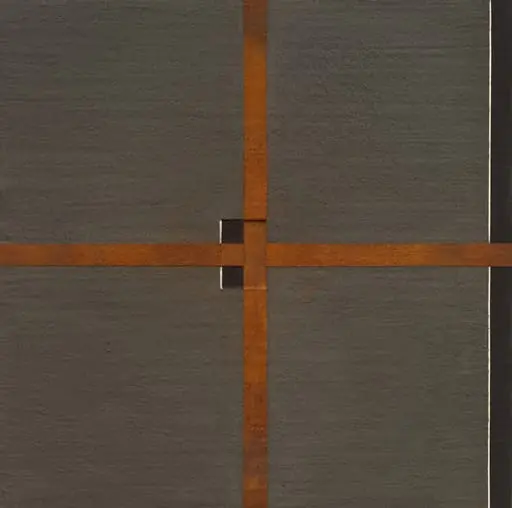
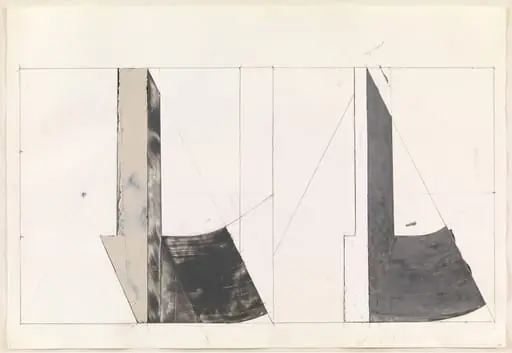
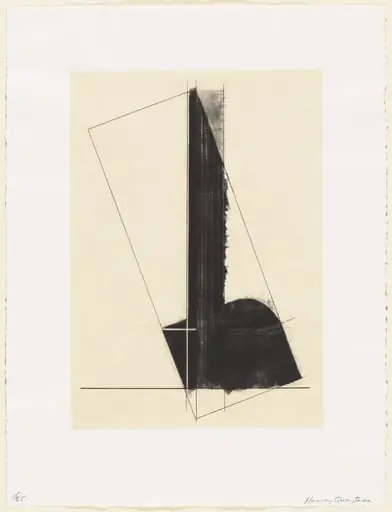
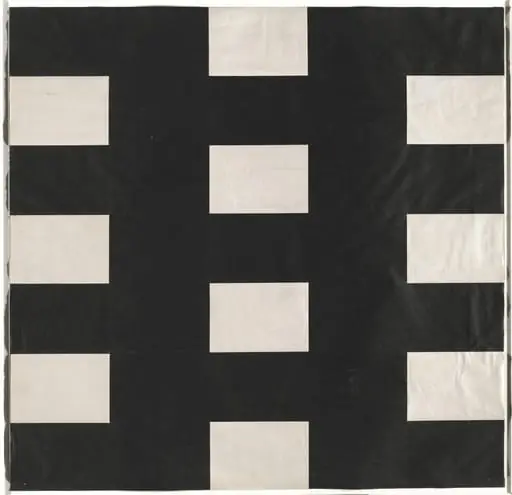
Untitled is an acrylic drawing by Harvey Quaytman. It dates from 1988 and is held in the collection of the Museum of Modern Art.
About this work
Overview
The piece resists overt expression, instead inviting quiet contemplation through its limited palette and structured form.
Created in 1988, this work by Harvey Quaytman combines acrylic paint and rust on paper mounted to aluminum. It belongs to a series of restrained, geometric compositions that emphasize materiality and subtle variation. The piece resists overt expression, instead inviting quiet contemplation through its limited palette and structured form. Its support—aluminum—adds a cool, industrial counterpoint to the organic textures of rust and paper.
Subject & Meaning
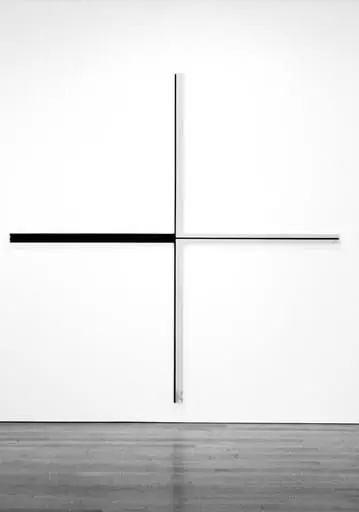
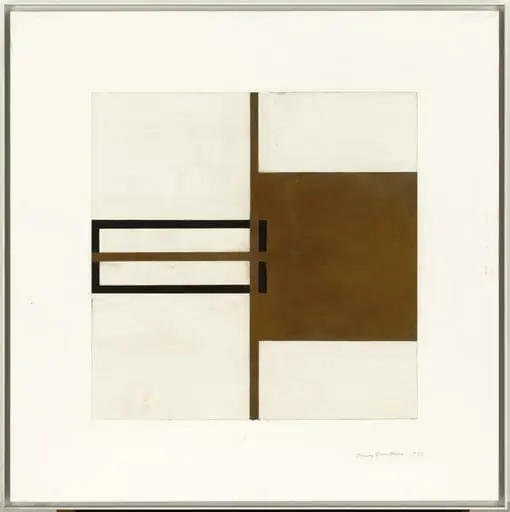
The central form is a cross composed of four rectangular blocks in varying shades of brown, arranged with precise alignment against a white field. The cross lacks religious symbolism; it functions as a structural anchor, a geometric motif explored for its balance and spatial relationships. The faint grid beneath suggests an underlying order, reinforcing the work’s focus on composition over narrative or emotion.
Technique & Style
Quaytman applied acrylic paint and rust to paper, then mounted it on aluminum, creating a hybrid surface that blends industrial and organic qualities. The rust introduces unpredictable, weathered textures, contrasting with the clean edges of the painted forms. The muted browns and white ground reflect a monochromatic discipline, while the slight irregularities in the material speak to an interest in imperfection within rigid structure.
History & Provenance
The work entered The Museum of Modern Art’s collection as part of its ongoing documentation of postwar American abstraction. Quaytman, active from the 1970s until his death in 2002, was not widely known during his lifetime but gained retrospective attention for his quiet, methodical approach. This piece exemplifies his mature style, developed after years of refining geometric language in painting and drawing.
Context
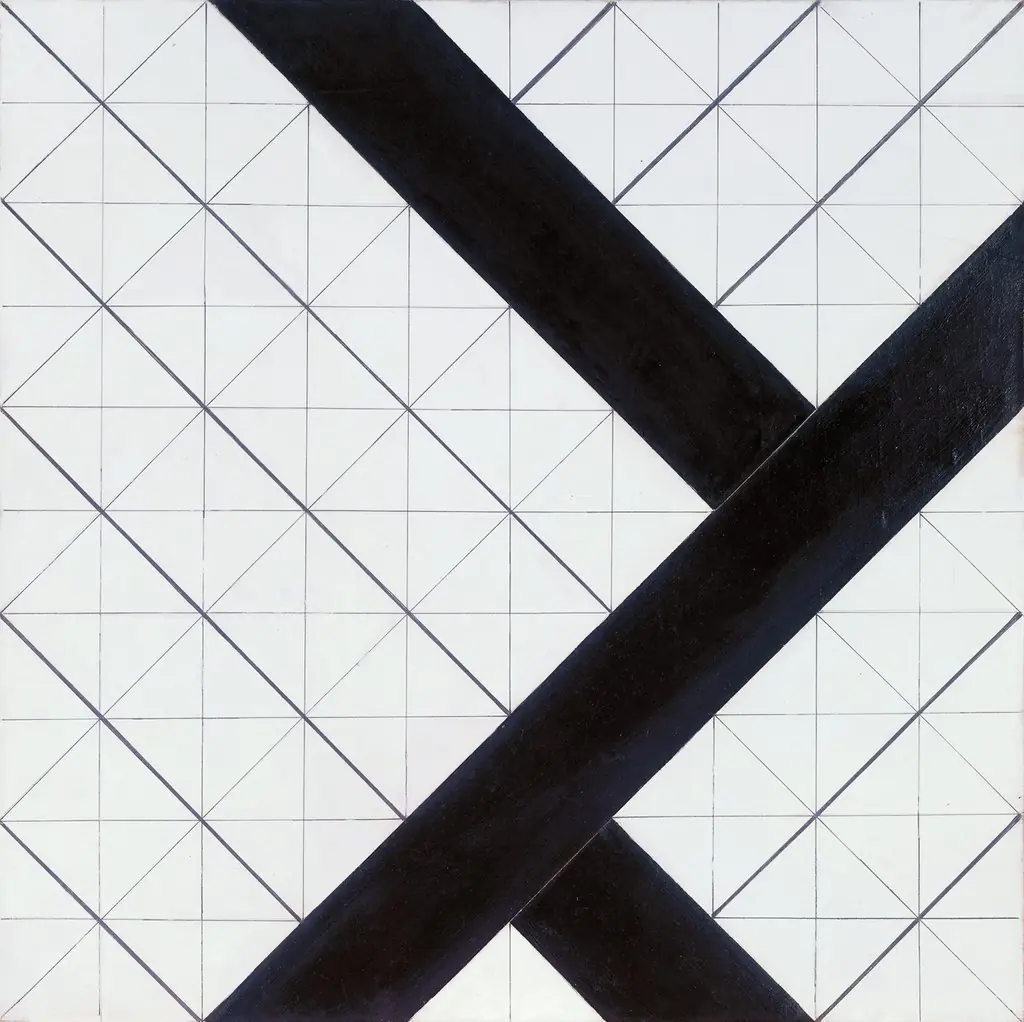
Emerging from the legacy of early 20th-century geometric abstraction, Quaytman engaged with the formal concerns of Malevich and Mondrian but rejected their utopian ideals. His work reflects a postmodern sensibility—attentive to material limits and the passage of time. The use of rust, a degrading agent, subtly critiques the permanence often assumed in modernist abstraction, grounding it in physical reality.
Legacy
Quaytman’s work has influenced a generation of artists interested in the intersection of minimalism and material process. His restrained use of color, emphasis on surface, and integration of decay into structured forms have been revisited in contemporary discussions about abstraction’s emotional potential. Though never commercially prominent, his oeuvre remains a quiet reference point in the evolution of American abstract art.
Artist & collection
Artist
Harvey Quaytman (April 20, 1937 - April 8, 2002) was a geometric abstraction painter best known for large modernist canvases with powerful monochromatic tones, in layered compositions, often with hard edges - inspired by Malevich and…