Artwork
Hickories in a Hayfield
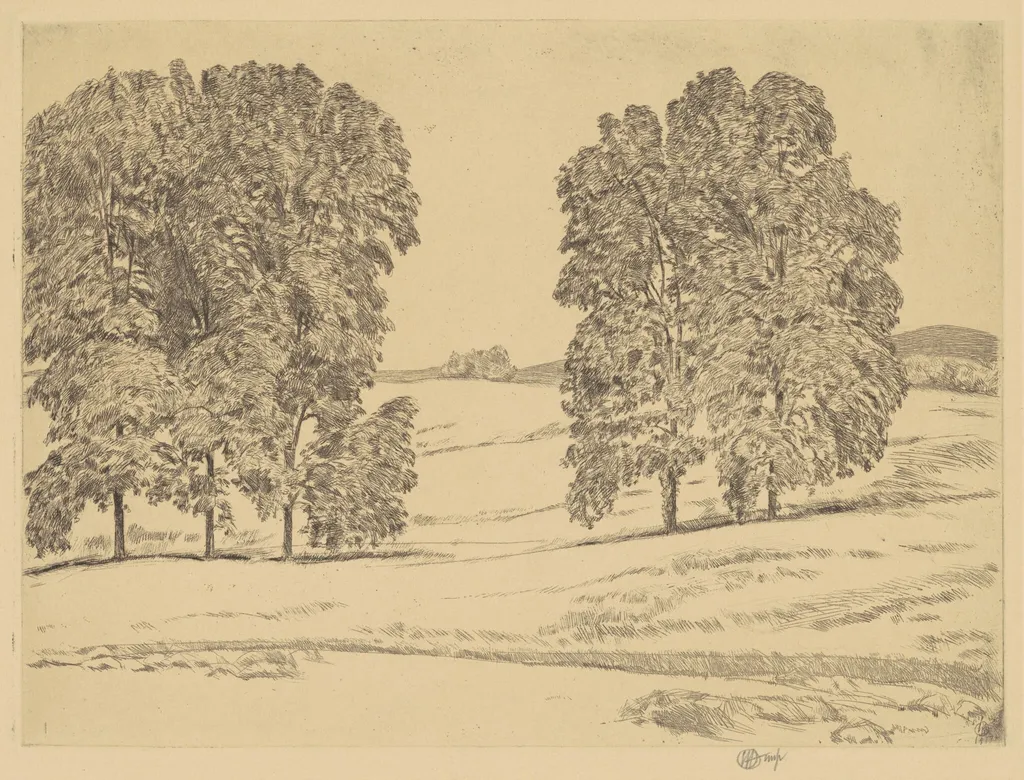
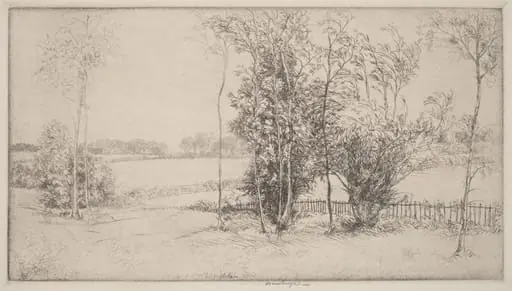
Hickories in a Hayfield is an ink print by Childe Hassam. It dates from 1917 and is held in the collection of the National Gallery of Art.
About this work
Overview
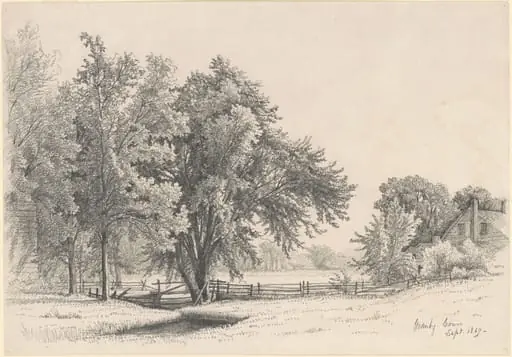
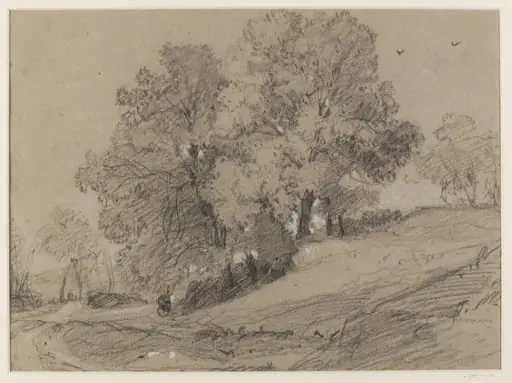
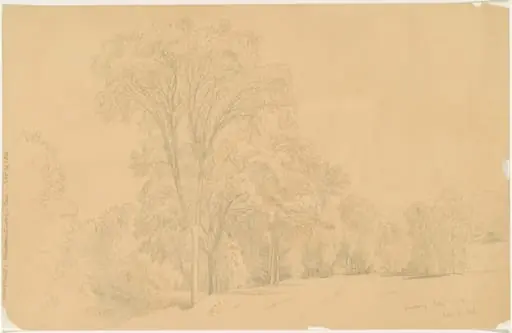
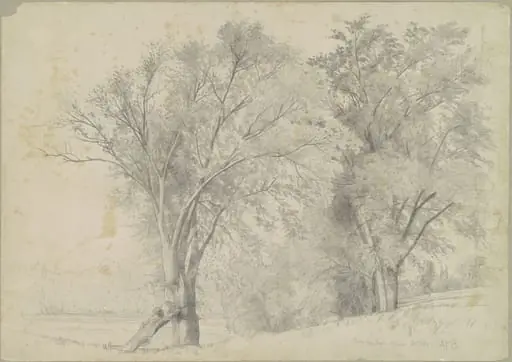
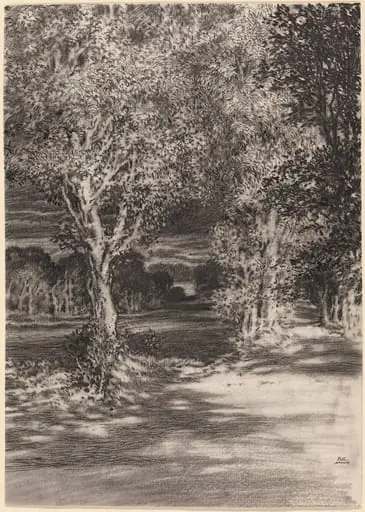
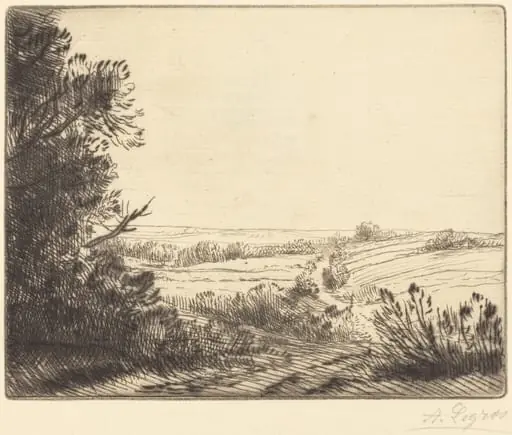
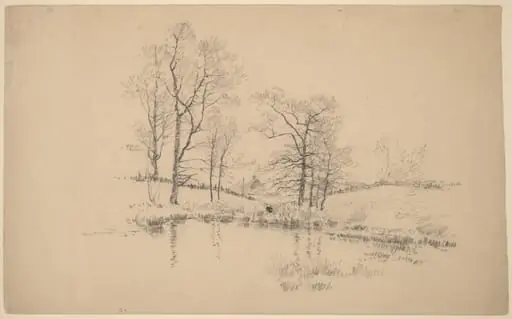
Childe Hassam’s print titled *Hickories in a Hayfield* presents a quiet rural scene. Tall hickory trunks lean over an expansive hayfield, their twisted branches outlined against a largely empty sky. Executed as a black‑ink etching on wove paper, the composition relies on stark contrasts to convey atmosphere.
Subject & Meaning
The work focuses on the relationship between cultivated land and the surrounding forest. The hickories, rendered with detailed line work, frame the open field, suggesting a protective presence while emphasizing the vastness of the cultivated space. The overall effect is one of calm, inviting contemplation of the American countryside.
Technique & Style
Hassam employed traditional intaglio etching, drawing fine lines to model bark texture and the subtle undulations of grass. The use of a single black ink on white paper creates a tonal range that suggests light and shadow without color, highlighting his skill in manipulating line density to achieve depth.
History & Provenance
Created during a summer spent in Connecticut, the piece reflects Hassam’s direct observation of the region’s landscape. The etching was produced in the artist’s studio and later circulated among collectors of American prints, remaining documented in several museum collections.
Context
At the turn of the twentieth century, American artists increasingly turned to domestic scenery as a source of inspiration. Hassam’s focus on a New England hayfield aligns with this trend, offering a visual record of rural life amid growing industrialization.
Own this work as a print
Artist & collection
Artist
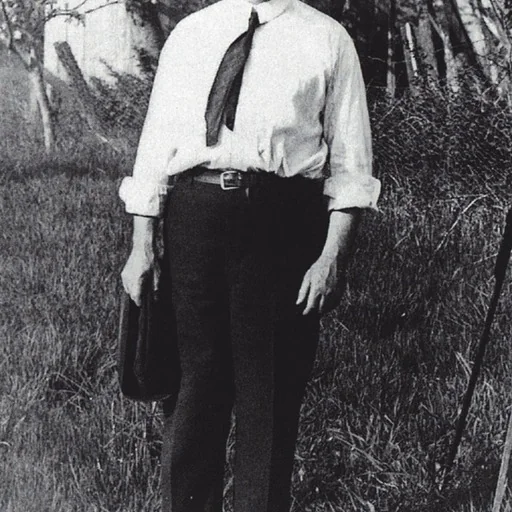
Frederick Childe Hassam was an American Impressionist painter, noted for his urban and coastal scenes.