Artwork
Simsbury, Connecticut
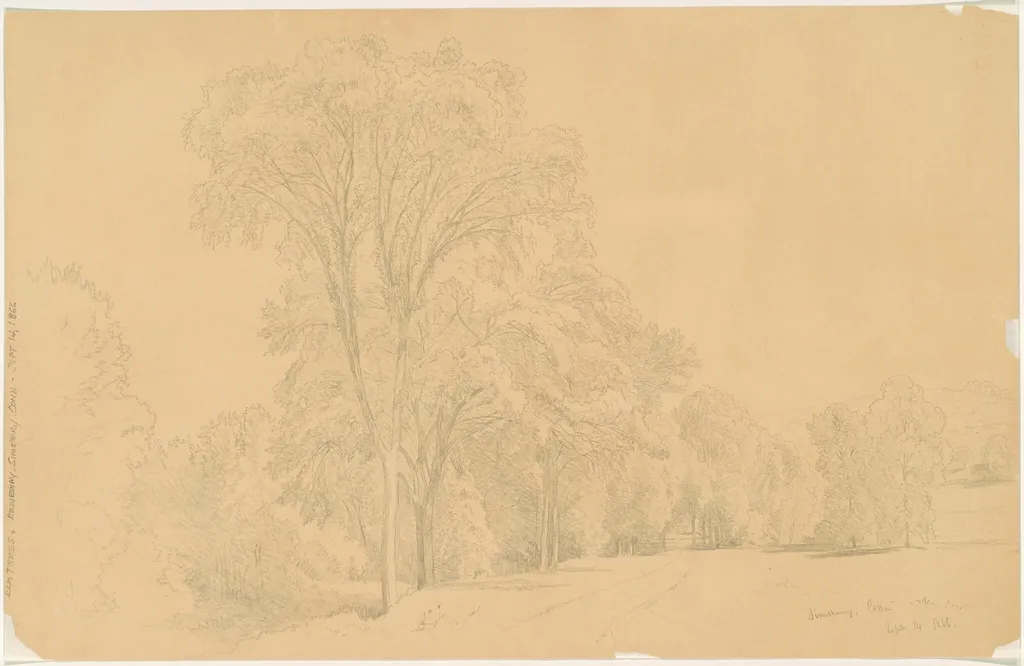
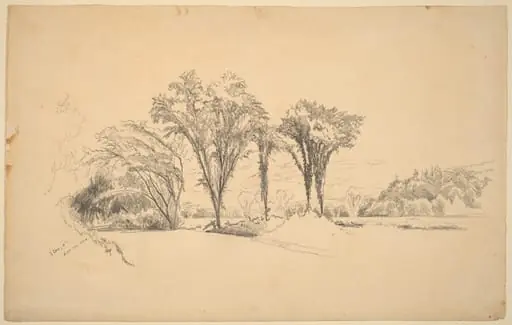
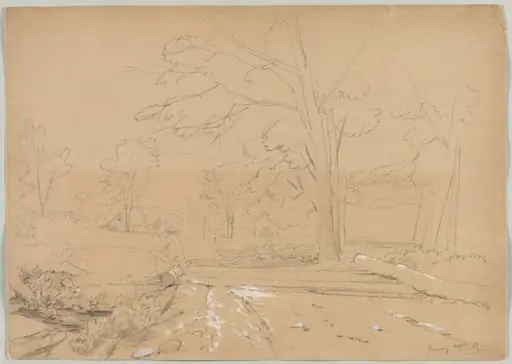
Simsbury, Connecticut is a graphite drawing by the Impressionist artist Aaron Draper Shattuck. It dates from 1866 and is held in the collection of the National Gallery of Art.
About this work
Overview
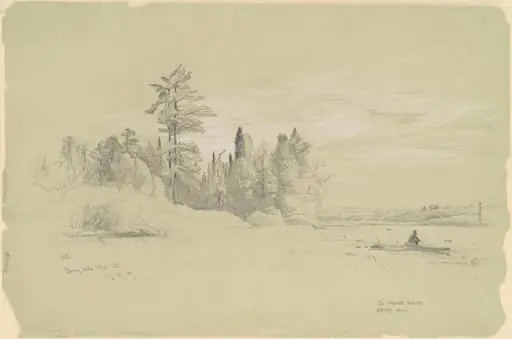
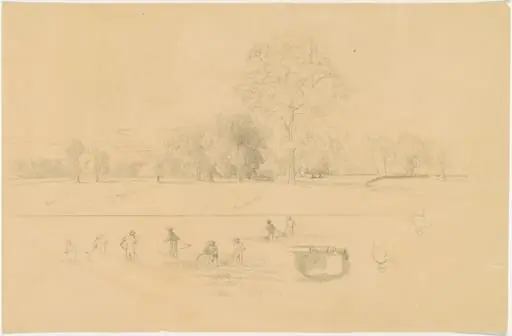
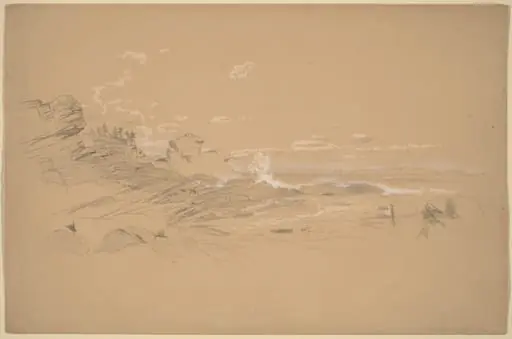
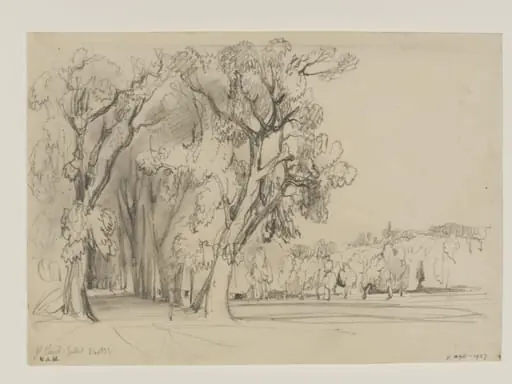
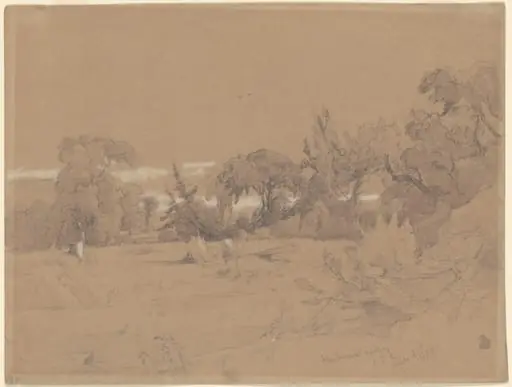
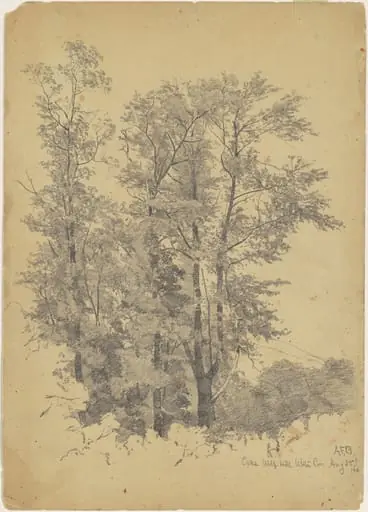
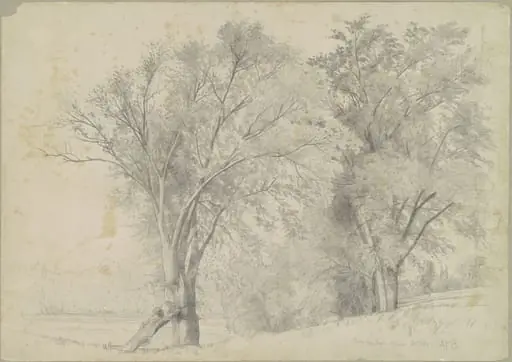
Created in 1866, this graphite drawing portrays a tranquil New England scene titled Simsbury, Connecticut. Executed on wove paper, the work exemplifies the artist’s focus on regional landscapes and reflects the visual character of mid‑nineteenth‑century rural Connecticut.
Subject & Meaning
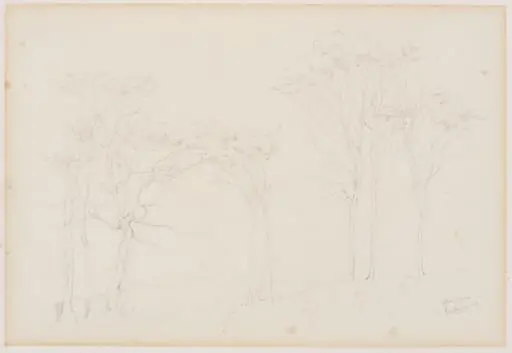
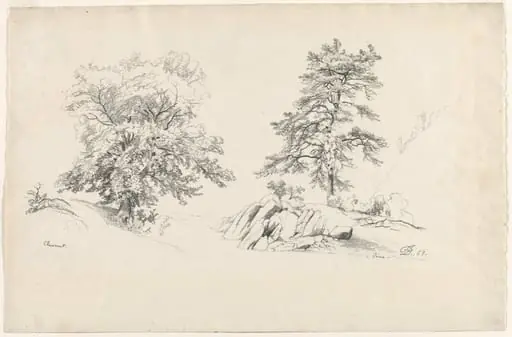
The composition captures the gentle topography of Simsbury, featuring modest hills, trees, and open fields that convey the everyday serenity of New England country life. By emphasizing natural detail over narrative drama, the piece underscores the artist’s interest in documenting the ordinary beauty of his surroundings.
Technique & Style
Rendered entirely in graphite, the drawing employs delicate shading and fine line work to suggest depth and atmospheric perspective. The use of wove paper provides a smooth surface that allows for precise rendering, while the overall tonal range aligns with the restrained aesthetic of the White Mountain and Hudson River schools.
History & Provenance
Aaron Draper Shattuck, born in Francestown, New Hampshire in 1832, produced the work after his studies with portraitist Alexander Ransom in Boston. Though connected to the Hudson River School through familial ties, Shattuck remained active in New England throughout his career, and this drawing reflects his lifelong dedication to the region’s visual record.
Artist & collection
Artist
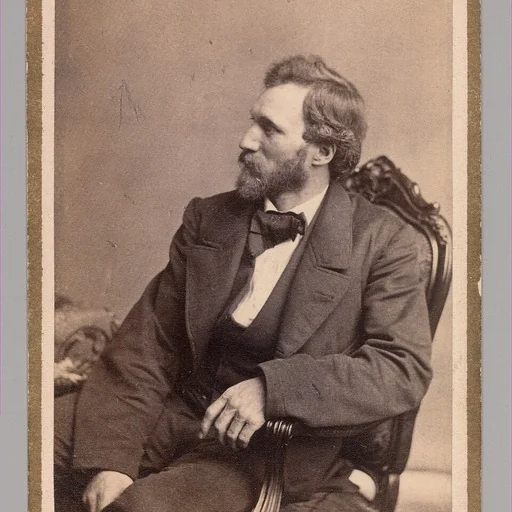
Aaron Draper Shattuck (March 9, 1832 – July 30, 1928) was an American painter of the White Mountain School.