Artwork
Old Chinatown, San Francisco
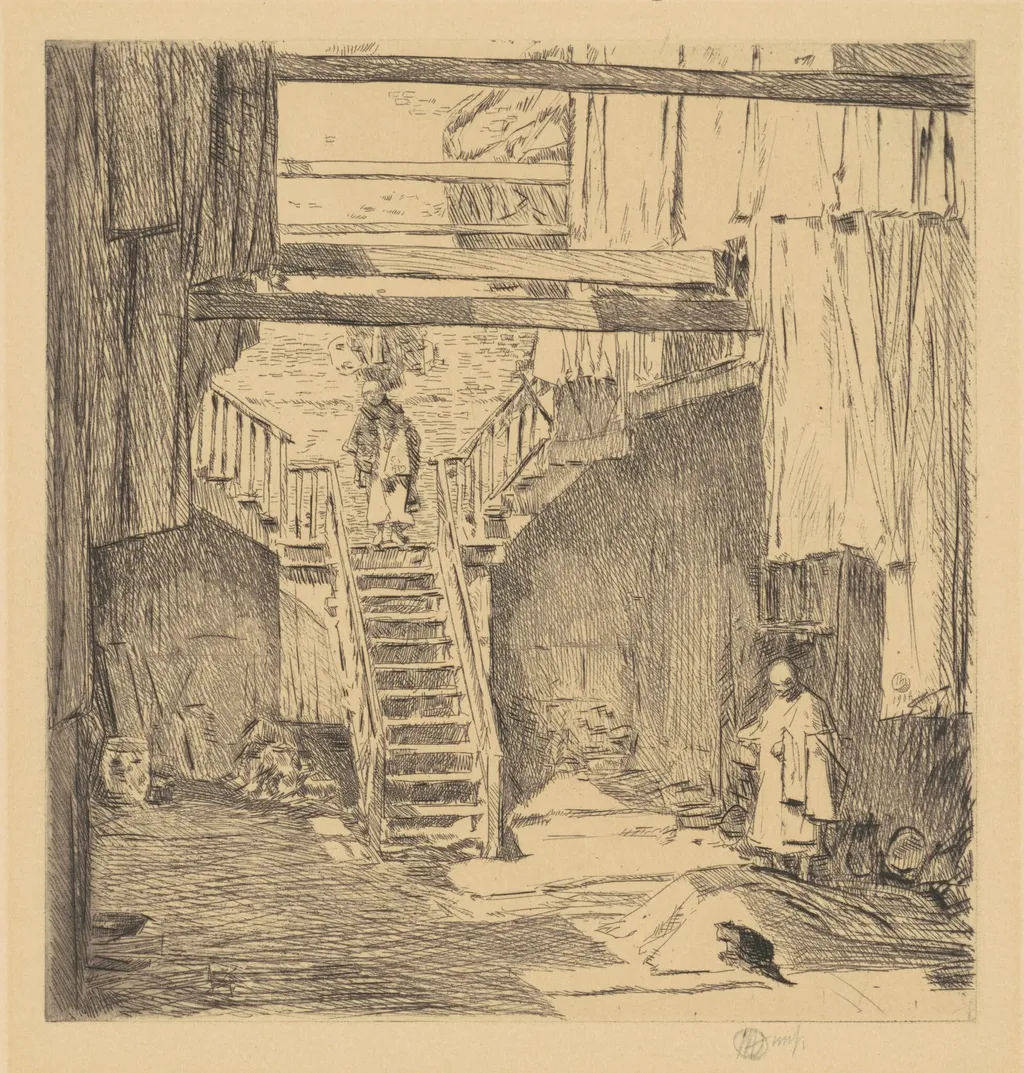
Old Chinatown, San Francisco is an ink print by Childe Hassam. It dates from 1904 and is held in the collection of the National Gallery of Art.
About this work
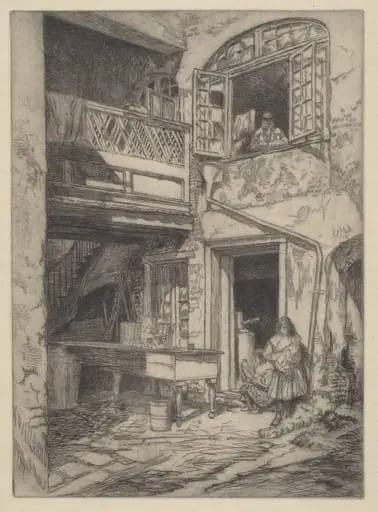
Sunlight cuts through the scene, landing on worn wooden stairs and rough brick walls.
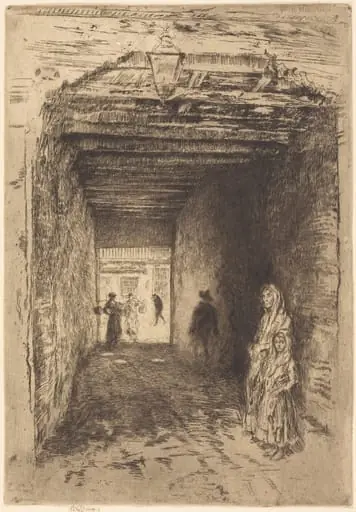
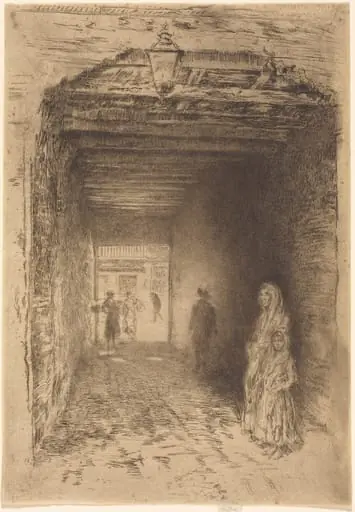
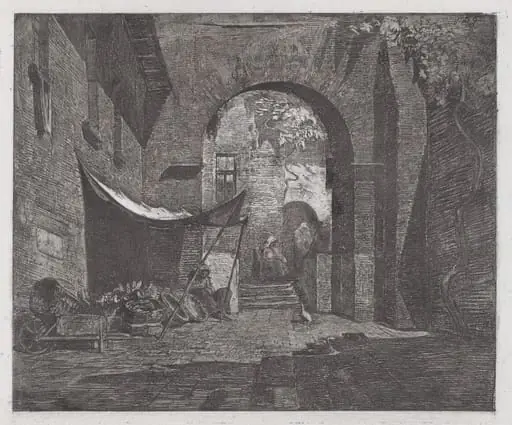
This etching shows a quiet courtyard in San Francisco’s Chinatown. Sunlight cuts through the scene, landing on worn wooden stairs and rough brick walls. Hassam’s lines are sharp but soft, like sunlight touching edges.
Old Chinatown wasn’t always this calm. By 1904, the area faced change and pressure. Hassam’s etching freezes a moment before more buildings went up.
Look for texture in this piece. See how shadows hold shapes, not just darkness. If you like this, check out Hassam, Childe’s other etchings.
Overview
Childe Hassam created this 1904 etching during a period of intense urban transformation in San Francisco. Rendered in black ink on wove paper, the work captures a secluded courtyard in the city’s Chinatown, emphasizing quietude amid encroaching modernization. The composition centers on a wooden staircase ascending into shadow, framed by weathered brick walls and overhead structures that suggest both confinement and intimacy.
Subject & Meaning
The scene portrays an ordinary, unremarkable interior space rarely depicted in art of the time. Rather than bustling streets or commercial activity, Hassam isolates a moment of stillness—sunlight filtering through narrow openings, illuminating worn steps and textured masonry. This quietude may reflect an awareness of the neighborhood’s vulnerability, as Chinatown faced displacement and redevelopment pressures in the early 20th century.
Technique & Style
Hassam employed fine, controlled etching lines to suggest light and surface without heavy shading. The texture of brick, wood, and plaster emerges through delicate cross-hatching and varying line density, while the play of light is implied rather than modeled. His approach balances precision with atmospheric suggestion, avoiding overt drama in favor of subtle tonal gradations that evoke time and wear.
History & Provenance
The etching was made during Hassam’s visit to San Francisco in 1904, part of a broader series of urban scenes he produced after returning from Europe. It reflects his interest in American city life beyond the familiar East Coast. The work remained in private hands for decades before entering public collections, where it is now recognized as a rare visual record of pre-earthquake Chinatown.
Context
By 1904, San Francisco’s Chinatown was under legal and social pressure, with city officials pushing for redevelopment and restrictive zoning. Hassam’s depiction avoids political commentary, instead offering a quiet, almost nostalgic view of a space soon to be altered. His focus on architectural detail and light suggests an appreciation for the everyday, even as the neighborhood’s future grew uncertain.
Legacy
This etching stands as one of Hassam’s few works centered on urban ethnic communities, distinguishing it from his more famous Impressionist paintings. It contributes to a broader understanding of his graphic work and reveals his sensitivity to overlooked corners of American cities. The piece remains a valuable document of a Chinatown that existed before major 20th-century transformations.
Artist & collection
Artist
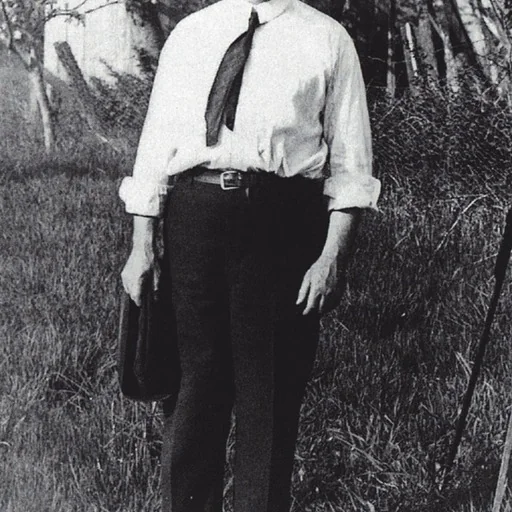
Frederick Childe Hassam was an American Impressionist painter, noted for his urban and coastal scenes.