Artwork
The Church at Old Lyme
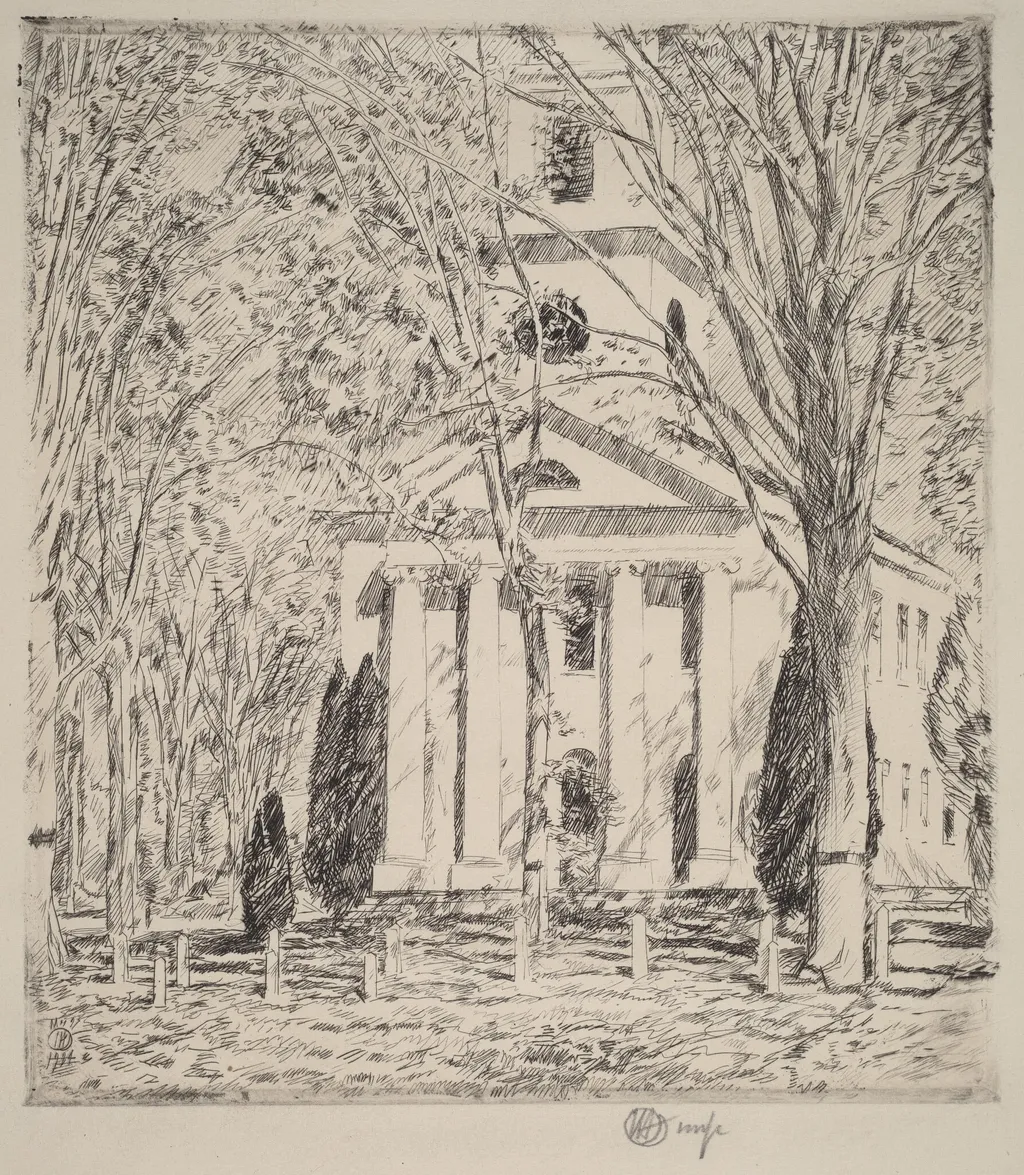
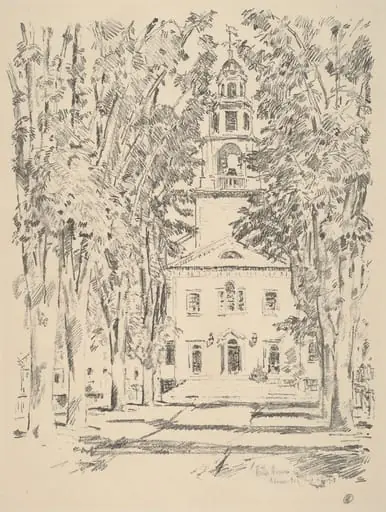
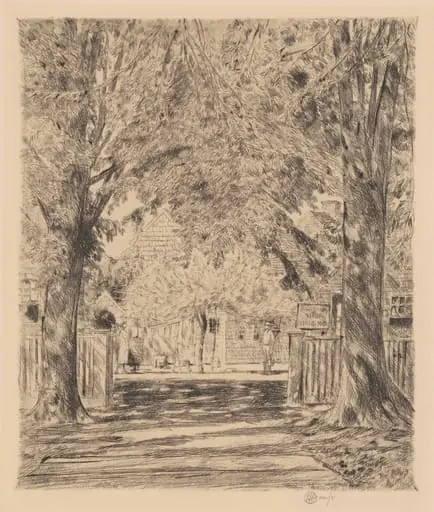
The Church at Old Lyme is an ink print by Childe Hassam. It dates from 1924 and is held in the collection of the National Gallery of Art.
About this work
Overview
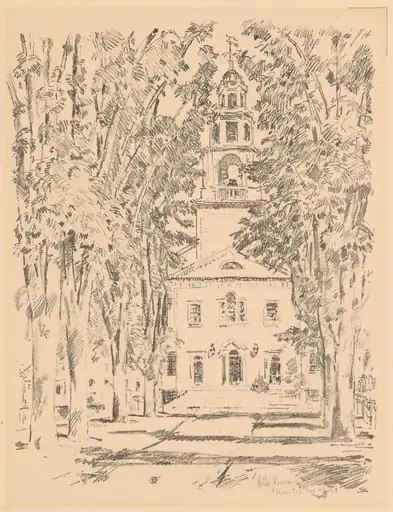
Created in 1924, *The Church at Old Lyme* is a black‑ink etching by Childe Hassam, an American painter associated with Impressionism. Executed in the final year of his life while he resided in Connecticut, the work presents a modest white church with a soaring steeple, flanked by leaning trees and a handful of figures strolling along a path.
Subject & Meaning
The composition captures a tranquil moment in a rural setting, emphasizing the quiet dignity of the church structure amid its natural surroundings. By placing a few passersby within the scene, Hassam suggests everyday activity while allowing the architecture to dominate, reflecting his broader fascination with built forms in landscape contexts.
Technique & Style
Hassam employed traditional intaglio etching, pressing the copper plate lightly to produce soft, almost blurred lines that convey a sense of fleeting impression. The monochrome palette relies on tonal variation rather than color, using delicate gradations of ink to model light and shadow across the steeple, foliage, and ground.
History & Provenance
The etching was produced during Hassam’s last year, a period when he had settled in Old Lyme, Connecticut, a locale that inspired several of his later works. The depicted church remains standing in Old Lyme and is accessible to visitors, linking the print directly to an existing historic site.
Context
Hassam, who introduced Impressionist ideas to American audiences and created more than three thousand works across painting, drawing, and printmaking, often turned to architectural subjects alongside his well‑known urban and coastal scenes. This print exemplifies his interest in rendering the atmosphere of a place through simplified, impressionistic line work.
Own this work as a print
Artist & collection
Artist
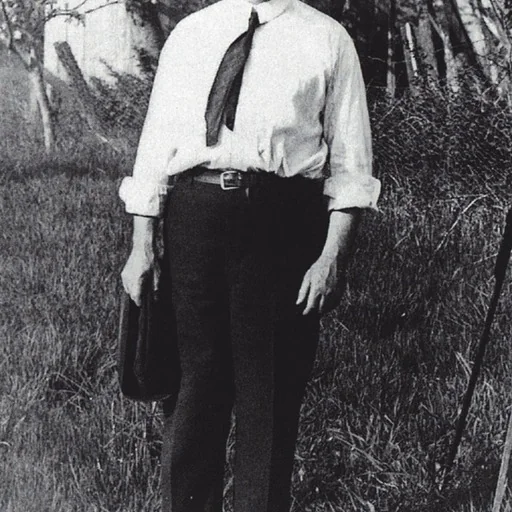
Frederick Childe Hassam was an American Impressionist painter, noted for his urban and coastal scenes.