Artwork
Wayside Inn—Oaks in Spring
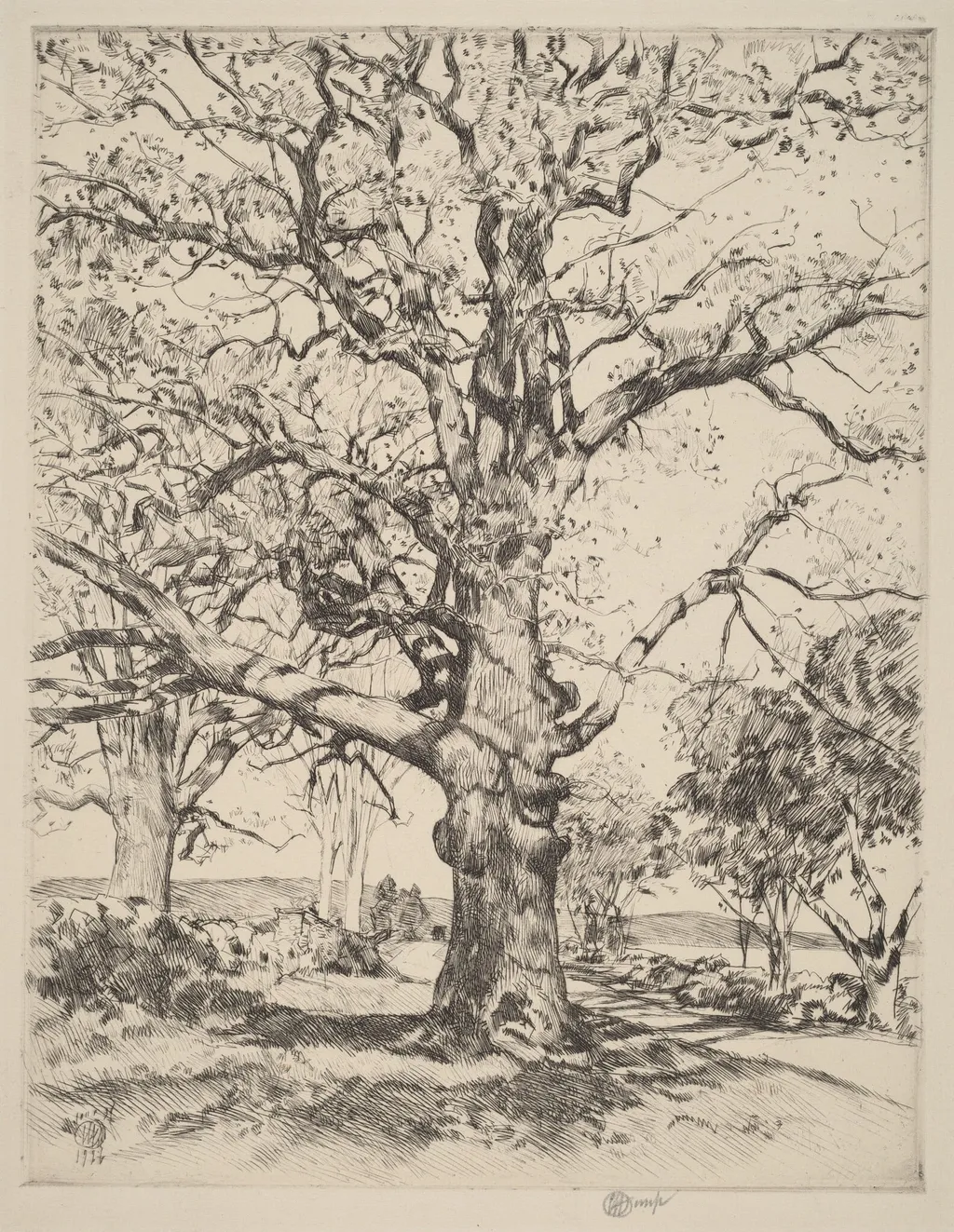
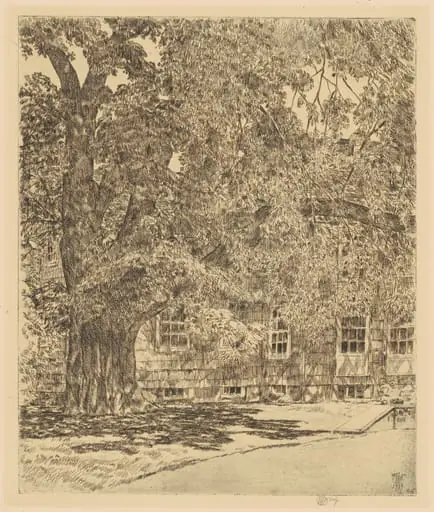
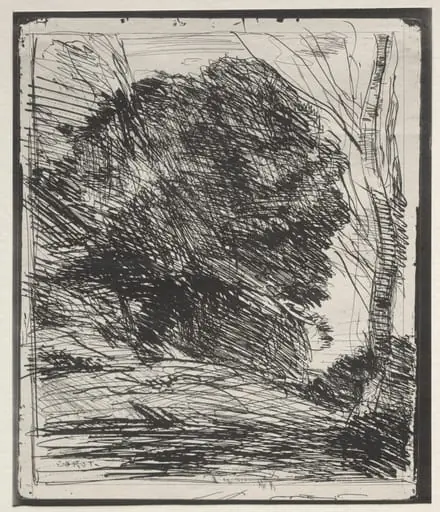
Wayside Inn—Oaks in Spring is an ink print by Childe Hassam. It dates from 1926 and is held in the collection of the National Gallery of Art.
About this work
Overview
The work captures a modest New England inn framed by mature oaks, rendered in stark black ink with delicate linear detail.
Childe Hassam created *Wayside Inn—Oaks in Spring* in 1926 as a drypoint etching, one of over 3,000 works he produced across painting, watercolor, and printmaking. Though best known for urban and coastal scenes, this piece reflects his sustained interest in rural landscapes. The work captures a modest New England inn framed by mature oaks, rendered in stark black ink with delicate linear detail. Its quiet composition contrasts with the vibrancy of his more famous cityscapes.
Subject & Meaning
The scene depicts a secluded wayside inn surrounded by springtime oaks, their new foliage softening the structure’s weathered wood. A narrow path leads directly to the entrance, suggesting quiet arrival or departure. There is no human presence, emphasizing solitude and the passage of seasons. The inn, unadorned and humble, becomes a symbol of enduring rural life, framed by nature’s annual renewal rather than human activity.
Technique & Style
Hassam employed drypoint etching, scratching the image directly into a metal plate with a sharp needle. This method produces a distinctive burr along the lines, holding extra ink and creating rich, velvety blacks. The texture is palpable under close inspection, especially in the tree bark and leaf clusters. His brush-like strokes convey movement and light, blending Impressionist sensitivity with the intimate scale of printmaking.
History & Provenance
Created late in Hassam’s career, this etching emerged during a period when he increasingly turned to printmaking as a means of personal expression. It was likely made at his studio in East Gloucester, Massachusetts, where he spent summers. The work entered public collections shortly after its creation, reflecting its recognition among print enthusiasts and institutions interested in American Impressionist prints.
Context
In the 1920s, Hassam was among the last generation of American artists to embrace Impressionism after its European origins. While modernist movements gained traction, he remained committed to capturing light and atmosphere in everyday scenes. *Wayside Inn—Oaks in Spring* aligns with his lifelong fascination with seasonal change and the quiet rhythms of the American countryside, offering a contemplative counterpoint to urban modernity.
Legacy
This etching exemplifies Hassam’s mastery of printmaking as a medium for nuanced observation. Though less celebrated than his paintings, his prints are now held in major collections as vital extensions of his artistic vision. The work contributes to the understanding of how American Impressionists adapted European techniques to domestic subjects, preserving a sense of place through delicate, hand-crafted mark-making.
Artist & collection
Artist
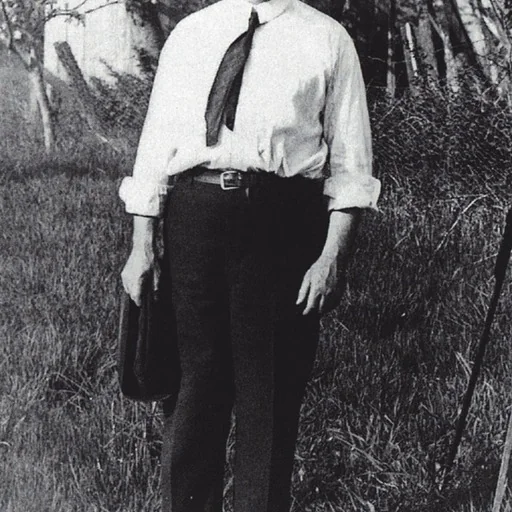
Frederick Childe Hassam was an American Impressionist painter, noted for his urban and coastal scenes.

![Bosco [Woods], by Mosè Bianchi](https://artifactworldgallery.com/img/mose-bianchi--bosco-woods--c857997776805c86-w320.webp)