Artwork
Winnegance Willows
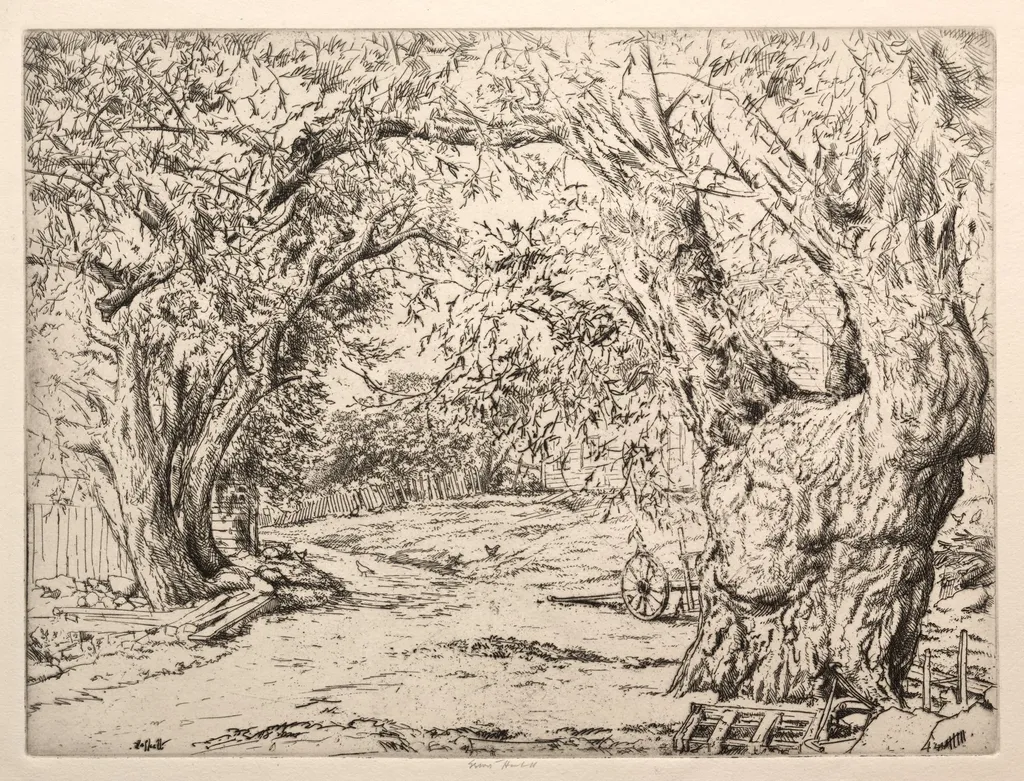
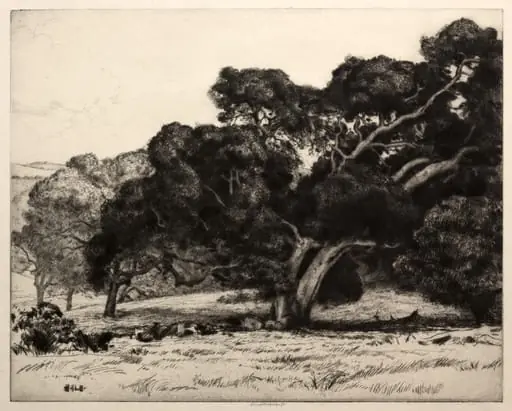
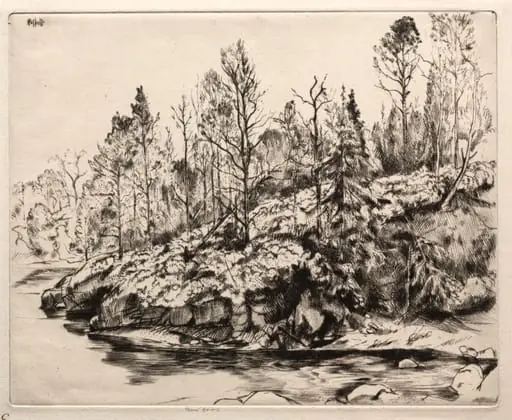
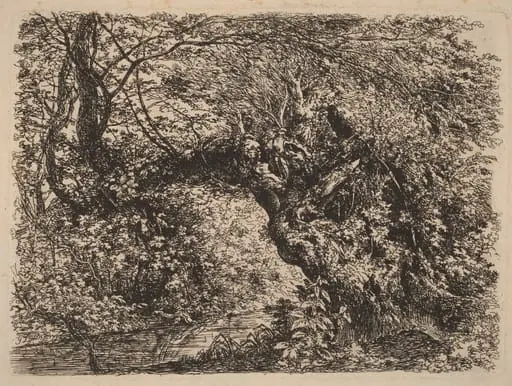
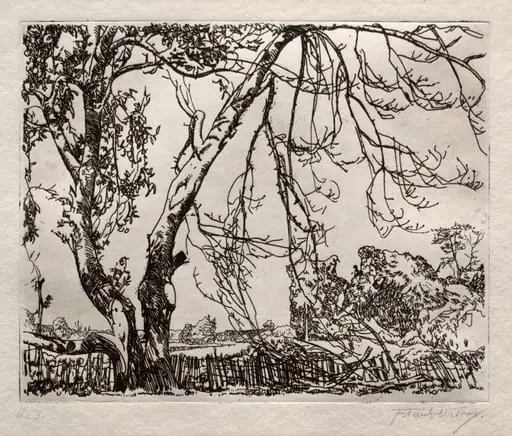
Winnegance Willows is a print by Ernest Haskell. It dates from 1910 and is held in the collection of the Cleveland Museum of Art.
About this work
Overview
The composition focuses on the interplay of vertical willow trunks and their winding branches, forming a dense canopy above the water.
Winnegance Willows is a monochrome drawing by Ernest Haskell, dated around 1910. Executed in ink or graphite, it captures a tranquil riverside in Maine with minimal detail and no color. The composition focuses on the interplay of vertical willow trunks and their winding branches, forming a dense canopy above the water. The absence of tone or hue emphasizes line as the primary vehicle of expression.
Subject & Meaning
The scene depicts a quiet stretch of the Winnegance River, where willows lean over still water, their roots exposed and branches entwined. No human presence is visible, and the stillness suggests solitude or retreat. The arrangement of logs along the shore implies recent water movement, hinting at nature’s quiet rhythms. The work conveys observation rather than narrative, valuing atmosphere over event.
Technique & Style
Haskell employed rapid, incised lines to suggest form and texture. The trees’ bark, water ripples, and root systems are rendered through dense, overlapping strokes that imply detail without defining it. The scratchy, economical mark-making avoids shading or blending, relying instead on the viewer’s perception to complete the image. This approach reflects a direct, almost spontaneous engagement with the landscape.
History & Provenance
The drawing entered the collection of The Cleveland Museum of Art in the early 20th century, likely acquired through the artist’s network or a contemporary print exchange. Haskell, known for his travel sketches and illustrations, produced this work during a period of focused outdoor study. Its preservation in a major institution underscores its value as a document of early American draftsmanship.
Context
Created during a time when American artists were turning to natural subjects with renewed attention, Winnegance Willows aligns with regionalist tendencies in early 20th-century drawing. Unlike grand landscapes, it favors intimacy and immediacy. Haskell’s method echoes the influence of Japanese woodblock prints and the American sketching tradition, emphasizing direct observation over studio refinement.
Legacy
The work remains a quiet example of Haskell’s commitment to capturing transient natural moments through disciplined line work. While not widely reproduced, it is studied for its economy of means and sensitivity to environment. It contributes to broader understandings of American graphic art beyond major movements, highlighting the significance of modest, personal sketches in art history.
Own this work as a print
Artist & collection

Artist
Ernest Haskell was an American artist and illustrator, internationally famous in his lifetime and remembered for his etchings, as well as engravings, pen-and-ink drawings, lithographs and watercolors.

![Forest on Lago Maggiore [Foresta sul Lago Maggiore], by Giberto Borromeo](https://artifactworldgallery.com/img/giberto-borromeo--forest-on-lago-maggiore-foresta-sul-lago-maggiore--6d25270befdb299f-w320.webp)