Artwork
Print Collection
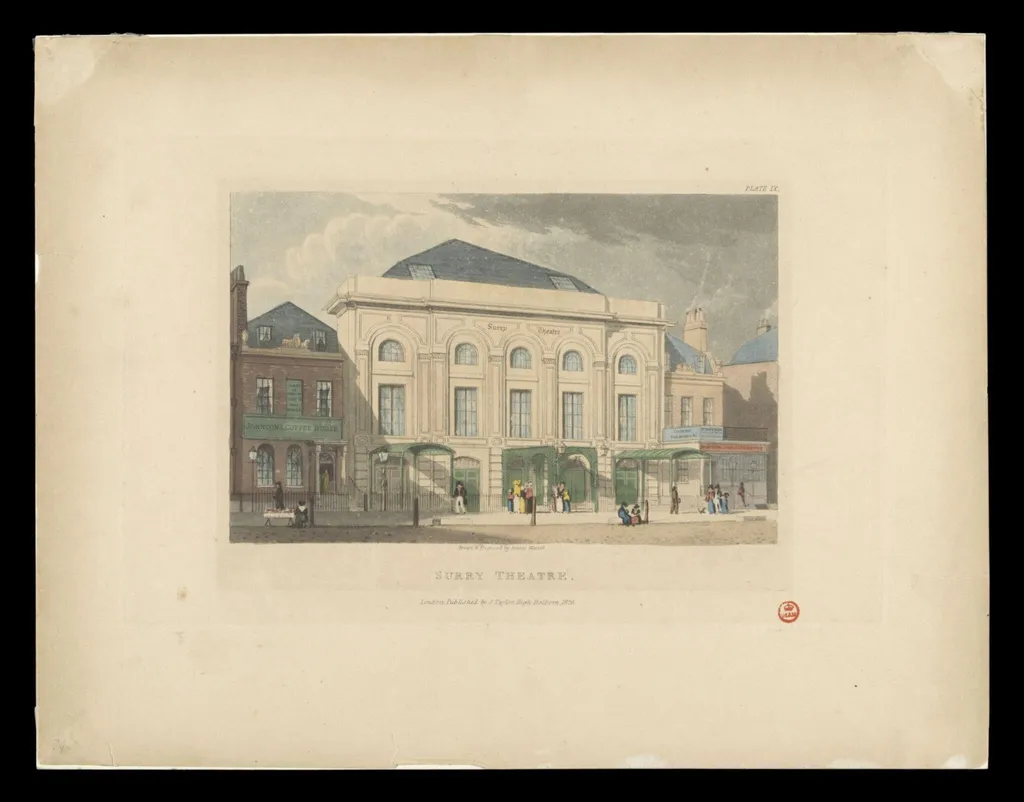
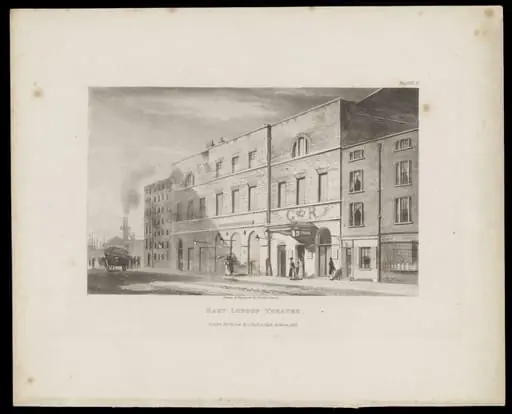
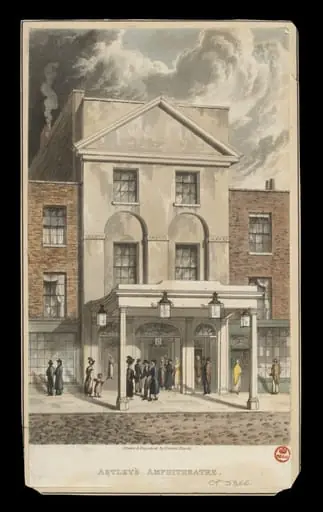
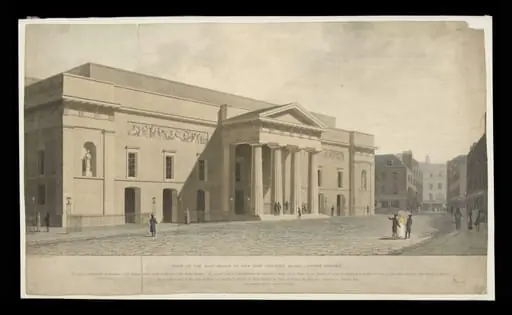
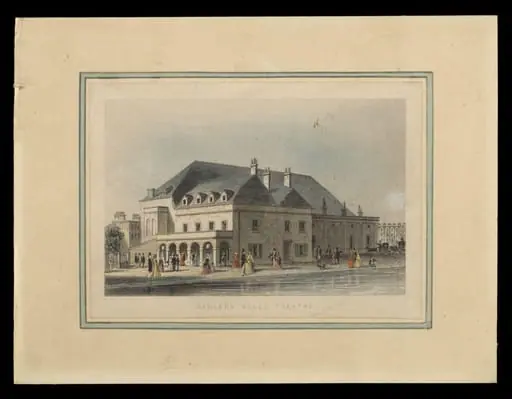
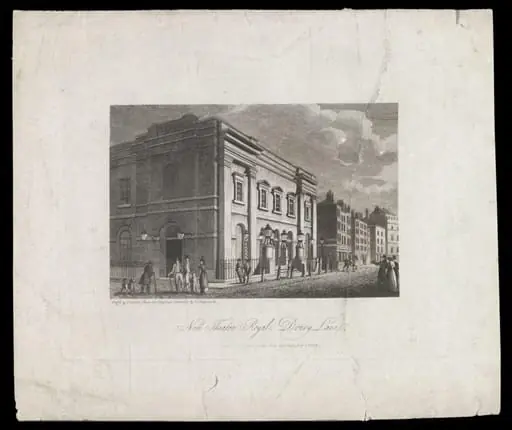
Print Collection is a print by the Romanticist artist Daniel Havell. It dates from 1826 and is held in the collection of the Victoria and Albert Museum. This 1826 print portrays the Surrey Theatre in London, rendered as a detailed topographical image.
About this work
Havell’s sharp lines and careful shading bring out the theatre’s tower and arched windows.
This print from 1826 shows the Surrey Theatre as seen through Romantic eyes. Daniel Havell drew and engraved it, then J. Taylor published it in London. The building sits in a quiet street scene.
Havell’s sharp lines and careful shading bring out the theatre’s tower and arched windows. The print captures the place exactly as it looked then.
Check out the Victoria and Albert Museum’s print collection next.
Overview
This 1826 print portrays the Surrey Theatre in London, rendered as a detailed topographical image. Created by Daniel Havell, who both drew and engraved the plate, it was published by J. Taylor. The composition presents the theatre in a calm urban setting, emphasizing architectural form over human activity. Its production reflects the period’s interest in documenting public buildings with precision.
Subject & Meaning
The Surrey Theatre, a prominent cultural venue in early 19th-century Southwark, is depicted without crowds or performance activity. This quiet presentation shifts focus from spectacle to structure, suggesting an interest in the building as a civic landmark. The absence of motion may reflect a desire to record the architecture as a stable element within the evolving cityscape.
Technique & Style
Havell employed fine, controlled lines and subtle tonal shading to define the theatre’s façade, particularly its tower and arched windows. The engraving technique allowed for crisp detail and graduated light effects, characteristic of topographical prints of the era. The composition avoids dramatic lighting or embellishment, favoring clarity and accuracy over emotional intensity.
History & Provenance
Produced in London in 1826, the print was part of a broader trend of publishing architectural views for public consumption. It was issued by J. Taylor, a known publisher of topographical prints. The work likely served as both a record and a commodity, circulating among collectors and locals interested in the city’s changing landscape during the early Victorian period.
Context
The Surrey Theatre stood in a rapidly developing area of London, frequented by working-class audiences. While its performances were often melodramatic or populist, this print omits any reference to its lively interior life. Instead, it aligns with contemporary efforts to document urban infrastructure with scholarly detachment, mirroring the rise of antiquarian and cartographic interests in the period.
Legacy
The print survives as a visual archive of the theatre’s pre-1860s appearance, before later renovations and eventual demolition. It contributes to the historical record of London’s entertainment venues and exemplifies the role of print culture in preserving architectural heritage. Today, it remains a reference point for scholars studying urban development and theatrical history in Regency England.
Artist & collection
Artist
Daniel Havell spent his life quietly printing books, not signing them. His engravings hum with tiny details—flora, fabrics, faces—so crisp you can almost hear the paper whisper. Flip through the 1826 “Print Collection”…