Artwork
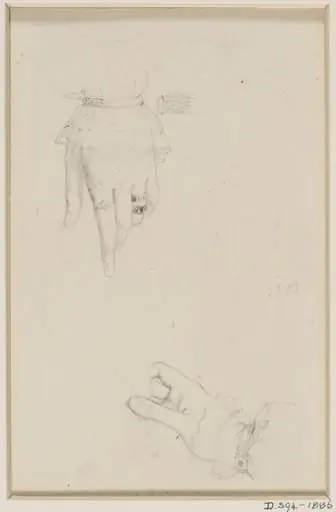
Study of a Hand [recto]
![Study of a Hand [recto], by Benjamin Haydon, charcoal, 1816](https://artifactworldgallery.com/img/benjamin-haydon--study-of-a-hand-recto--a1c8376edca59300-w1024.webp)
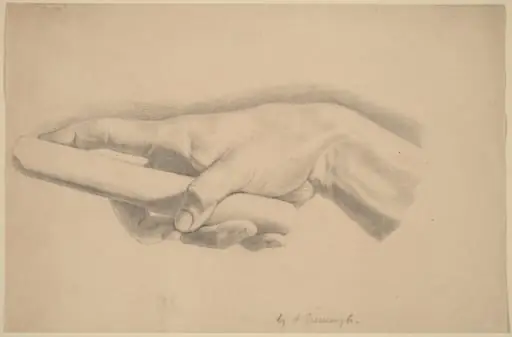
Study of a Hand [recto] is a charcoal drawing by the Romanticist artist Benjamin Haydon. It dates from 1816 and is held in the collection of the National Gallery of Art. Created in 1816, this charcoal drawing by Benjamin Robert Haydon captures a single hand rendered on brown wove paper.
About this work
Overview
Though best known for grand historical compositions, Haydon devoted significant attention to anatomical studies as foundational work for his larger paintings.
Created in 1816, this charcoal drawing by Benjamin Robert Haydon captures a single hand rendered on brown wove paper. Though best known for grand historical compositions, Haydon devoted significant attention to anatomical studies as foundational work for his larger paintings. This piece exemplifies his disciplined practice of observing and recording the human form with precision, even in informal sketches.
Subject & Meaning
The drawing depicts a relaxed human hand, fingers gently curled and thumb angled downward, as if resting after motion. There is no narrative context—only the physical presence of the hand is emphasized. This focus on a solitary body part reflects Haydon’s belief in the expressive potential of anatomy, treating it as a subject worthy of study in its own right, independent of larger scenes.
Technique & Style
Haydon employed loose, fluid charcoal strokes to model form, allowing the natural texture of the brown paper to suggest areas of light. Soft smudging creates subtle gradations, lending volume without hard outlines. The raw, unfinished quality—where the paper’s tone remains visible—underscores the sketch’s function as a working study rather than a polished finish, prioritizing observation over finish.
History & Provenance
This drawing belongs to a series of anatomical studies Haydon produced during a period of financial hardship and strained relationships with patrons. Though his large-scale works struggled for recognition, his preparatory drawings were consistently detailed and numerous. This piece likely originated in his studio as part of ongoing efforts to refine his understanding of the human figure for future compositions.
Context
In early 19th-century Britain, academic training demanded rigorous study of the human body. Haydon’s sketches align with this tradition, influenced by classical ideals and Enlightenment-era emphasis on empirical observation. While Romanticism celebrated emotion and individual expression, Haydon’s studies reveal a more methodical, almost scientific approach to form, bridging classical discipline with Romantic sensibility.
Legacy
Haydon’s anatomical drawings, though less celebrated than his finished paintings, offer insight into his artistic process and the pedagogical practices of his time. They remain valuable for understanding how 19th-century artists trained their eyes and hands, emphasizing direct observation over idealization. These studies continue to inform discussions on the role of preparatory work in artistic creation.
Artist & collection
Artist
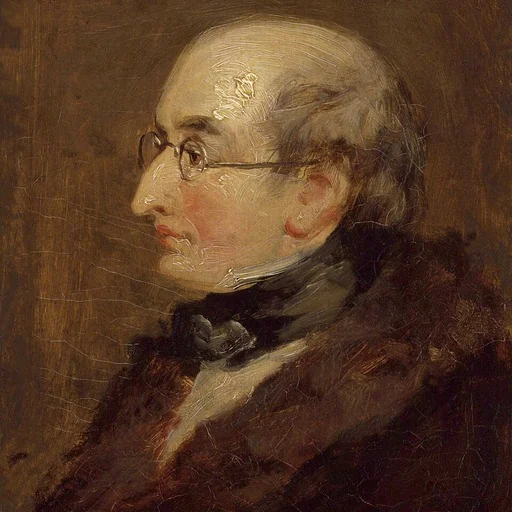
Benjamin Robert Haydon (; 26 January 1786 – 22 June 1846) was a British painter who specialised in grand historical pictures, although he also painted a few contemporary subjects and portraits.

![Xenophon and the Greeks Sighting the Sea [recto], by Benjamin Haydon](https://artifactworldgallery.com/img/benjamin-haydon--xenophon-and-the-greeks-sighting-the-sea-recto--0775cd64b855201c-w320.webp)
![Study of a Foot [verso], by Benjamin Haydon](https://artifactworldgallery.com/img/benjamin-haydon--study-of-a-foot-verso--1953df802be24b7d-w320.webp)
![Xenophon and the Greeks Sighting the Sea [verso], by Benjamin Haydon](https://artifactworldgallery.com/img/benjamin-haydon--xenophon-and-the-greeks-sighting-the-sea-verso--308c2fa5f646a86e-w320.webp)
![Study of a Right Hand [recto], by Benjamin Haydon](https://artifactworldgallery.com/img/benjamin-haydon--study-of-a-right-hand-recto--88b544f65d3eb1a7-w320.webp)
![Study of the Statue of Diana in the Vatican [verso], by Benjamin Haydon](https://artifactworldgallery.com/img/benjamin-haydon--study-of-the-statue-of-diana-in-the-vatican-verso--a30cde8a9d697c60-w320.webp)

![Studies of Hands [recto], by Perry, Enoch Wood, Jr.](https://artifactworldgallery.com/img/perry-enoch-wood-jr--studies-of-hands-recto--594d36f72822a9f4-w320.webp)
![Hand Studies [verso], by Allan Ramsay](https://artifactworldgallery.com/img/allan-ramsay--hand-studies-verso--f6c634d33f170fe2-w320.webp)
![Study of an Arm [verso], by Guillaume Lethière](https://artifactworldgallery.com/img/guillaume-lethiere--study-of-an-arm-verso--bba4291c1ba000f2-w320.webp)