Artwork
Study of a Right Hand [recto]
![Study of a Right Hand [recto], by Benjamin Haydon, chalk, 1816](https://artifactworldgallery.com/img/benjamin-haydon--study-of-a-right-hand-recto--88b544f65d3eb1a7-w1024.webp)
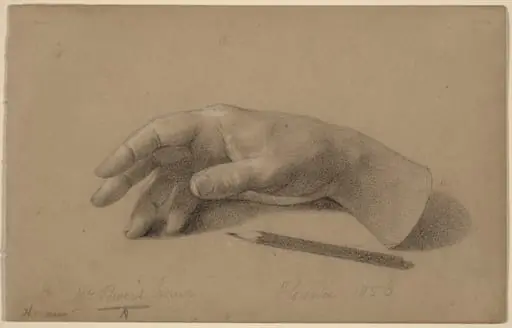
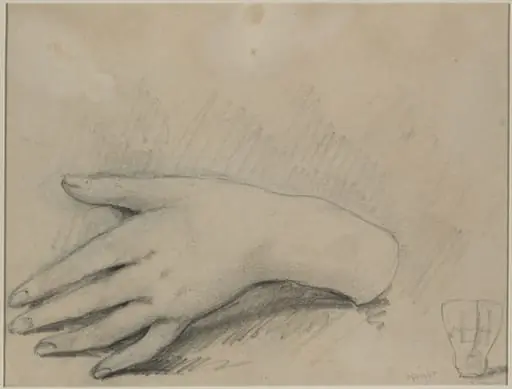
Study of a Right Hand [recto] is a chalk drawing by the Romanticist artist Benjamin Haydon. It dates from 1816 and is held in the collection of the National Gallery of Art. Created in 1816, this charcoal and white chalk drawing on laid paper is a focused anatomical study by British artist Benjamin Robert Haydon.
About this work
Overview
Created in 1816, this charcoal and white chalk drawing on laid paper is a focused anatomical study by British artist Benjamin Robert Haydon.
Created in 1816, this charcoal and white chalk drawing on laid paper is a focused anatomical study by British artist Benjamin Robert Haydon. It depicts only the right hand and lower wrist, rendered with careful tonal variation. The work reflects Haydon’s disciplined approach to figure study, undertaken despite his broader struggles with financial instability and limited recognition for his large historical paintings.
Subject & Meaning
The drawing isolates the right hand in a relaxed, slightly curled position, palm facing the viewer. Without context or narrative, the focus is purely on form and structure. It serves as a technical exercise, capturing the subtle interplay of bone, tendon, and skin. Such studies were essential to Haydon’s pursuit of anatomical accuracy in his larger compositions, grounding his historical scenes in observed reality.
Technique & Style
Haydon employed charcoal for its versatility, building depth through layered strokes and lifting highlights with white chalk to suggest light falling across the knuckles and palm. The lines are deliberate, avoiding flourish in favor of structural clarity. The paper’s laid texture subtly enhances the tactile quality of the skin, reinforcing the study’s emphasis on physical presence over idealization.
History & Provenance
The drawing dates from a period when Haydon was actively preparing for major historical works, often relying on life studies to inform his compositions. Though little is documented about its immediate ownership, it survived within his personal archive and later entered institutional collections, reflecting its value as a pedagogical artifact rather than a public commission.
Context
In early 19th-century Britain, artists frequently produced anatomical studies as foundational training, especially those committed to grand historical subjects. Haydon’s dedication to such detail aligned with Romantic-era ideals of emotional truth through realism. His hand studies were part of a broader effort to elevate historical painting by anchoring it in rigorous observation of the human body.
Legacy
Though Haydon’s large-scale paintings faded from public view, his preparatory drawings, including this one, remain valued for their technical precision and quiet intensity. They offer insight into the labor behind his ambitious projects and illustrate how even lesser-known works can illuminate an artist’s commitment to craft over spectacle.
Artist & collection
Artist
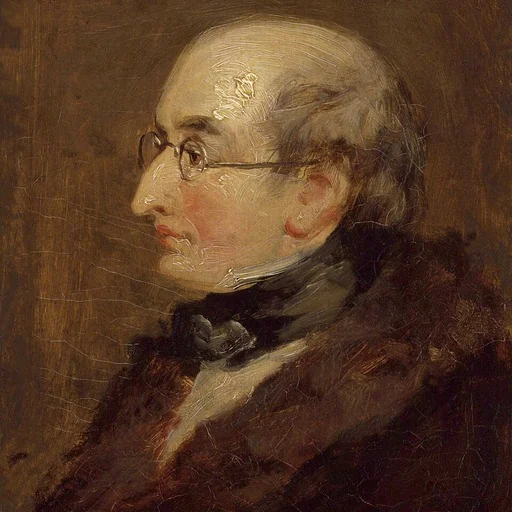
Benjamin Robert Haydon (; 26 January 1786 – 22 June 1846) was a British painter who specialised in grand historical pictures, although he also painted a few contemporary subjects and portraits.

![Xenophon and the Greeks Sighting the Sea [recto], by Benjamin Haydon](https://artifactworldgallery.com/img/benjamin-haydon--xenophon-and-the-greeks-sighting-the-sea-recto--0775cd64b855201c-w320.webp)
![Study of a Foot [verso], by Benjamin Haydon](https://artifactworldgallery.com/img/benjamin-haydon--study-of-a-foot-verso--1953df802be24b7d-w320.webp)
![Xenophon and the Greeks Sighting the Sea [verso], by Benjamin Haydon](https://artifactworldgallery.com/img/benjamin-haydon--xenophon-and-the-greeks-sighting-the-sea-verso--308c2fa5f646a86e-w320.webp)
![Study of a Hand [recto], by Benjamin Haydon](https://artifactworldgallery.com/img/benjamin-haydon--study-of-a-hand-recto--a1c8376edca59300-w320.webp)
![Study of the Statue of Diana in the Vatican [verso], by Benjamin Haydon](https://artifactworldgallery.com/img/benjamin-haydon--study-of-the-statue-of-diana-in-the-vatican-verso--a30cde8a9d697c60-w320.webp)
![Hand Studies [verso], by Allan Ramsay](https://artifactworldgallery.com/img/allan-ramsay--hand-studies-verso--f6c634d33f170fe2-w320.webp)
![Studies of Hands [recto], by Perry, Enoch Wood, Jr.](https://artifactworldgallery.com/img/perry-enoch-wood-jr--studies-of-hands-recto--594d36f72822a9f4-w320.webp)
![Study of an Arm [verso], by Guillaume Lethière](https://artifactworldgallery.com/img/guillaume-lethiere--study-of-an-arm-verso--bba4291c1ba000f2-w320.webp)