Artwork
Boats
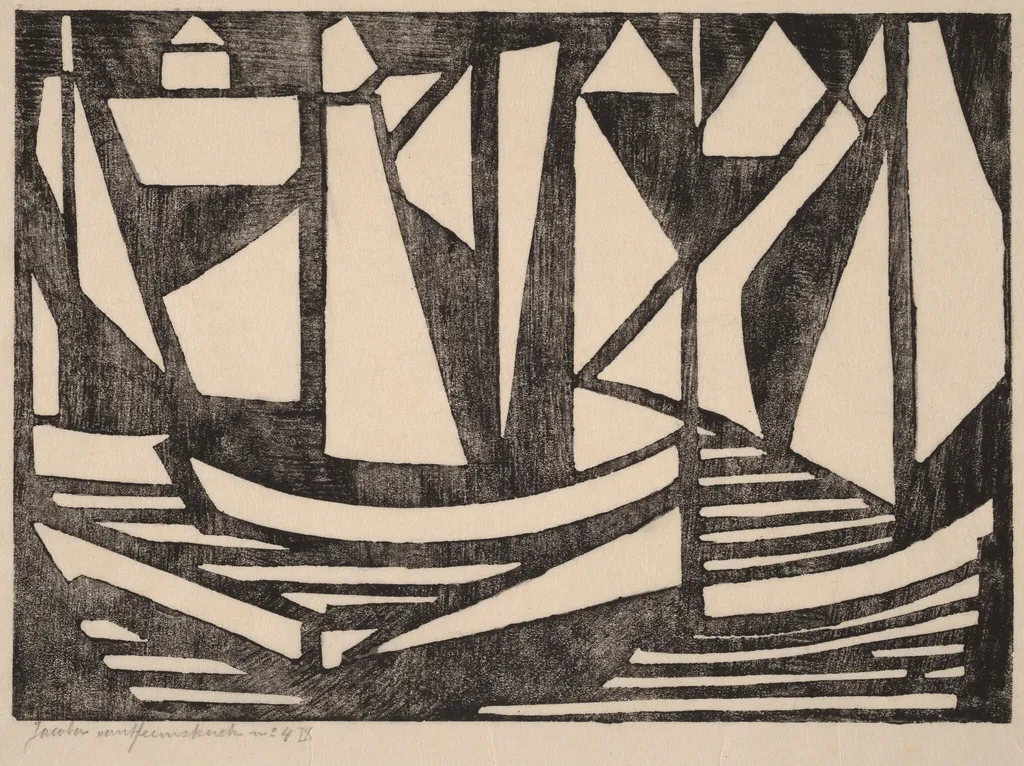
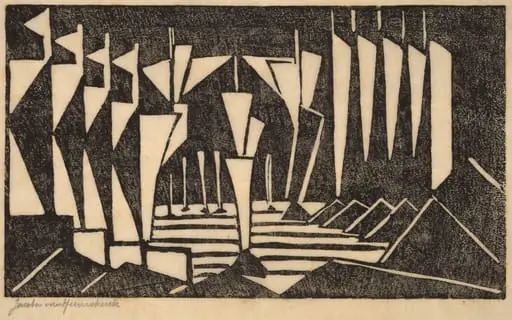
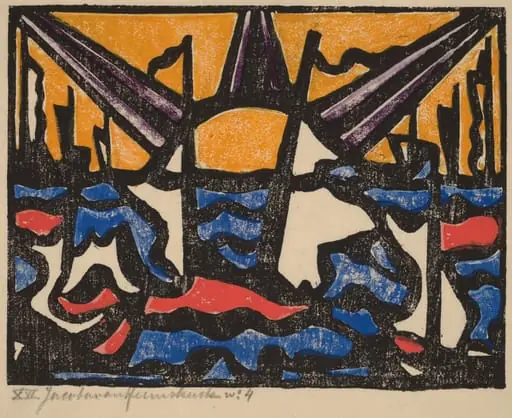
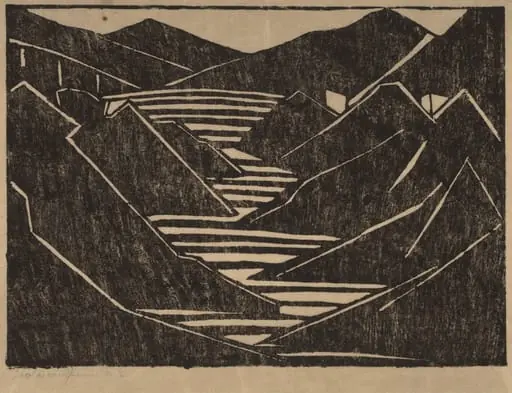
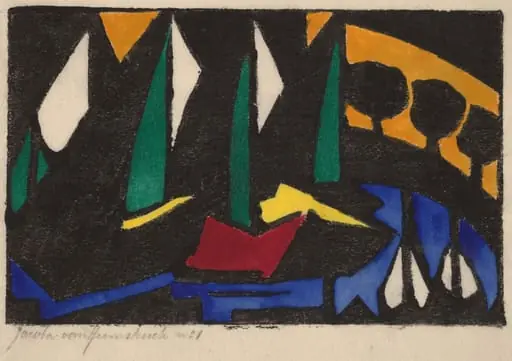
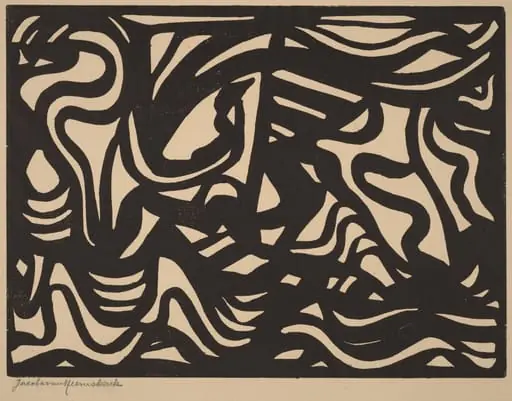
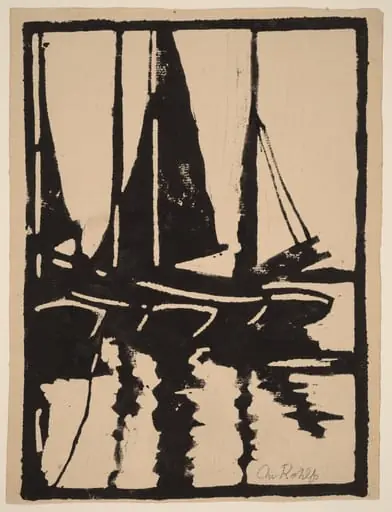
Boats is an ink print by Jacoba van Heemskerck van Beest. It dates from 1915 and is held in the collection of the National Gallery of Art.
About this work
Overview
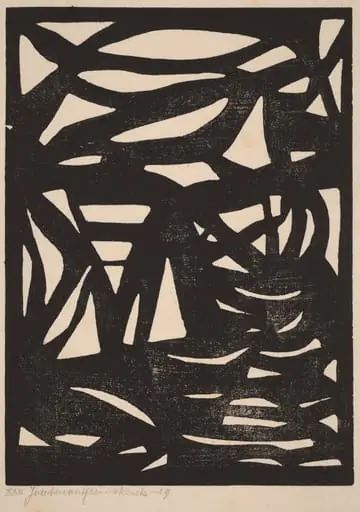
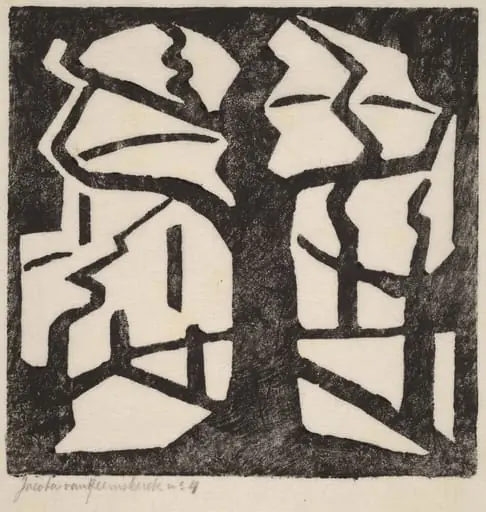
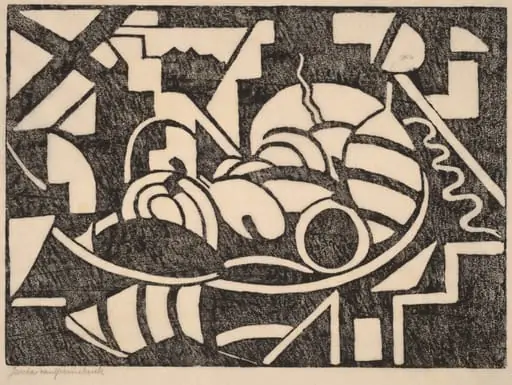
Jacoba van Heemskerck van Beest created this woodcut in 1915, using black ink on thin Japan paper. The print captures a quiet maritime scene with multiple boats, rendered through the distinctive grain and texture of carved wood. The simplicity of the composition emphasizes form over detail, reflecting early 20th-century printmaking trends that favored abstraction and reduced visual noise.
Subject & Meaning
The subject consists of a group of boats, loosely arranged on water, with no clear narrative or human presence. Their stylized forms suggest movement or rest, but avoid literal representation. The absence of context invites contemplation of solitude, labor, or the quiet rhythm of coastal life, aligning with modernist interests in mood over storytelling.
Technique & Style
The artist employed traditional woodcut methods, carving bold, angular lines into a wooden block to create sharp contrasts between inked and uninked areas. The use of Japan paper, thin and absorbent, enhances the ink’s depth and the wood’s natural grain. Geometric simplification and strong black shapes dominate, rejecting realism in favor of structural clarity and tactile surface.
History & Provenance
While specific ownership history is not widely documented, the piece reflects broader interest in indigenous print traditions during the early modernist era.
Created in 1915, the work emerged during a period when European artists were redefining printmaking as an independent art form. Van Heemskerck van Beest, active in the Netherlands, was part of a generation exploring expressive potential in woodcuts. While specific ownership history is not widely documented, the piece reflects broader interest in indigenous print traditions during the early modernist era.
Context
In the years before and after World War I, Dutch artists increasingly turned to woodcut for its directness and affordability. Van Heemskerck van Beest’s work aligns with contemporaries who sought to break from academic painting, embracing simplified forms and handcrafted aesthetics. This piece fits within a regional movement that valued craftsmanship and emotional restraint over ornamentation.
Legacy
Though not widely exhibited today, the woodcut contributes to the recognition of early 20th-century Dutch women printmakers, whose contributions were often overlooked. Its restrained aesthetic and technical precision continue to inform studies of modernist printmaking, particularly in how abstraction and materiality can convey quiet, enduring themes.
Artist & collection