Artwork
Bridge
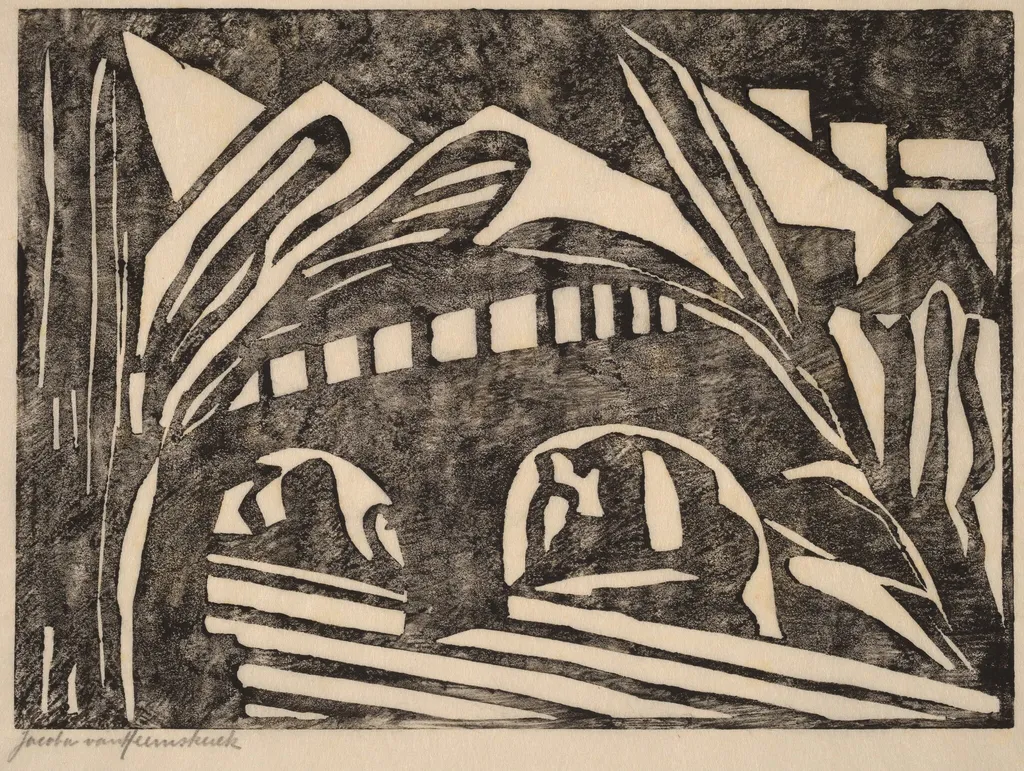
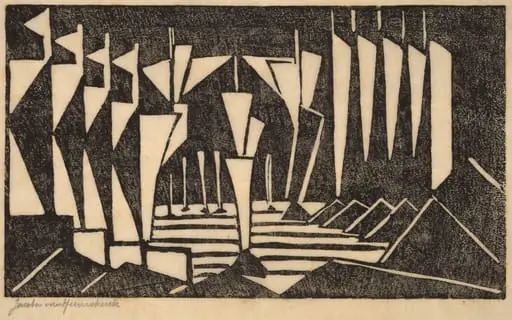
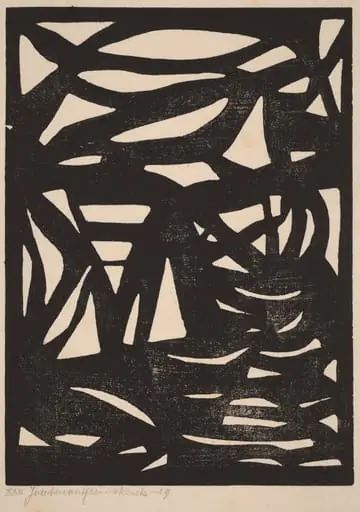
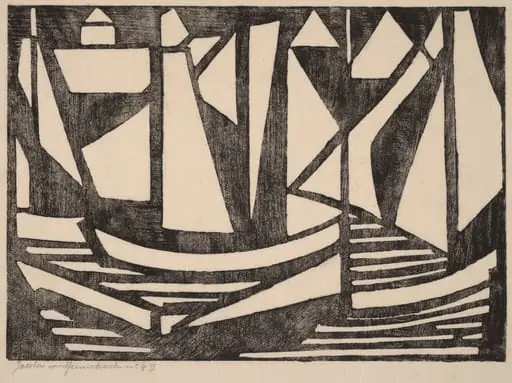
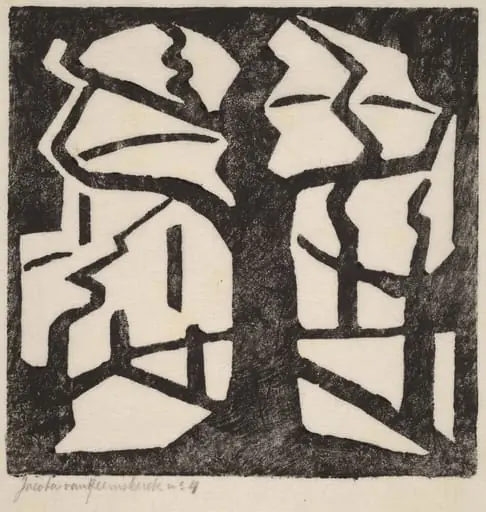
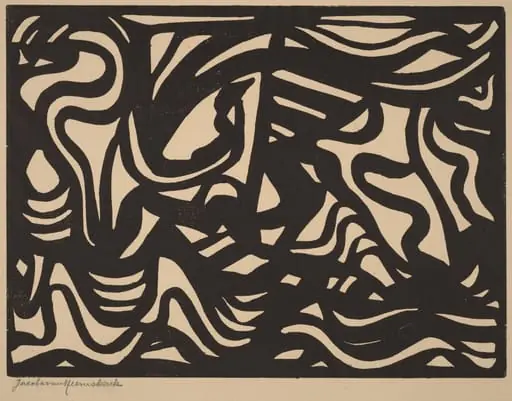
Bridge is an ink print by Jacoba van Heemskerck van Beest. It dates from 1916 and is held in the collection of the National Gallery of Art.
About this work
Overview
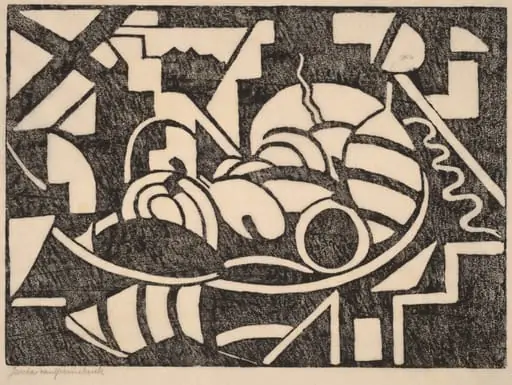
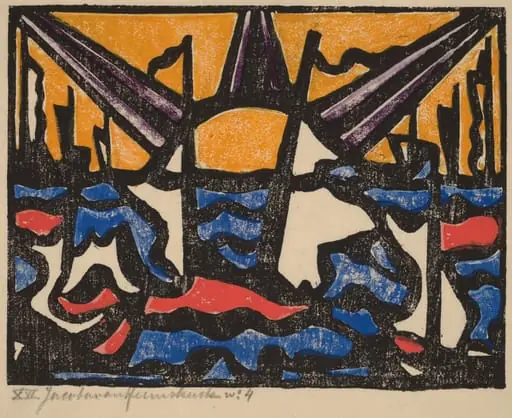
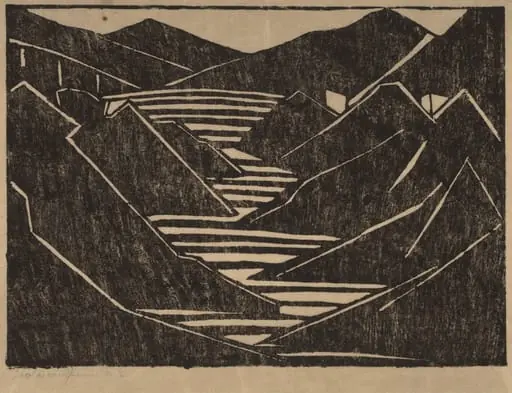
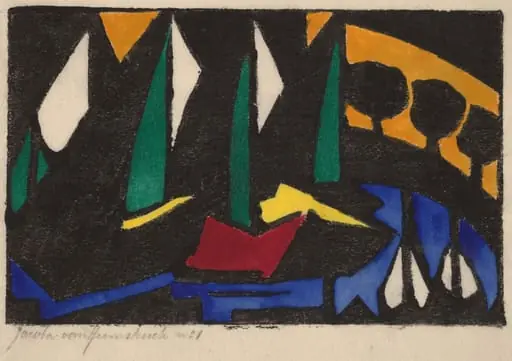
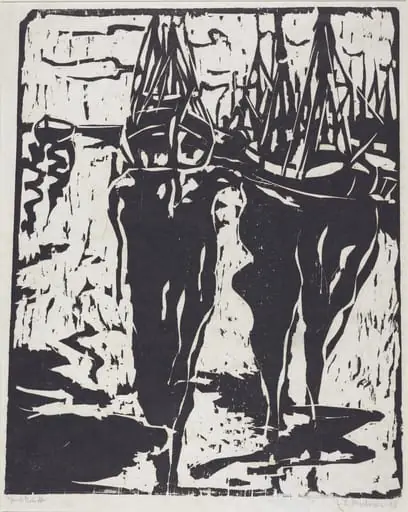
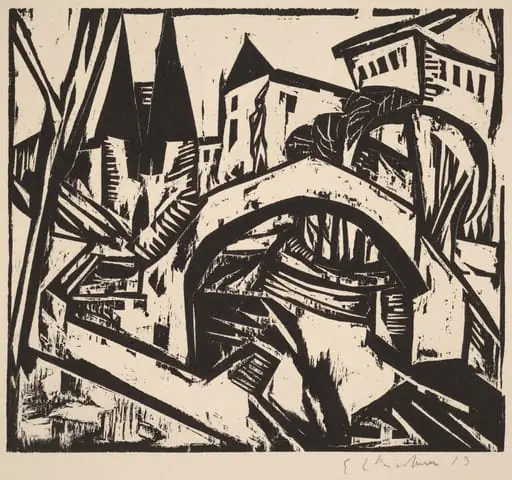
Created in 1916, this woodcut by Jacoba van Heemskerck van Beest depicts a minimalist bridge scene rendered in black ink on thin Japan paper.
Created in 1916, this woodcut by Jacoba van Heemskerck van Beest depicts a minimalist bridge scene rendered in black ink on thin Japan paper. The composition reduces form to essential lines and shapes, emphasizing flat planes and clean edges. The absence of shading and the high contrast between ink and paper give the image a graphic, almost architectural quality, characteristic of early 20th-century printmaking experiments.
Subject & Meaning
Two figures traverse a slender bridge, their simplified forms suggesting movement without detail. The bridge, rendered as a rigid, linear structure, functions as both a physical passage and a visual divider. The scene lacks narrative context or emotional cues, inviting contemplation of solitude, transit, or the relationship between human presence and constructed environments.
Technique & Style
Executed as a woodcut, the image was carved from a wooden block, with ink applied to raised surfaces before pressing onto paper. The sharp, unmodulated lines and absence of gradation reflect the medium’s inherent constraints. The artist embraced the block’s limitations, using bold, cut-out forms to create a stylized, two-dimensional space that prioritizes structure over realism.
History & Provenance
The print dates from 1916, a period when Dutch artists were exploring modernist approaches to printmaking. While little is documented about its early ownership, its preservation in Japan paper suggests an interest in fine, absorbent materials favored by printmakers of the era. The work remains part of a broader corpus of early modern Dutch woodcuts that sought formal clarity over decorative detail.
Context
Emerging during World War I, the print reflects a broader European trend toward abstraction and simplification in visual art. Artists turned to woodcut for its directness and affordability, often distancing themselves from academic traditions. Van Heemskerck van Beest’s work aligns with contemporaries who used reduced forms to express modernity, even in quiet, everyday subjects.
Legacy
This print contributes to the legacy of early 20th-century Dutch printmaking, where woodcut became a vehicle for formal innovation. Its restrained aesthetic influenced later generations interested in the intersection of craft and modernism. Though not widely exhibited, it remains a quiet example of how simplicity in technique could convey structural harmony and spatial clarity.
Own this work as a print
Artist & collection