Artwork
Italian Village Forge
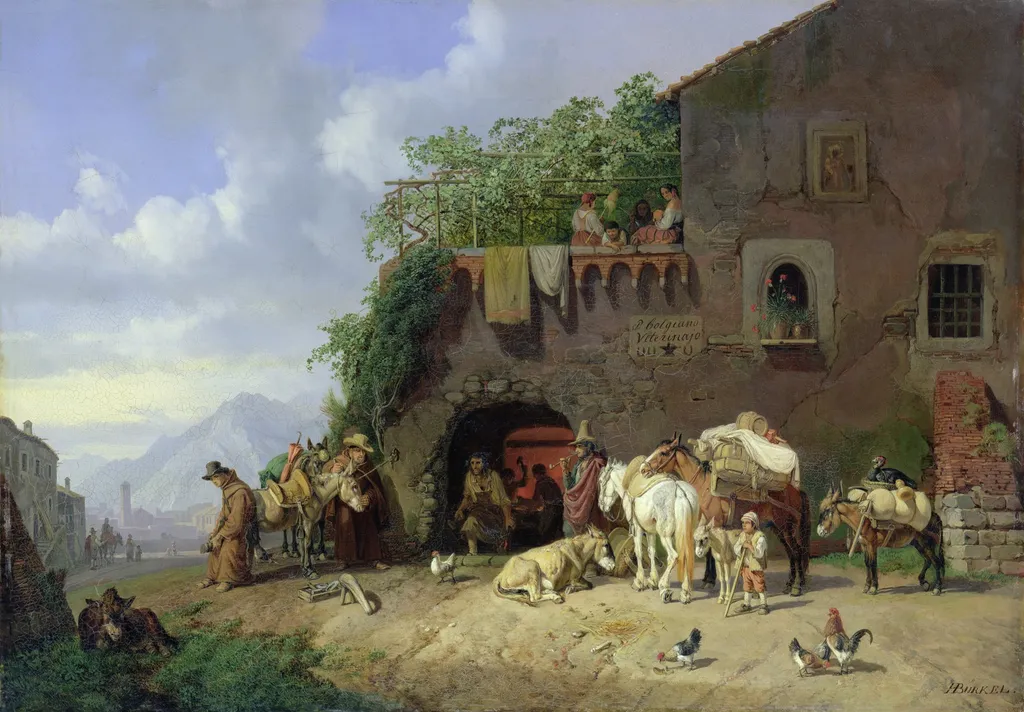
Italian Village Forge is an oil painting by the Biedermeier artist Heinrich Bürkel. It dates from 1845 and is held in the collection of the Hamburger Kunsthalle.
About this work
Overview
Heinrich Bürkel’s Italian Village Forge, painted around 1845, is an oil-on-canvas genre scene depicting rural labor in a southern Italian hamlet.
Heinrich Bürkel’s Italian Village Forge, painted around 1845, is an oil-on-canvas genre scene depicting rural labor in a southern Italian hamlet. The work captures a moment of everyday activity centered on a blacksmith’s workshop, surrounded by villagers and livestock. Its composition balances quiet motion with stillness, avoiding theatricality in favor of observed realism. The painting resides in the collection of the Hamburger Kunsthalle, where it reflects 19th-century European interest in authentic rural life.
Subject & Meaning
The painting portrays a communal forge as the heart of village life, where a blacksmith works while others observe, converse, or attend to animals. No single figure dominates; instead, the scene emphasizes collective rhythm and unspoken cooperation. The absence of overt narrative or moralizing suggests an appreciation for the dignity of labor and the quiet continuity of traditional crafts. The setting implies a self-sustaining community bound by routine and mutual reliance.
Technique & Style
Bürkel employs subtle chiaroscuro to model forms and create spatial depth, guiding the viewer’s eye from the dark interior of the forge outward toward the luminous sky. Brushwork is restrained, favoring soft transitions over sharp detail, particularly in the rendering of fabric, skin, and foliage. The palette is muted, dominated by earth tones and pale blues, reinforcing the scene’s calm, unembellished atmosphere. Light falls naturally, enhancing the sense of a real moment captured rather than staged.
History & Provenance
Painted circa 1845 during Bürkel’s time in Italy, the work reflects his engagement with local life after traveling through the peninsula. It entered the Hamburger Kunsthalle’s collection in the 19th century, likely through acquisition by a German patron or institution interested in Romantic-era genre painting. Its preservation in a major German museum underscores its recognition within Northern European art circles, even as its subject matter remained distinctly Italian.
Context
Bürkel’s painting emerged amid a broader European fascination with rural authenticity, influenced by Romanticism and early ethnographic interest in peasant life. While urban centers industrialized, artists like him turned to the countryside as a site of perceived moral and aesthetic purity. Unlike idealized pastoral scenes, this work avoids sentimentality, presenting labor as unglamorous yet integral to community survival.
Legacy
Though not widely reproduced or celebrated in mainstream art history, Italian Village Forge remains a quiet example of 19th-century genre painting that prioritized observation over drama. It contributes to a lesser-known strand of German and Austrian art that looked southward for subject matter, valuing restraint and detail over spectacle. Its continued presence in the Hamburger Kunsthalle ensures its role as a document of cross-cultural artistic exchange.
Own this work as a print
Artist & collection
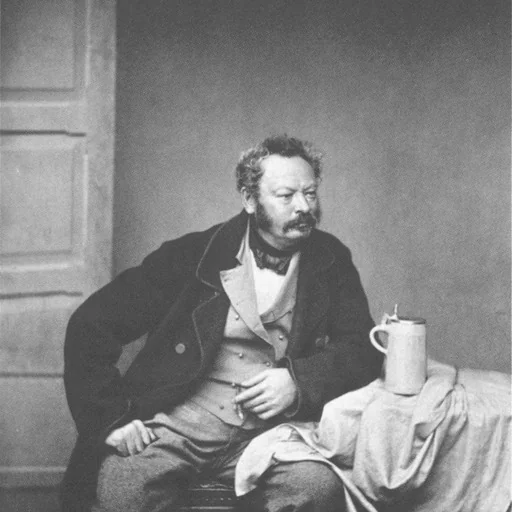

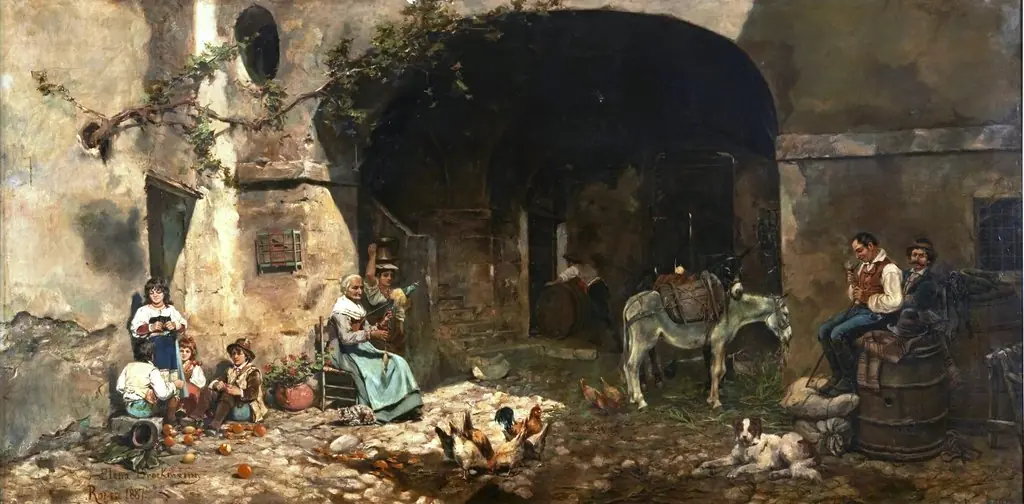 El patio de un parador
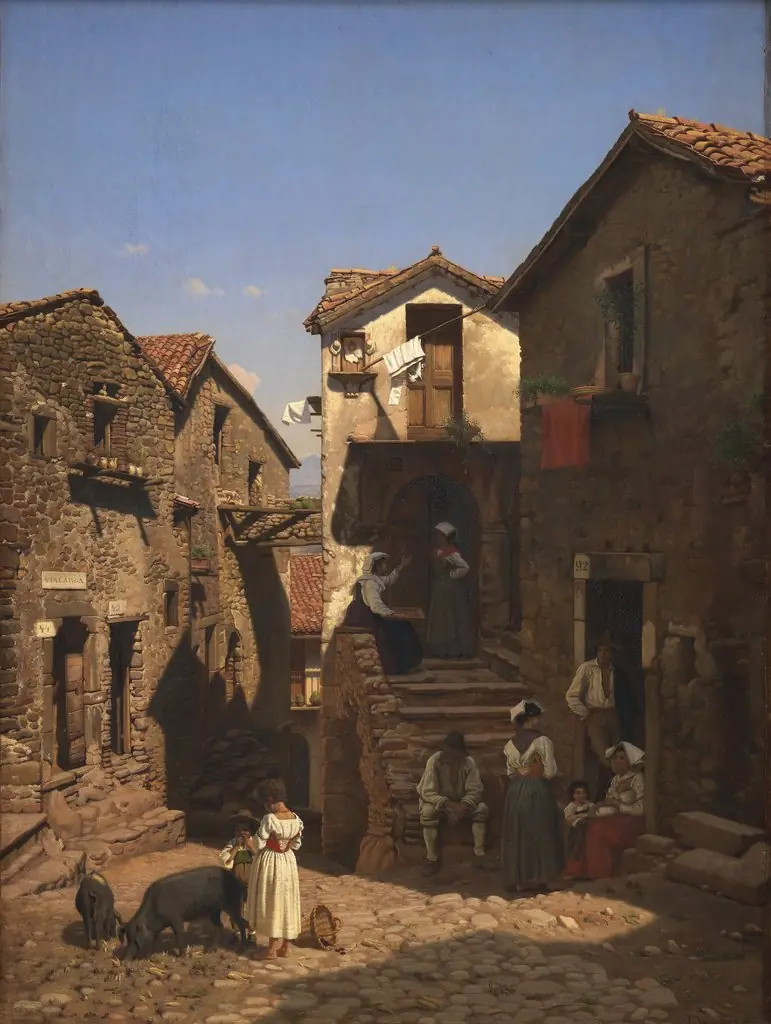 A Street in Gerano
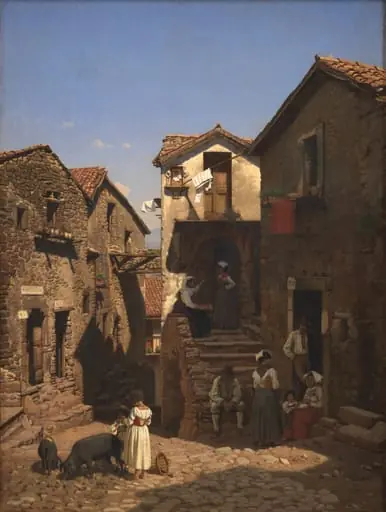 A Street in Gerano
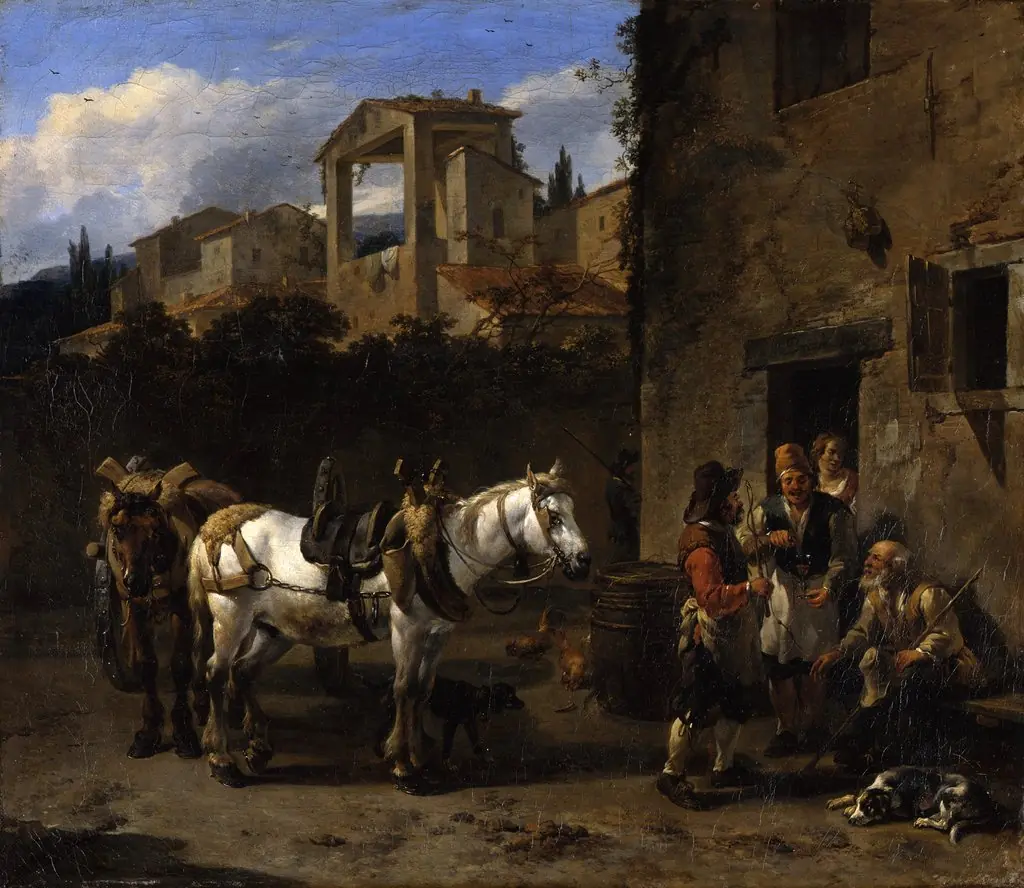 The Halt at the Inn
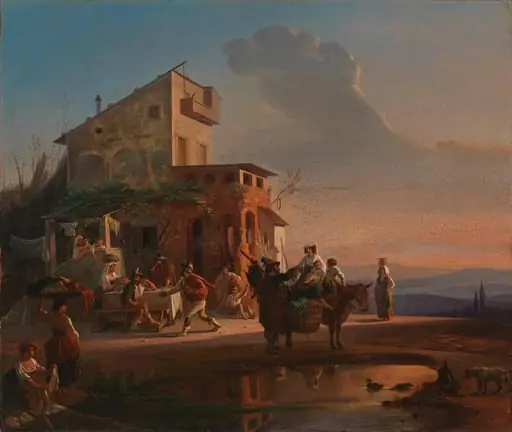 Osteria con cucina, Italialainen majatalo
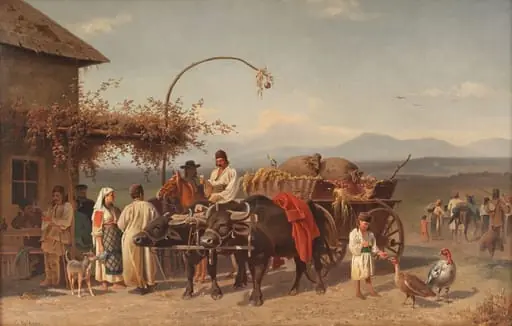 Popas
Popas Hof der Fürstenburg in Burgeis
 Die Schmiede an der Heeresstraße
 At the Capuchin Monastery in Rome
 Ved Capucinerklostret i Rom
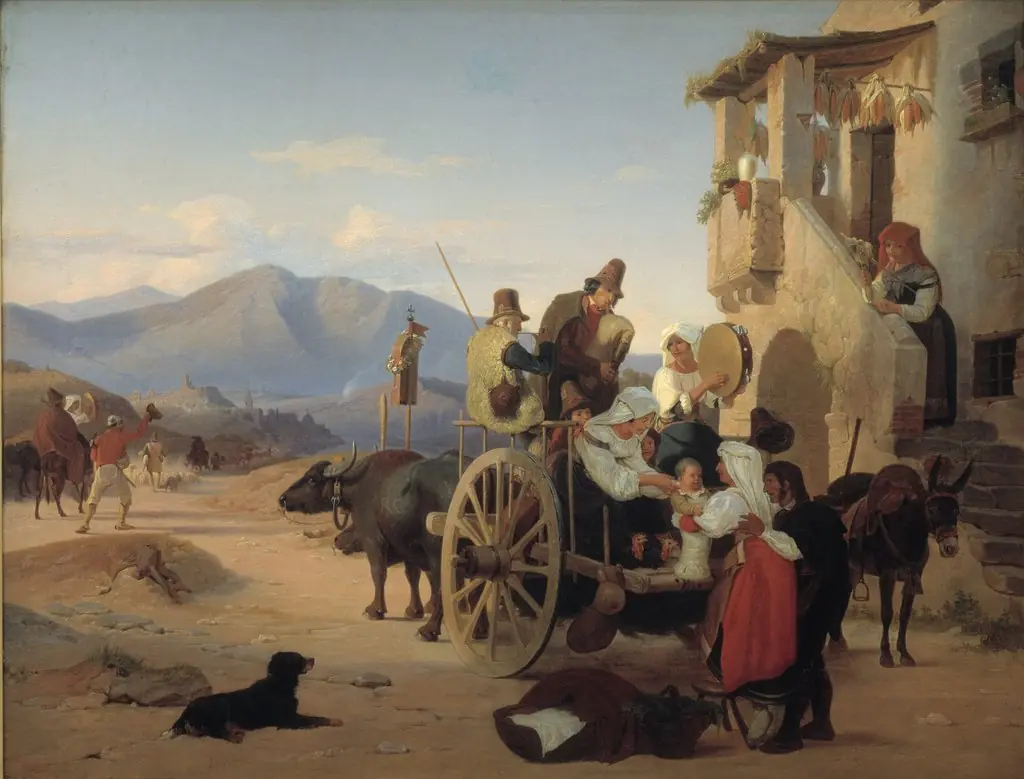 Romerske landfolk drager til marked
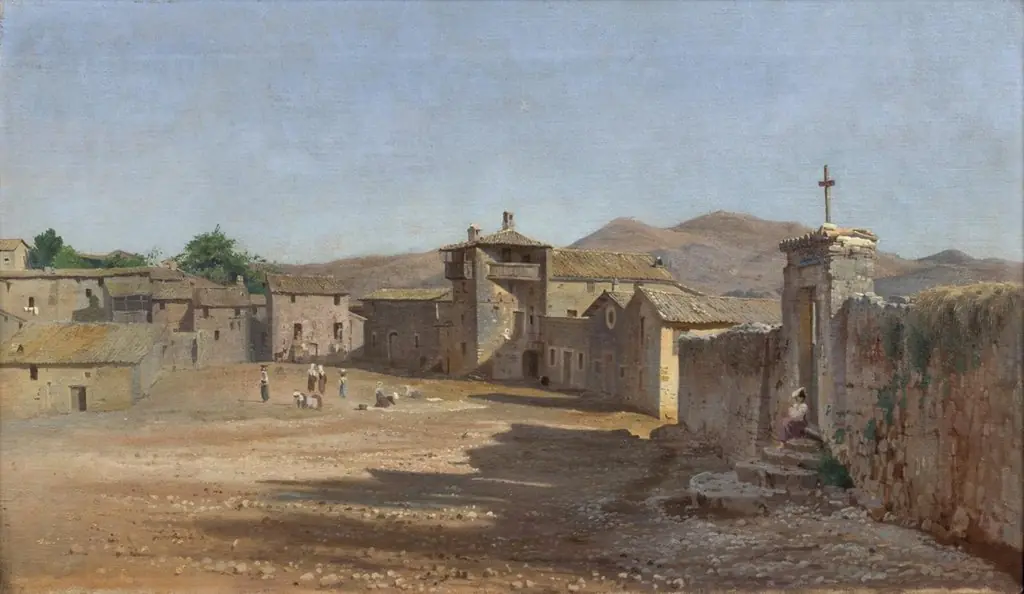 Torvet i Anticoli Corrado, Italien