Artwork
Die Schmiede an der Heeresstraße
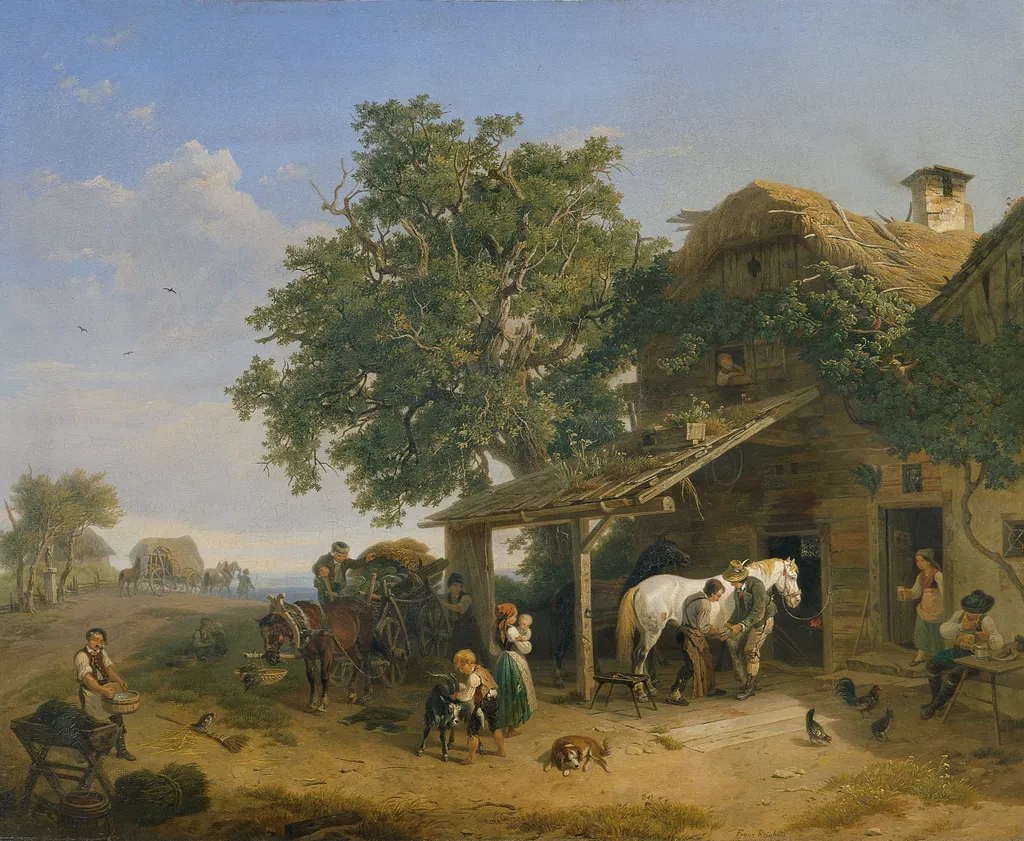
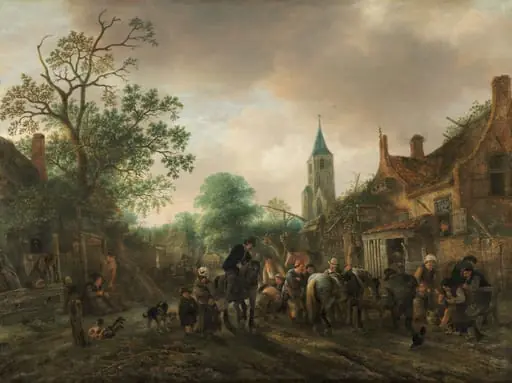
Die Schmiede an der Heeresstraße is an oil painting by the Biedermeier artist Franz Reinhold. It dates from 1852 and is held in the collection of the Kunsthistorisches Museum.
About this work
Overview
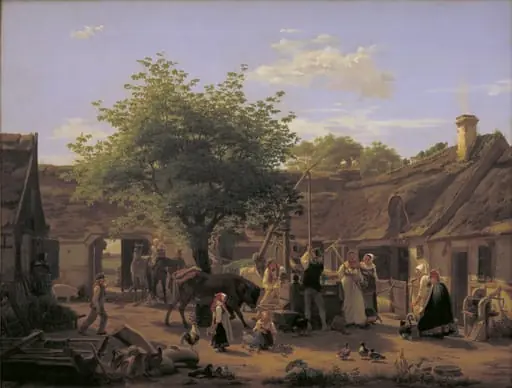
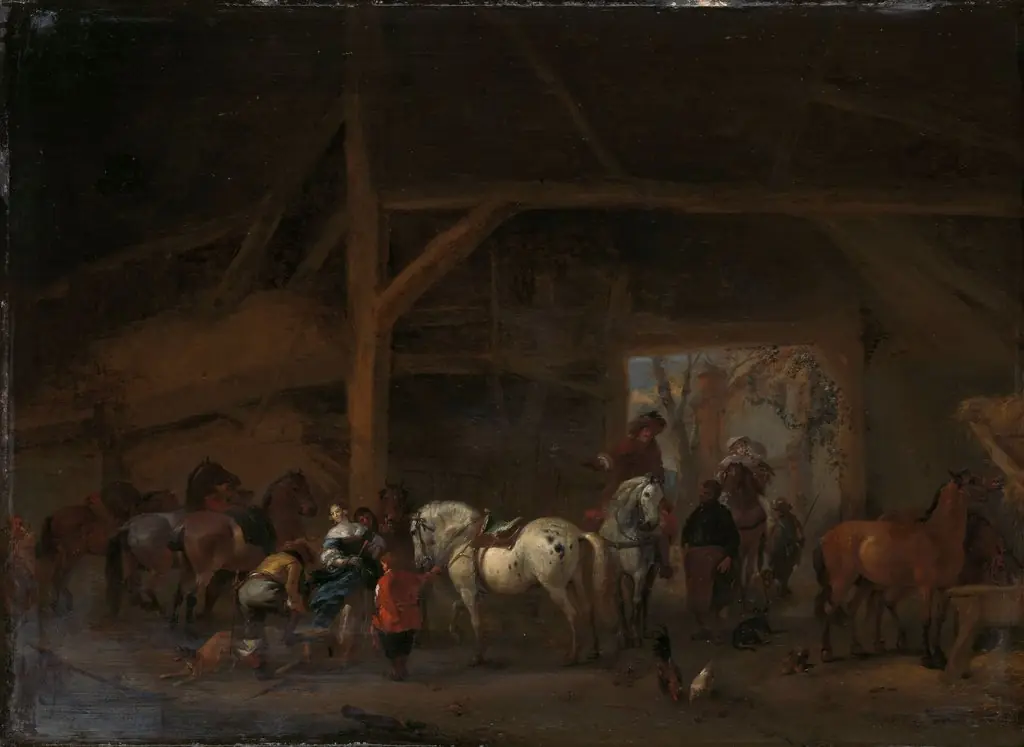
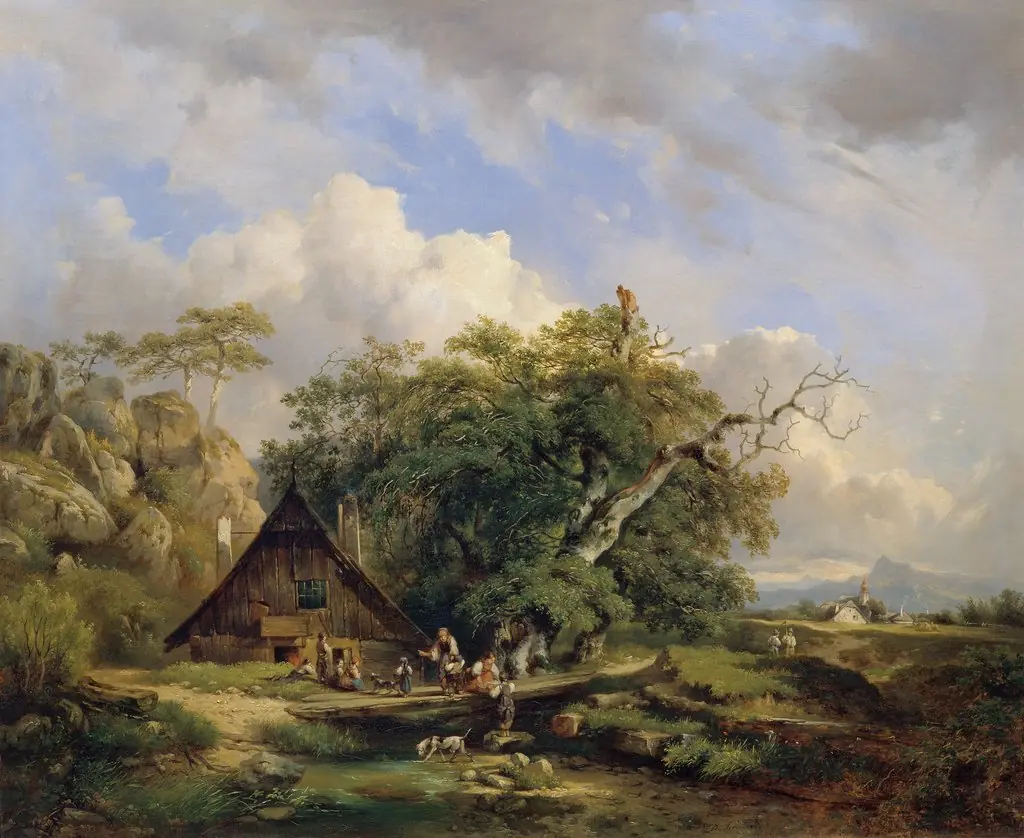
Franz Reinhold’s 1852 oil on canvas, titled Die Schmiede an der Heeresstraße, depicts a quiet rural tableau. The work is part of the permanent collection of the Kunsthistorisches Museum in Vienna, where it is displayed among other 19th‑century genre paintings.
Subject & Meaning
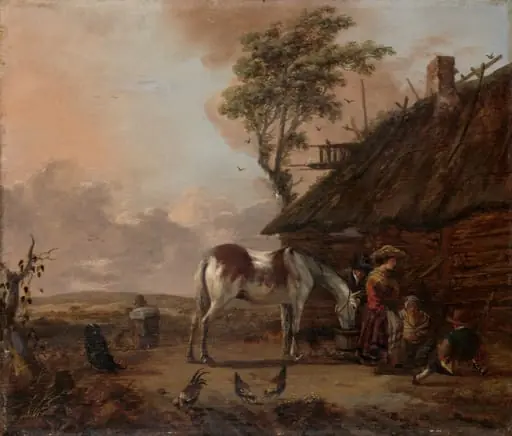
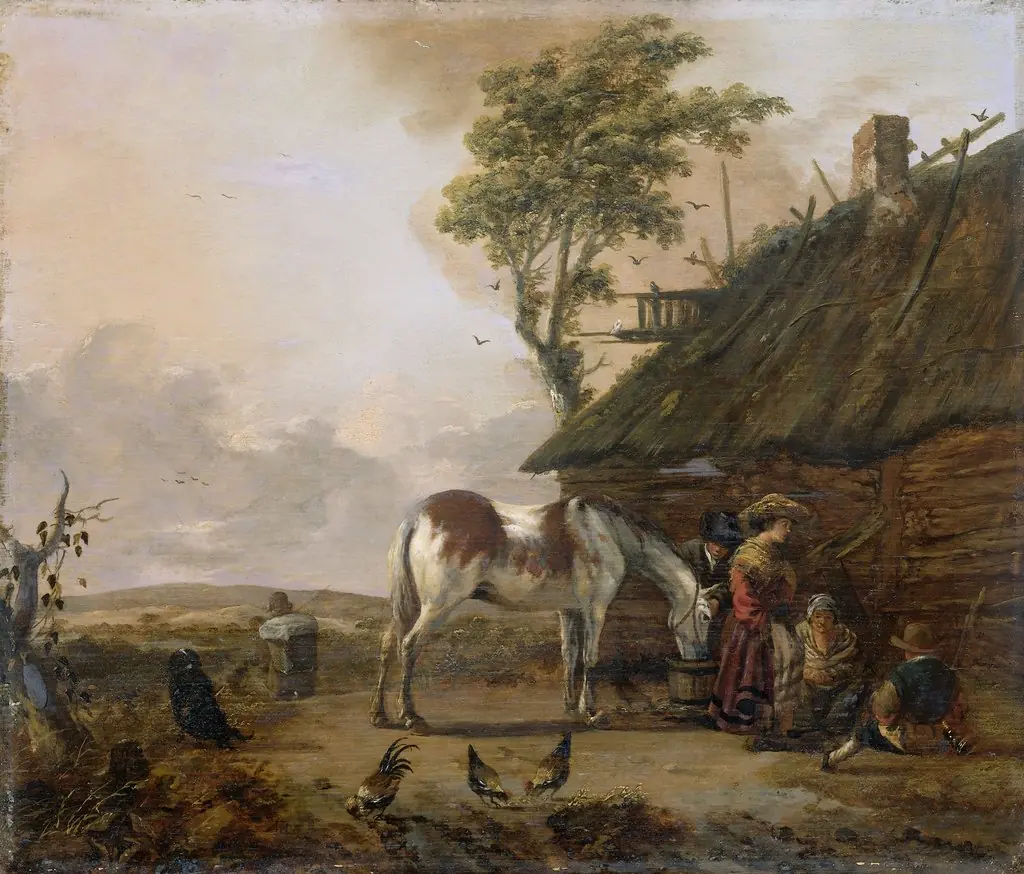
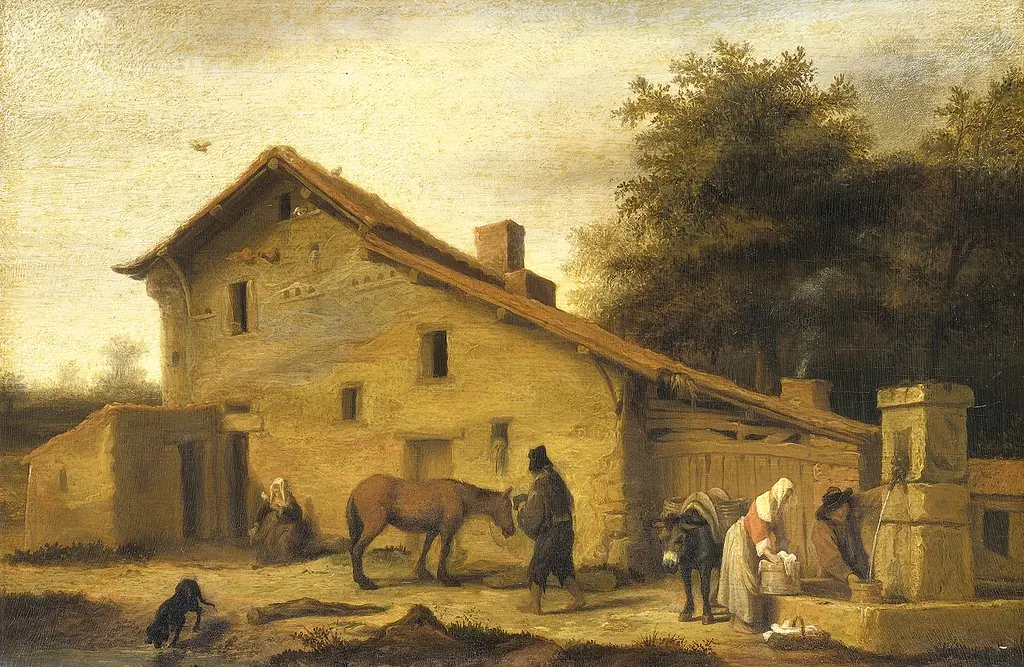
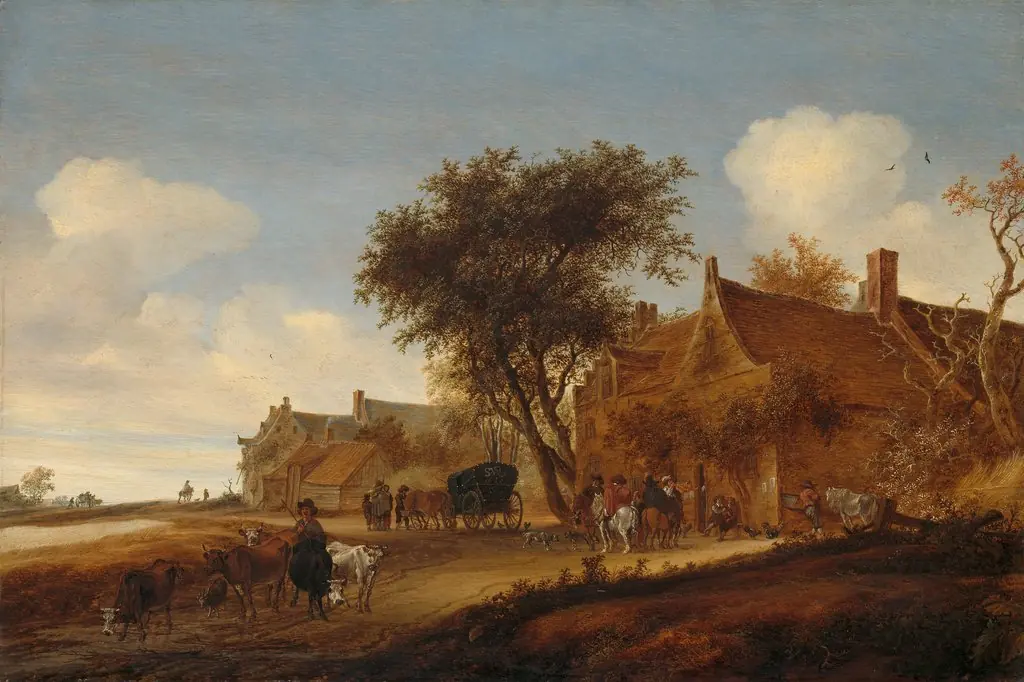
The scene unfolds outside a modest thatched building, where a group of figures and animals gather in a relaxed manner. A man tends a white horse while another sits at a table, suggesting a brief respite from labor. The composition conveys everyday life’s simple pleasures and the camaraderie of a small community.
Technique & Style
Reinhold employs a warm palette of earth tones, softened by gentle illumination that bathes the figures and structures. Careful brushwork renders the texture of the thatch, the bark of a nearby tree, and the fabrics of the clothing, creating a tactile sense of the environment while maintaining a harmonious, tranquil mood.
History & Provenance
Created in 1852, the painting entered the Kunsthistorisches Museum’s holdings during the late 19th century, reflecting the institution’s effort to acquire representative works of Austrian genre painting. Its provenance has remained stable, with no recorded changes of ownership since its acquisition.
Context
Die Schmiede an der Heeresstraße belongs to a broader tradition of mid‑19th‑century genre scenes that celebrated rural labor and domesticity. Reinhold’s focus on a forge setting aligns with contemporary interest in depicting the dignity of work and the picturesque qualities of the Austrian countryside.
Own this work as a print
Artist & collection