Artwork
Untitled
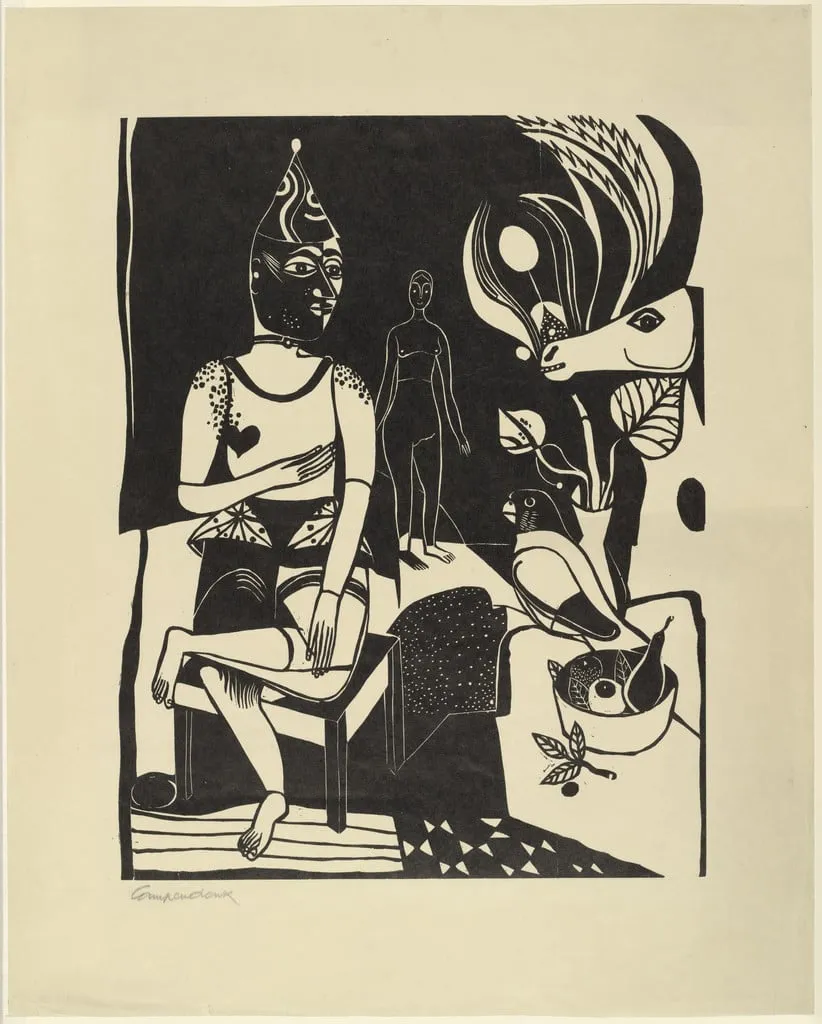
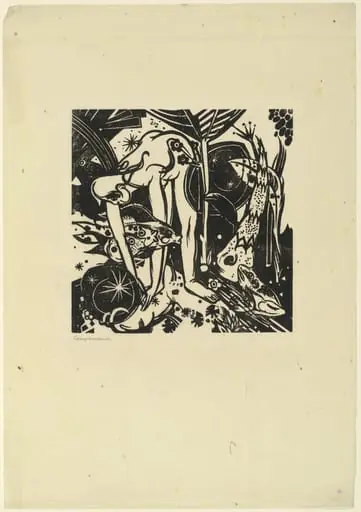
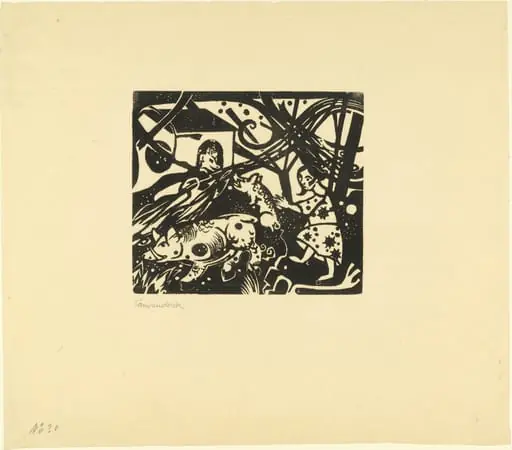
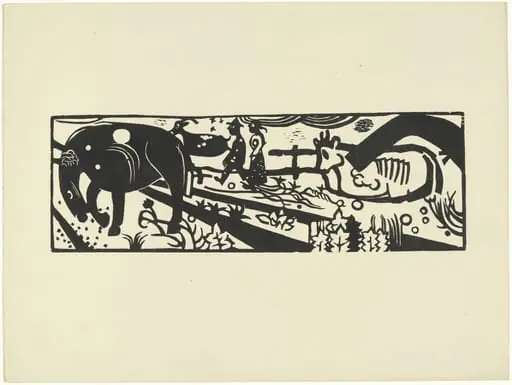
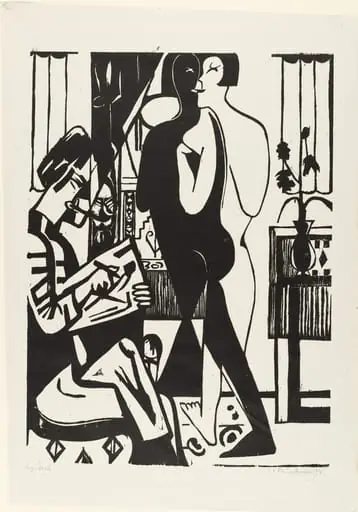
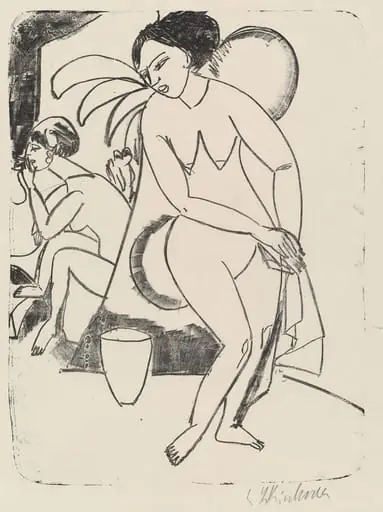
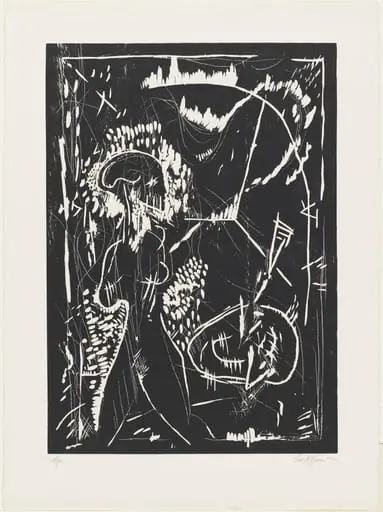
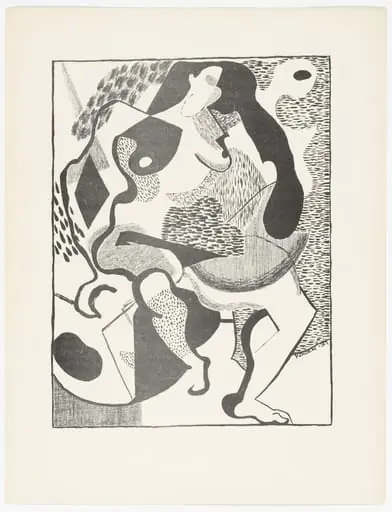
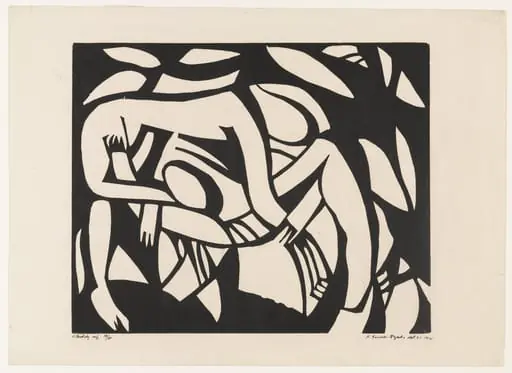
Untitled is an ink print by Heinrich Campendonk. It dates from 1922 and is held in the collection of the Museum of Modern Art.
About this work
Overview
Created in 1922, this woodcut by Heinrich Campendonk reflects his engagement with Expressionist aesthetics during his early career.
Created in 1922, this woodcut by Heinrich Campendonk reflects his engagement with Expressionist aesthetics during his early career. Though German by birth, Campendonk was active in Dutch artistic circles and later became a Dutch citizen. The print is part of The Museum of Modern Art’s collection, representing his contribution to early 20th-century printmaking. Its stark black-and-white composition and symbolic imagery distinguish it from his more colorful paintings.
Subject & Meaning
The scene presents enigmatic figures: a seated individual wearing a spiked crown and holding a staff, flanked by a standing figure confronting a peacock with a human face. A small bird rests near a basket of fruit at their feet. The fusion of human and avian traits suggests mythic or allegorical intent, evoking a dreamlike narrative. The imagery resists clear interpretation, inviting contemplation rather than literal reading.
Technique & Style
Campendonk employed the woodcut method, carving bold, linear forms into woodblock and printing in high contrast. Sharp, angular lines define the figures and textures, while simplified shapes reduce detail to essential forms. The absence of color emphasizes tonal contrast and graphic clarity. The resulting image has a stylized, almost folkloric quality, aligning with Expressionist tendencies to prioritize emotional resonance over realism.
History & Provenance
The work was produced in 1922, during a period when Campendonk was exploring printmaking alongside painting. It entered The Museum of Modern Art’s collection through established acquisition channels, likely as part of broader efforts to document European modernist prints. Its preservation reflects institutional recognition of Campendonk’s role in the interwar German-Dutch artistic exchange, though it remains less widely studied than his paintings.
Context
In the early 1920s, Campendonk was influenced by the Blue Rider group and Dutch modernism, blending symbolic content with formal experimentation. This woodcut emerges from a time when artists across Europe turned to printmaking for its accessibility and capacity for abstraction. The surreal juxtapositions in the image echo broader postwar interests in myth, psychology, and the subconscious, common in Expressionist circles.
Legacy
Though not among Campendonk’s most reproduced works, this woodcut exemplifies his distinctive synthesis of folk motifs and modernist abstraction. It contributes to the understanding of printmaking’s role in Expressionist discourse beyond painting. Its presence in MoMA’s collection ensures continued visibility, offering insight into lesser-known facets of early 20th-century German-Dutch artistic dialogue.
Artist & collection
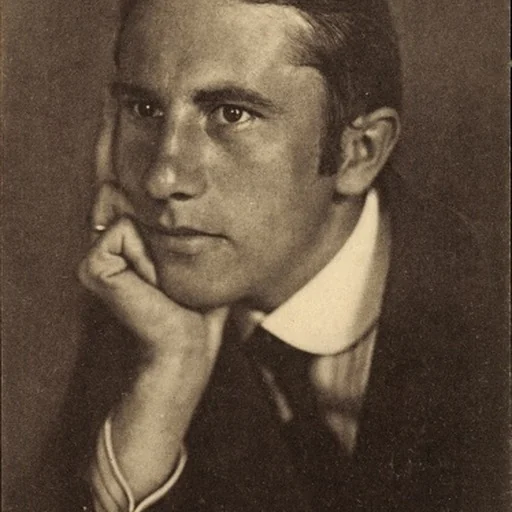
Artist
Heinrich Mathias Ernst Campendonk (3 November 1889 – 9 May 1957) was a painter and graphic designer born in Germany who became a naturalized Dutch citizen.