Artwork
A Woman Doing Laundry in an Ice Hole (recto); Two Gentlemen (verso)
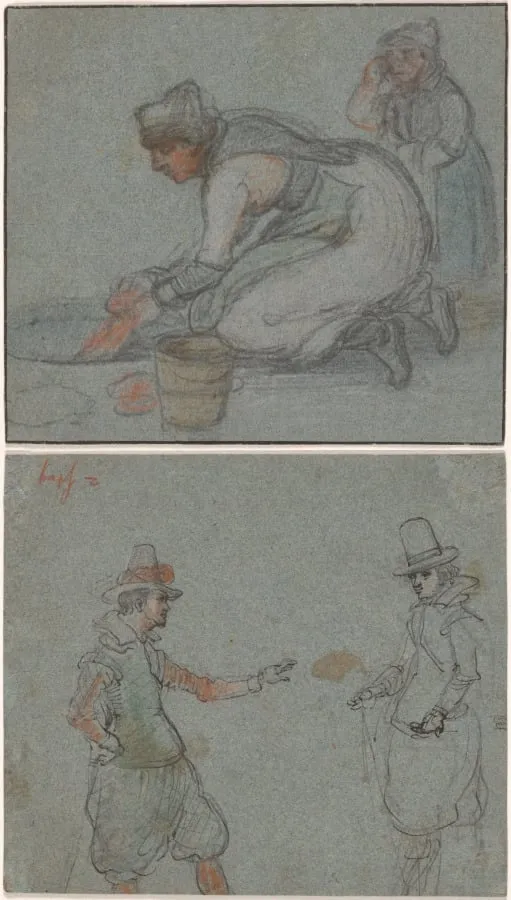
A Woman Doing Laundry in an Ice Hole (recto); Two Gentlemen (verso) is a drawing by the Baroque artist Hendrick Avercamp. It dates from 1618 and is held in the collection of the Cleveland Museum of Art.
About this work
Overview
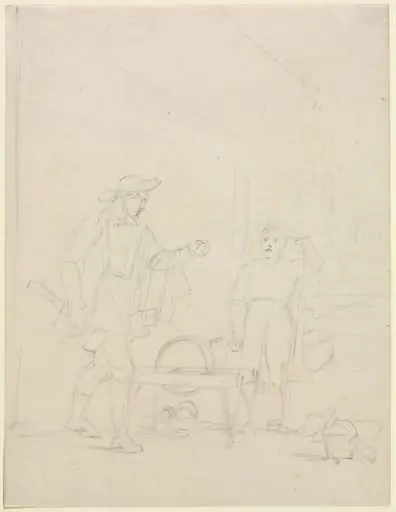
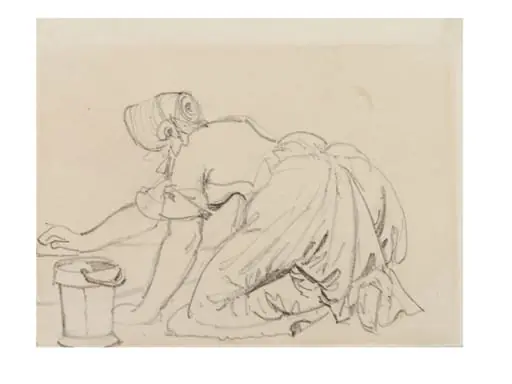
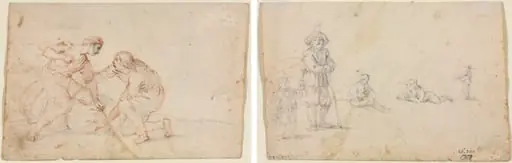
This drawing by Hendrick Avercamp features two distinct scenes on its recto and verso. The front depicts a woman engaged in laundry through an ice hole, accompanied by a child, while the back shows two elegantly dressed men socializing.
Subject & Meaning
The recto highlights everyday resilience in the face of harsh winter conditions, a common theme in Avercamp's work, showcasing how daily activities like laundry continued despite the weather. The child's tears could symbolize either physical discomfort or emotional distress.
Technique & Style
Executed in a sketchy manner, this drawing likely served as a reference for more elaborate compositions, characteristic of Avercamp's practice of maintaining sketch sheets for future reference in his workshop.
History & Provenance
Created in the 17th century, this work is typical of Avercamp's focus on winter landscapes populated by diverse social classes. The specific provenance history of this piece is not detailed here.
Context
The practice of cutting ice holes for laundry was a real necessity during Dutch winters when rivers froze, providing a glimpse into the practical adaptations of daily life in 17th-century Netherlands.
Legacy
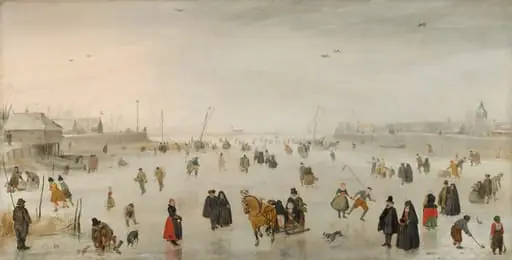
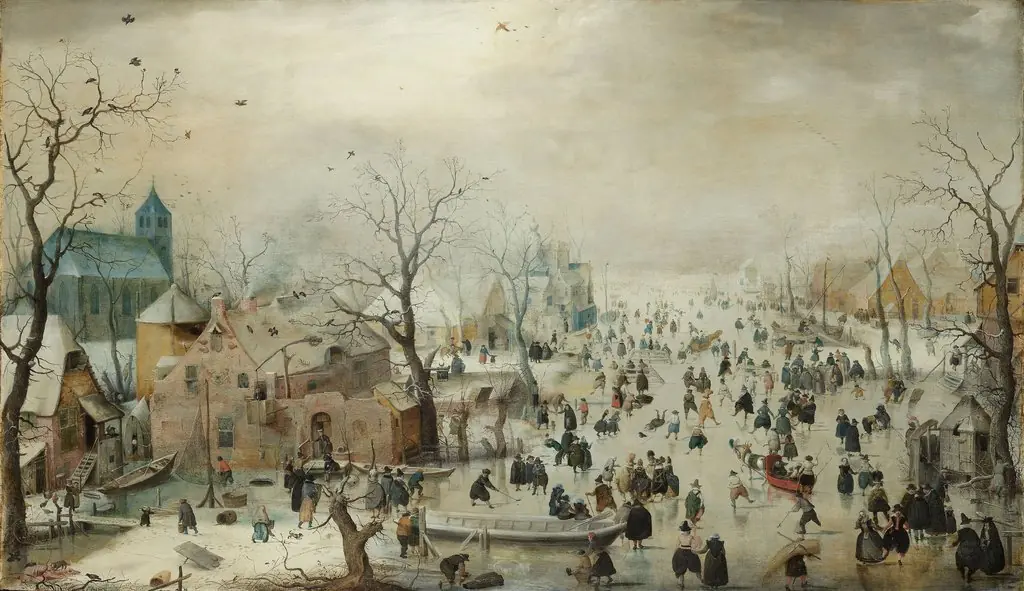
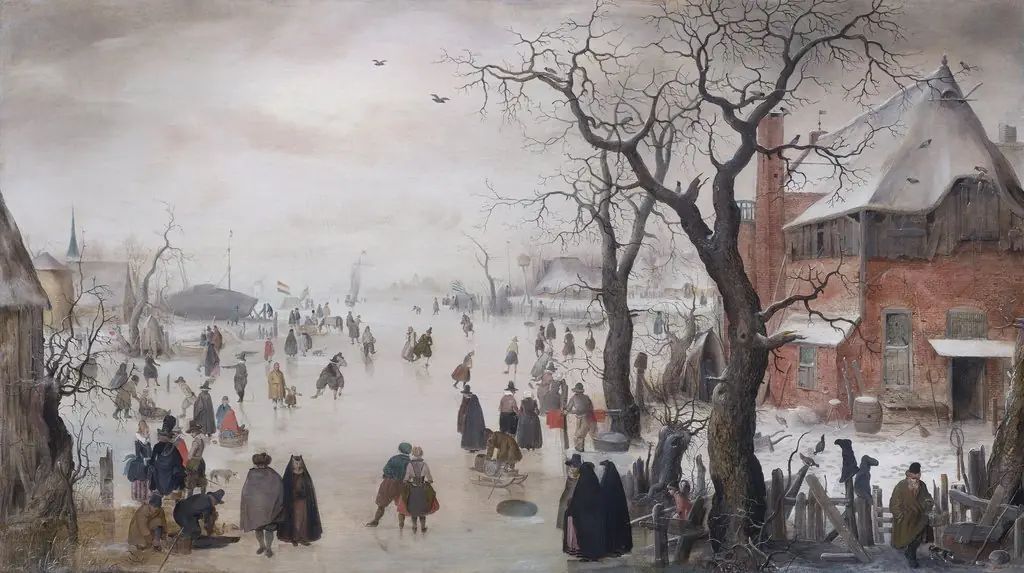
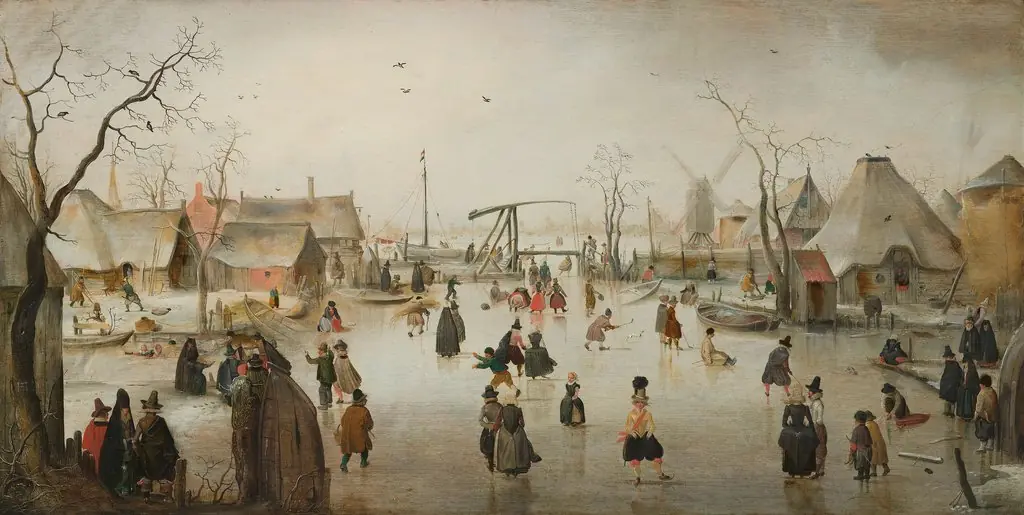
This drawing contributes to Avercamp's legacy of documenting Dutch winter life, influencing the broader tradition of capturing everyday activities in art. For similar scenes, the subject 'Netherlands winter life' offers further examples.
Artist & collection
Artist
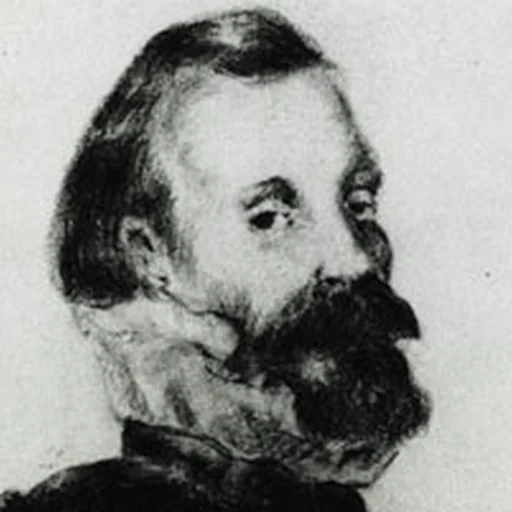
Hendrick Avercamp (January 27, 1585 (bapt.) – May 15, 1634 (buried)) was a Dutch painter during the Dutch Golden Age of painting.