Artwork
Interior of the Church of Saint Paul in Antwerp
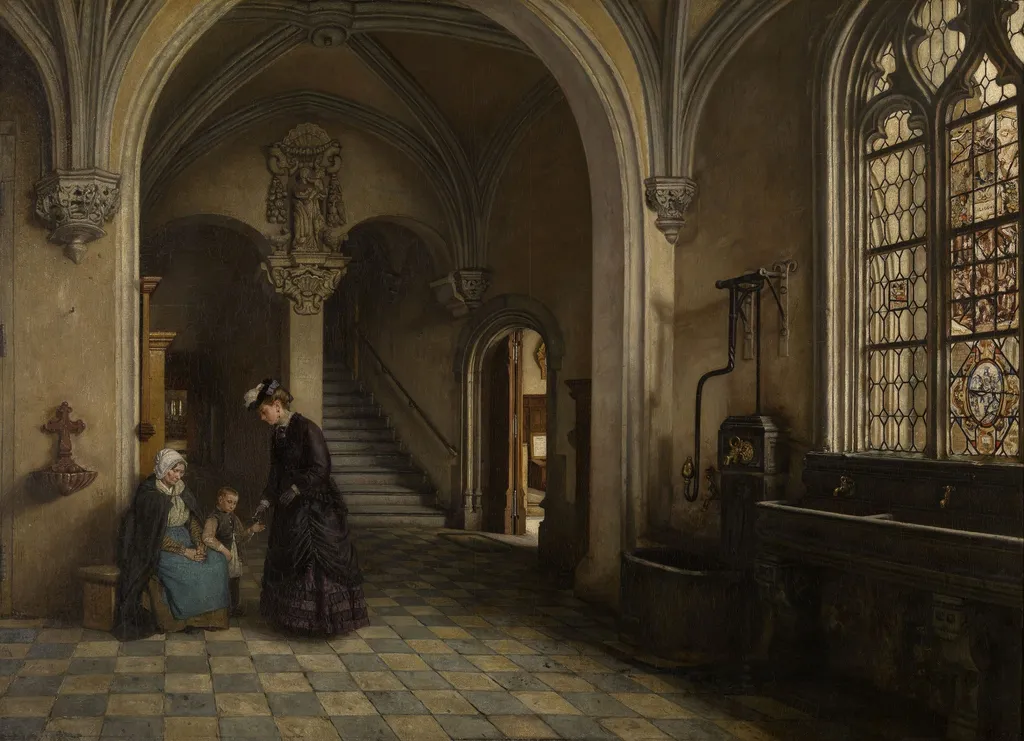
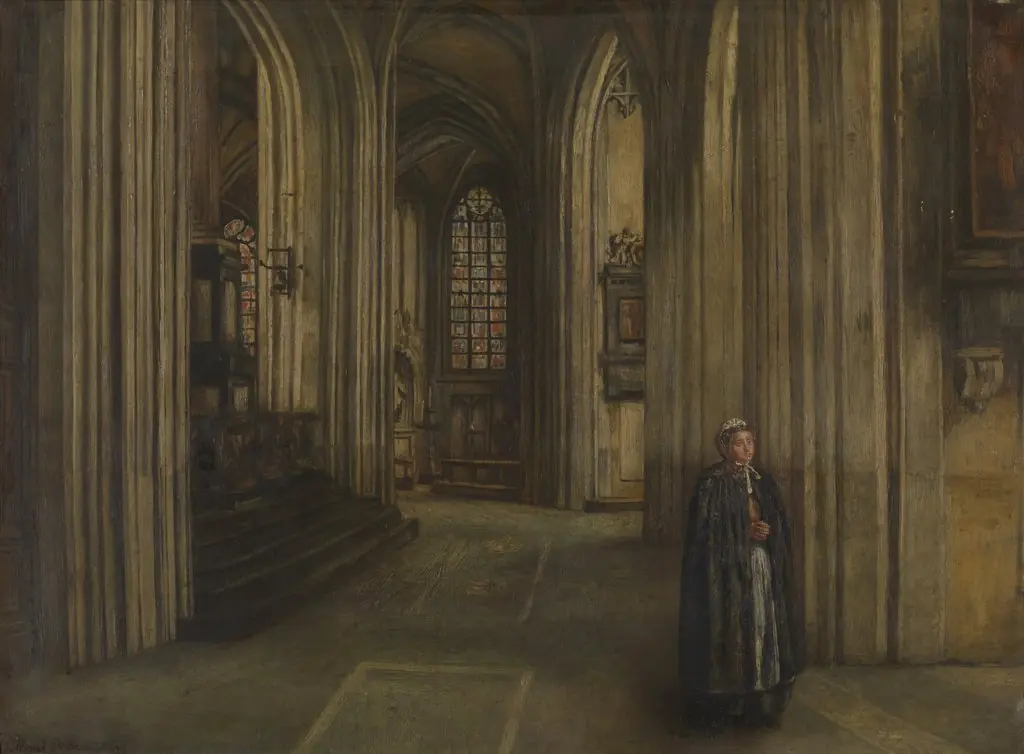
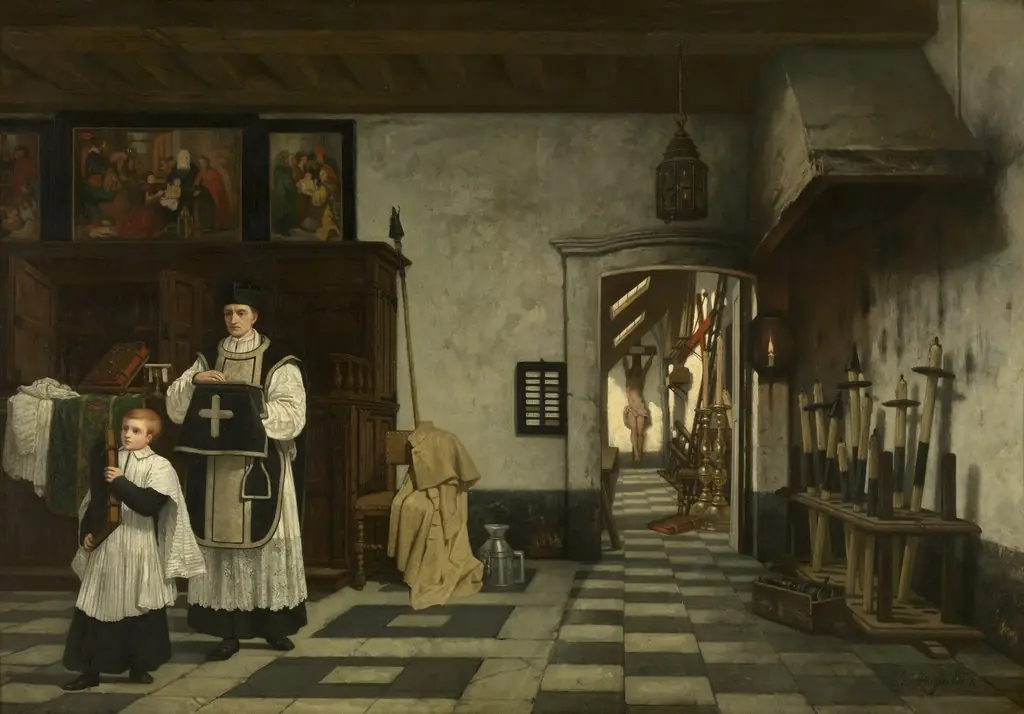
Interior of the Church of Saint Paul in Antwerp is an oil painting by the Realist artist Henri de Braekeleer. It dates from 1867 and is held in the collection of the Royal Museum of Fine Arts Antwerp.
About this work
Overview
A Belgian artist trained in the city’s artistic traditions, Braekeleer focused on intimate, observed moments rather than grand narratives.
Painted in 1867 by Henri de Braekeleer, this oil on canvas captures the interior of the Church of Saint Paul in Antwerp. A Belgian artist trained in the city’s artistic traditions, Braekeleer focused on intimate, observed moments rather than grand narratives. The work reflects his commitment to realism, emphasizing quiet human presence within an architectural setting. It is part of the collection at the Royal Museum of Fine Arts Antwerp.
Subject & Meaning
A central figure, dressed in dark attire, stands amid three other individuals—two women and a child—on a stone bench. The group is engaged in a subdued, unspoken exchange, suggesting private reflection or prayer. No overt religious symbols dominate; instead, the scene conveys stillness and personal devotion. The figures are integrated into the space, their stillness enhancing the sense of reverence without melodrama.
Technique & Style
Braekeleer employed precise brushwork to render the church’s stone surfaces, carved details, and the soft diffusion of light through stained glass. The palette is muted, dominated by grays, browns, and the faint glow of colored glass. Light falls naturally, modeling forms without theatrical contrast. The composition directs attention to the central figure while preserving the architectural depth, characteristic of his observational approach to interior spaces.
History & Provenance
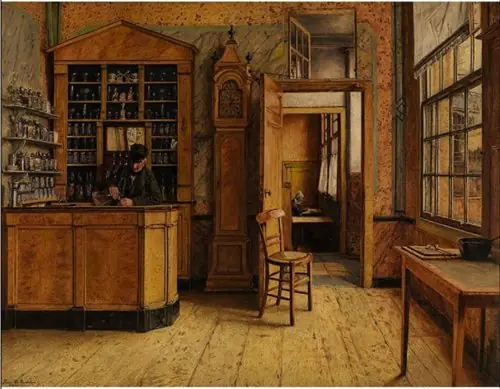
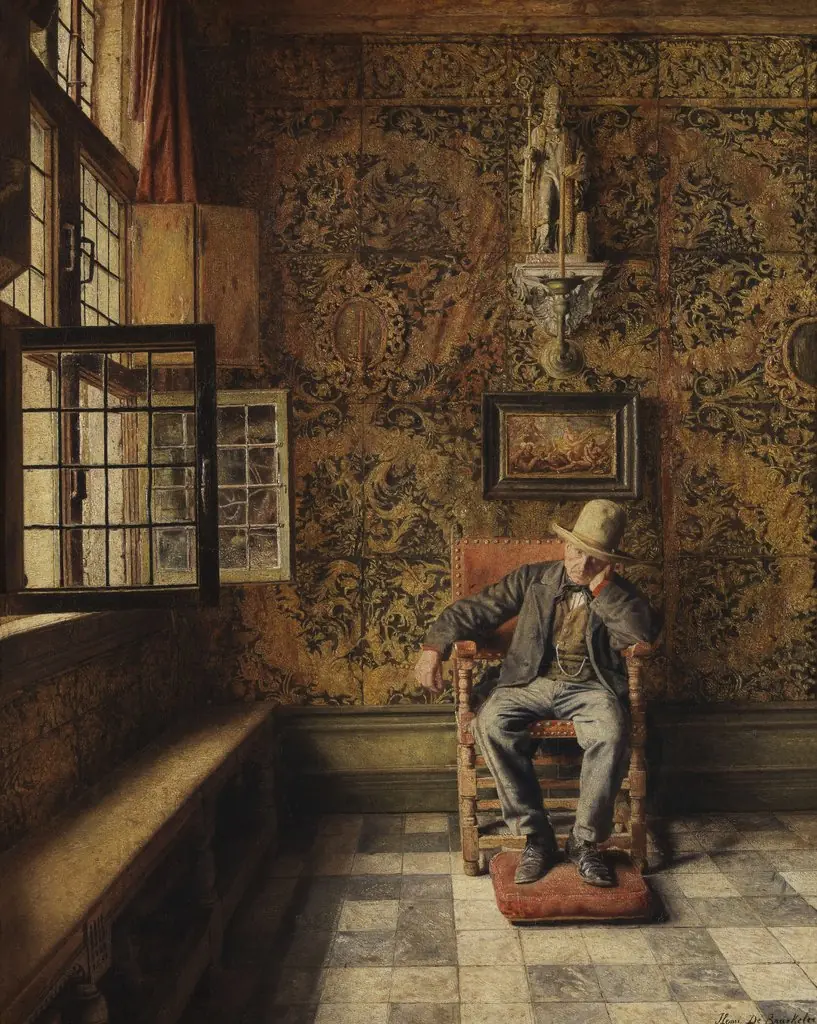
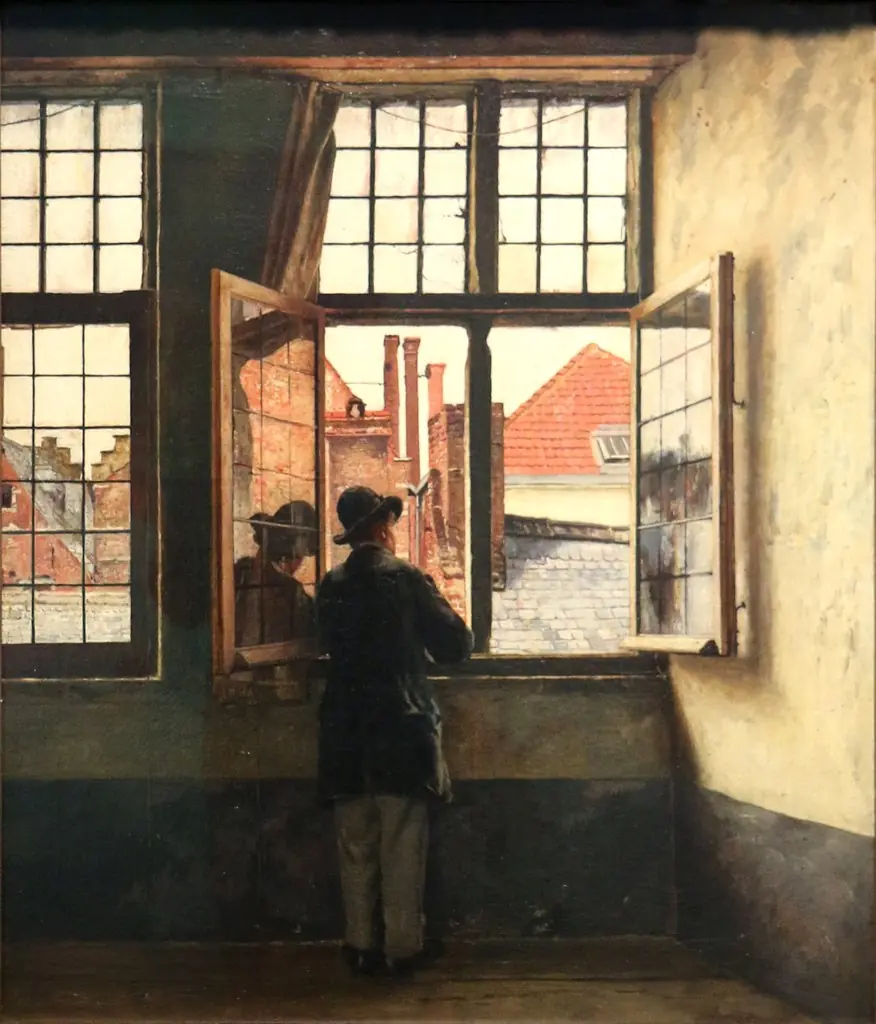
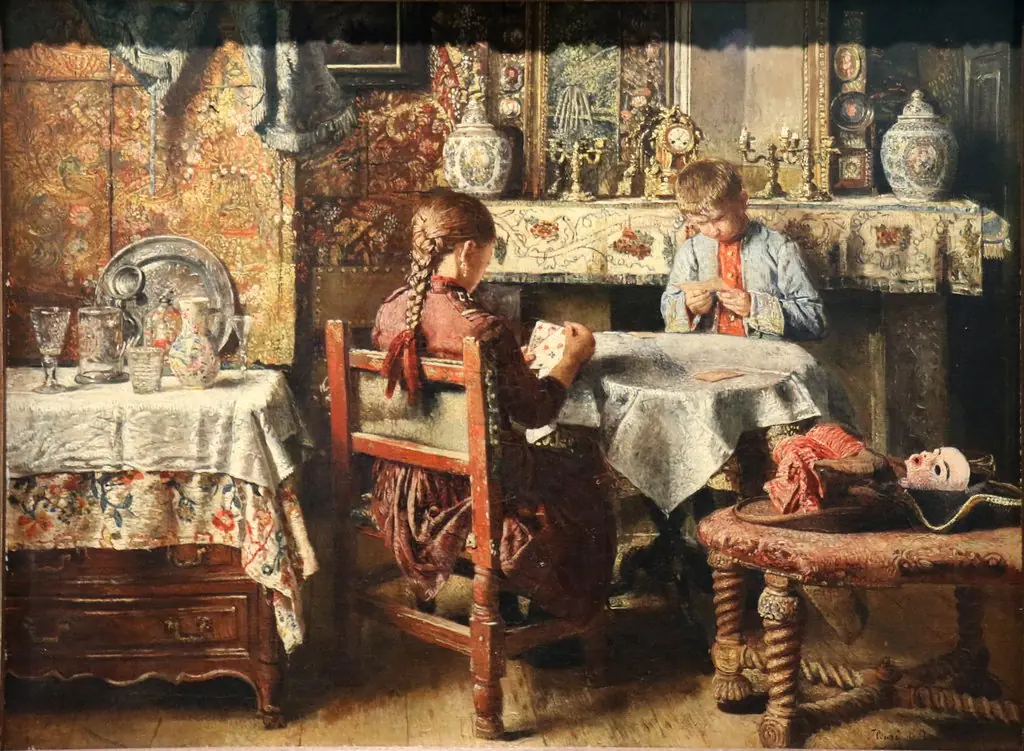
Henri de Braekeleer, born in Antwerp in 1818, trained under his father and uncle, both established painters. He exhibited regularly from 1858 onward, gaining recognition for his depictions of domestic and ecclesiastical interiors. This painting was completed in 1867 and entered the collection of the Royal Museum of Fine Arts Antwerp, where it remains today as part of the city’s 19th-century artistic heritage.
Context
In mid-19th-century Belgium, realism emerged as a response to romantic idealism, favoring everyday scenes rendered with accuracy. Braekeleer’s work aligns with this trend, focusing on ordinary moments within sacred spaces. Unlike grand historical or religious paintings, his interiors emphasize atmosphere and quietude, reflecting broader cultural shifts toward introspection and secular observation in art.
Legacy
Though not widely known beyond Belgium, Braekeleer’s interiors are regarded as refined examples of regional realism. His careful attention to light, texture, and human presence influenced later Belgian painters interested in intimate, non-dramatic subjects. This painting endures as a quiet testament to the spiritual and architectural character of Antwerp’s churches during a period of social and artistic change.
Own this work as a print
Artist & collection
Artist
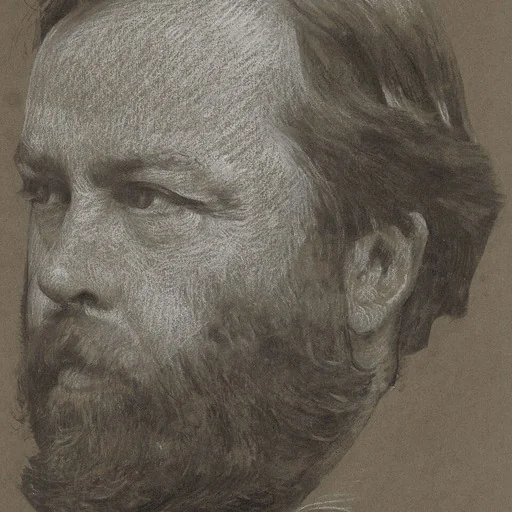
Henri Jean Augustin de Braekeleer (11 June 1840 – 20 July 1888) was a Belgian painter.