Artwork
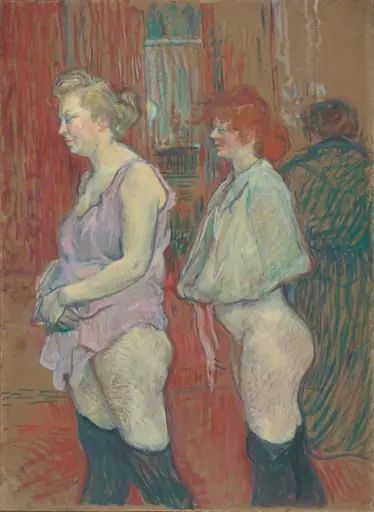
At the Moulin Rouge: La Goulue and Her Sister
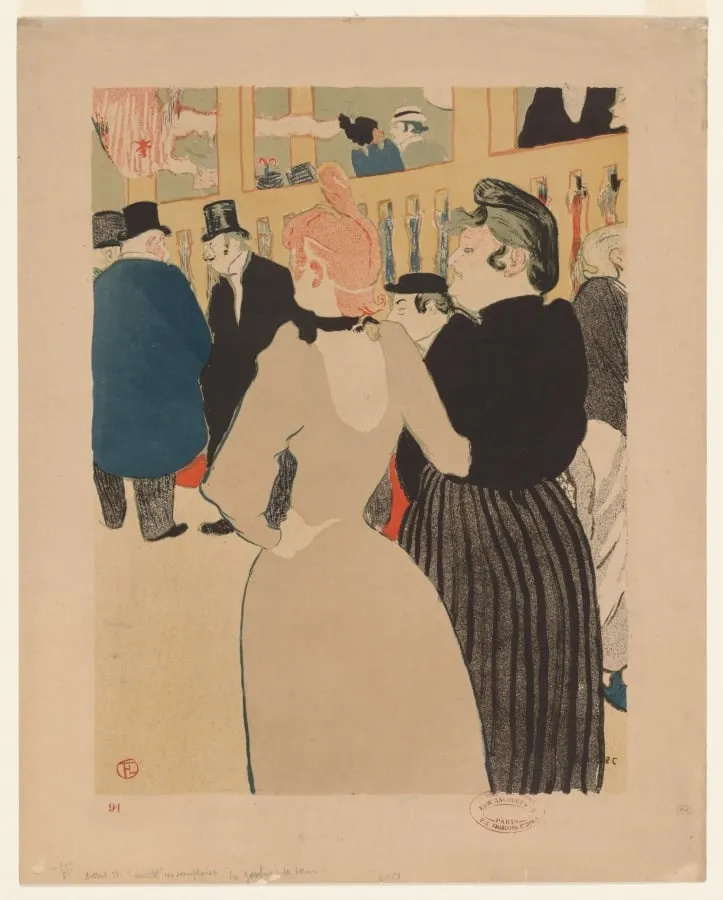
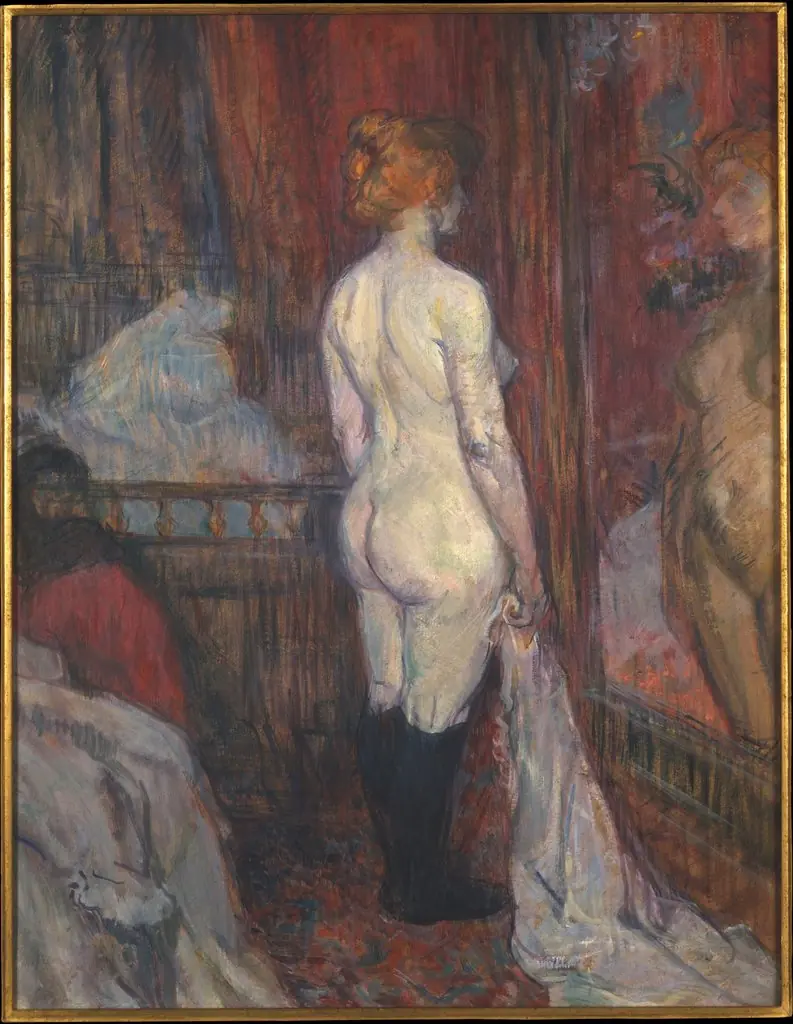
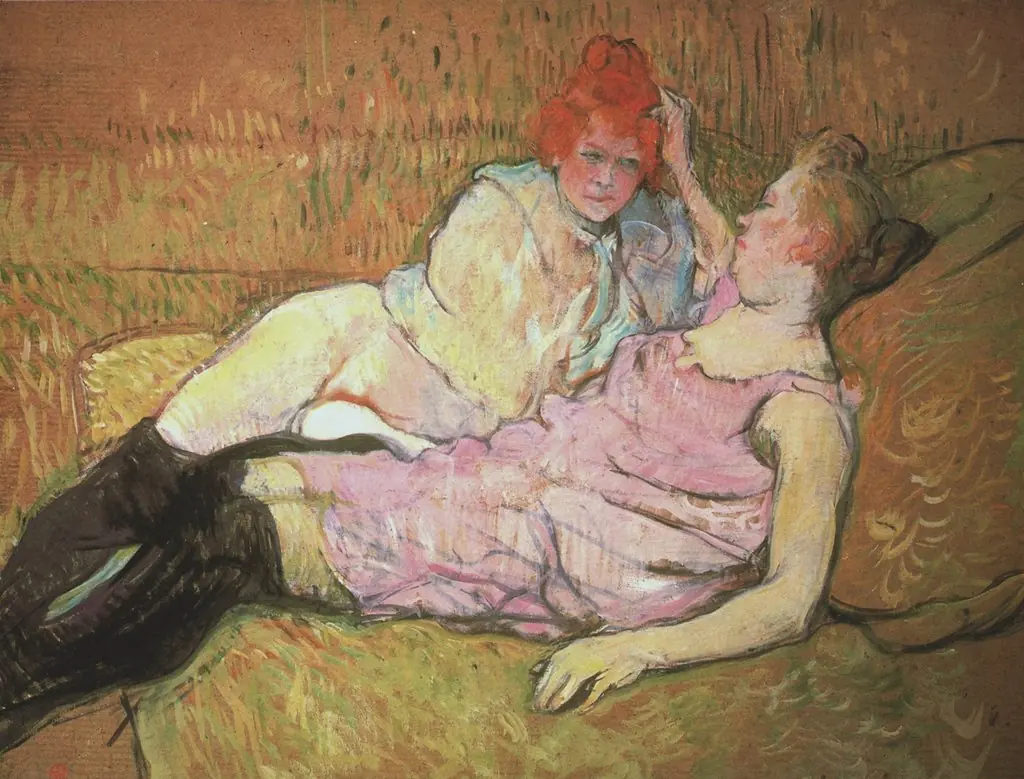
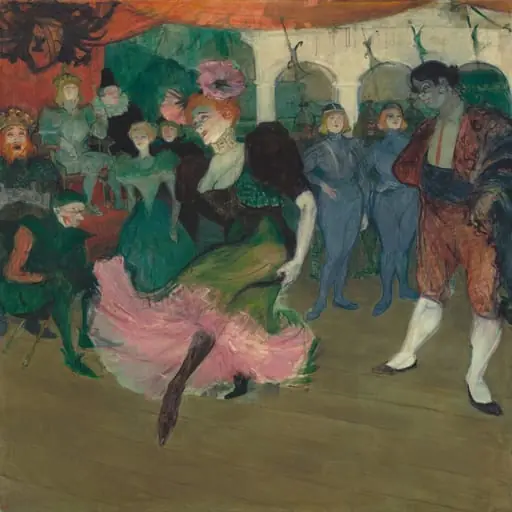
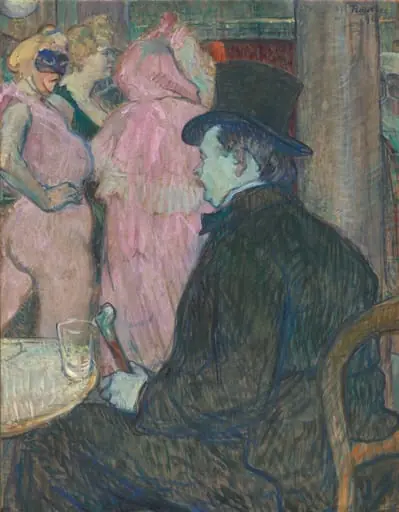
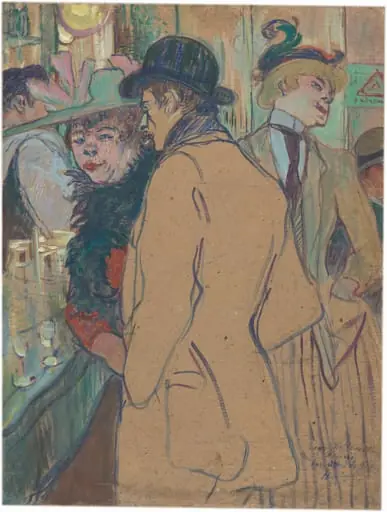
At the Moulin Rouge: La Goulue and Her Sister is a print by the Impressionist artist Henri de Toulouse-Lautrec. It dates from 1892 and is held in the collection of the Cleveland Museum of Art.
About this work
Overview
The work is part of a series documenting performers and patrons, rendered with a distinctive graphic style that blends observation with stylized form.
Created in 1892, this lithograph by Henri de Toulouse-Lautrec captures a moment inside the Moulin Rouge, a popular Parisian cabaret. As a member of the French aristocracy who chose to immerse himself in the city’s underground entertainment scene, Toulouse-Lautrec used printmaking to reach a broad audience. The work is part of a series documenting performers and patrons, rendered with a distinctive graphic style that blends observation with stylized form.
Subject & Meaning
The central figures are La Goulue, a celebrated can-can dancer, and her sister, positioned in a moment of quiet intimacy amid the chaos. La Goulue grips her sibling’s head, a gesture both protective and performative. Around them, male spectators in formal attire observe passively, their faces rendered as anonymous silhouettes. The scene reflects the blurred boundaries between spectacle and solitude in nightlife, where personal connections form briefly within crowded, artificial environments.
Technique & Style
Toulouse-Lautrec employed lithography to achieve sharp, flat planes of color and strong outlines, rejecting traditional modeling in favor of graphic clarity. He simplified facial features and bodily forms into angular shapes, evoking the immediacy of a fleeting glance. The palette—dominated by black, crimson, and cobalt blue—enhances the theatrical atmosphere. The composition’s crowded, off-center framing mimics the visual overload of a live performance, emphasizing motion over detail.
History & Provenance
The print was produced as a poster to advertise the Moulin Rouge’s performances, distributed widely across Paris. It was among the first artworks to treat nightlife as a legitimate subject for fine art printing. Originally intended for public display, it later entered private collections and museum holdings, recognized for its role in elevating commercial printmaking to the status of fine art. Its survival in multiple impressions reflects its early popularity and cultural resonance.
Context
In the 1890s, Paris saw a boom in cabarets and music halls as working-class entertainment flourished. Toulouse-Lautrec, frequenting these venues, documented their inhabitants with empathy rather than moral judgment. His work emerged alongside advancements in lithographic printing, allowing artists to bypass academic institutions and reach the public directly. This print reflects a broader cultural shift toward valuing urban experience and the lives of performers as worthy of artistic attention.
Legacy
This print helped redefine the boundaries of modern graphic design and influenced later movements such as Expressionism and poster art. Toulouse-Lautrec’s ability to convey psychological depth within stylized forms set a precedent for artists exploring urban alienation and identity. The work remains a touchstone for understanding how commercial media and fine art intersected in the late 19th century, shaping how modern audiences perceive public spectacle.
Artist & collection
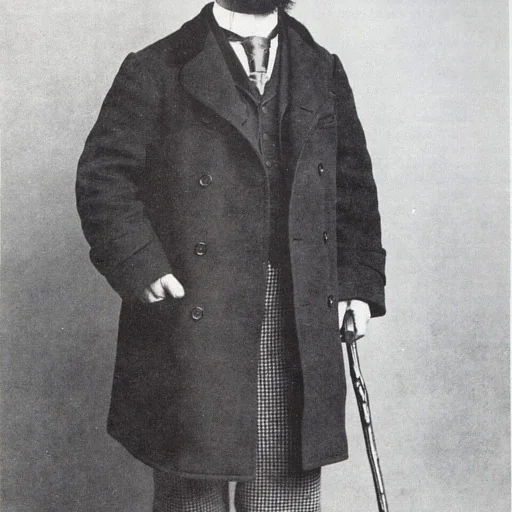
Artist
Comte Henri Marie Raymond de Toulouse-Lautrec-Montfa (24 November 1864 – 9 September 1901), known as Toulouse-Lautrec (French: ), was a French painter, printmaker, draughtsman, caricaturist, and illustrator.