Artwork
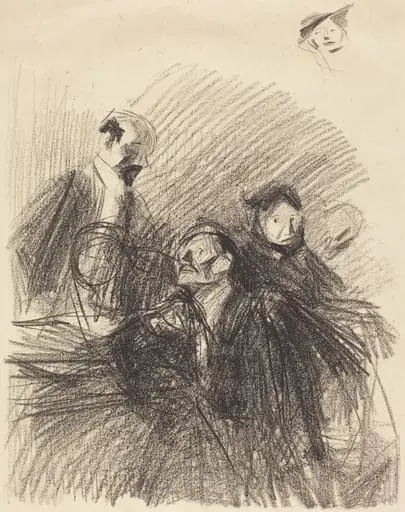
Au pied du Sinaï: Arrestation de Schlomé Fuss
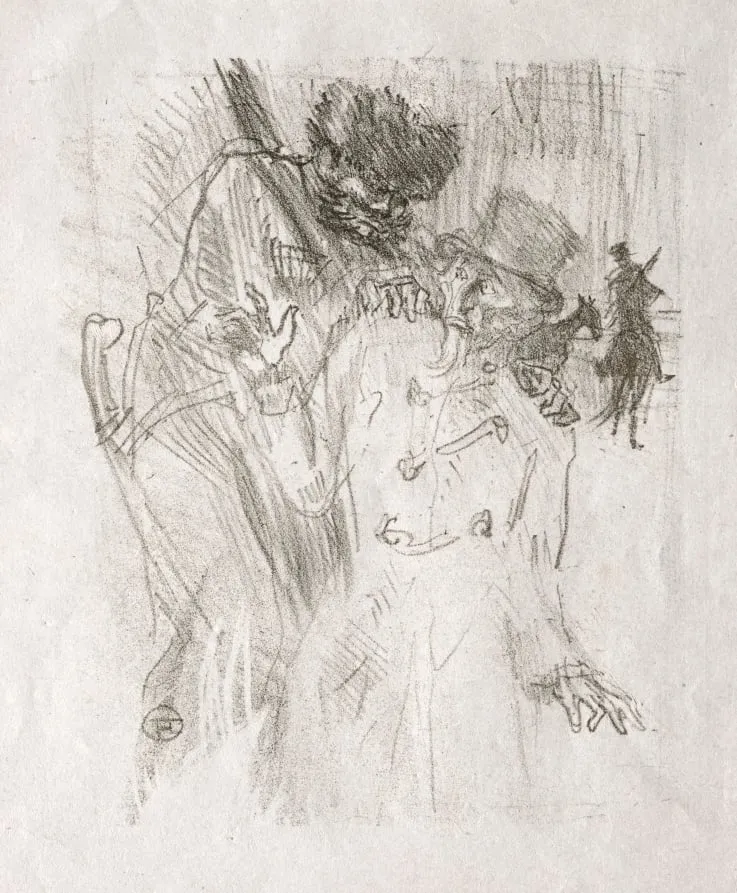
Au pied du Sinaï: Arrestation de Schlomé Fuss is a print by the Impressionist artist Henri de Toulouse-Lautrec. It dates from 1898 and is held in the collection of the Cleveland Museum of Art.
About this work
Overview
Henri de Toulouse-Lautrec’s 1898 lithograph *Au pied du Sinaï: Arrestation de Schlomé Fuss* captures a fleeting moment from the nocturnal world of Paris. Rendered in quick, sketch‑like lines, the image presents two men in a tense encounter, their worn clothing and hurried gestures suggesting a scene drawn from the city’s less polished venues.
Subject & Meaning
The work portrays an arrest‑type confrontation, likely staged within the theatrical or cabaret milieu that fascinated Toulouse‑Lautrec. By focusing on figures on the margins of society—such as performers, prostitutes, and street‑wise characters—the print comments on the gritty undercurrents of late‑19th‑century Parisian life.
Technique & Style
Executed as a lithograph, the piece relies on spontaneous, uneven strokes that convey movement rather than finish. The artist deliberately left lines rough and the background vague, allowing the viewer to sense the immediacy of the scene without detailed setting, a hallmark of Toulouse‑Lautrec’s blend of caricature and observational drawing.
Context
Created during a prolific period when the painter produced a series of prints exploring Paris’s bohemian nightlife, the lithograph reflects his personal outsider status—shaped by a childhood injury that left him physically diminished. This perspective informed his empathy for society’s fringe, and the work circulated among collectors of avant‑garde prints in the years following its publication.
Artist & collection
Artist
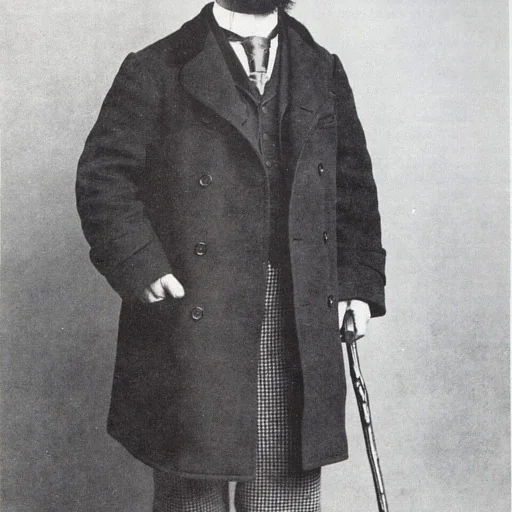
Comte Henri Marie Raymond de Toulouse-Lautrec-Montfa (24 November 1864 – 9 September 1901), known as Toulouse-Lautrec (French: ), was a French painter, printmaker, draughtsman, caricaturist, and illustrator.

 Dans une tranchée, des soldats allemands se rendent
 Evanouissement à l'audience (Fainting at the Hearing)
 The Holdup, second state
 Why Not? Once Does Not Constitute a Habit
 La Cimetière de Busk
 Civil War (Scene of the Commune of Paris)
 Scène d'audience (les deux avocats) (Scene of a Hearing (The Two Lawyers))
 Untitled