Artwork
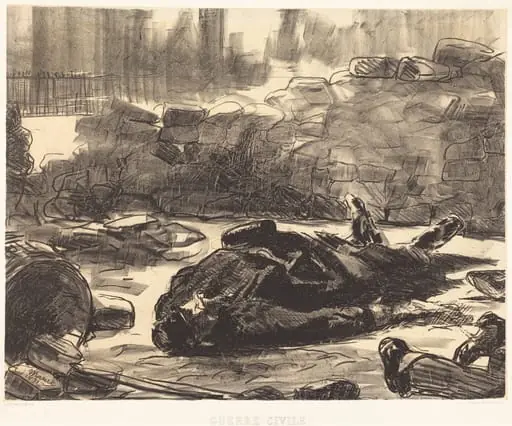
Civil War (Scene of the Commune of Paris)
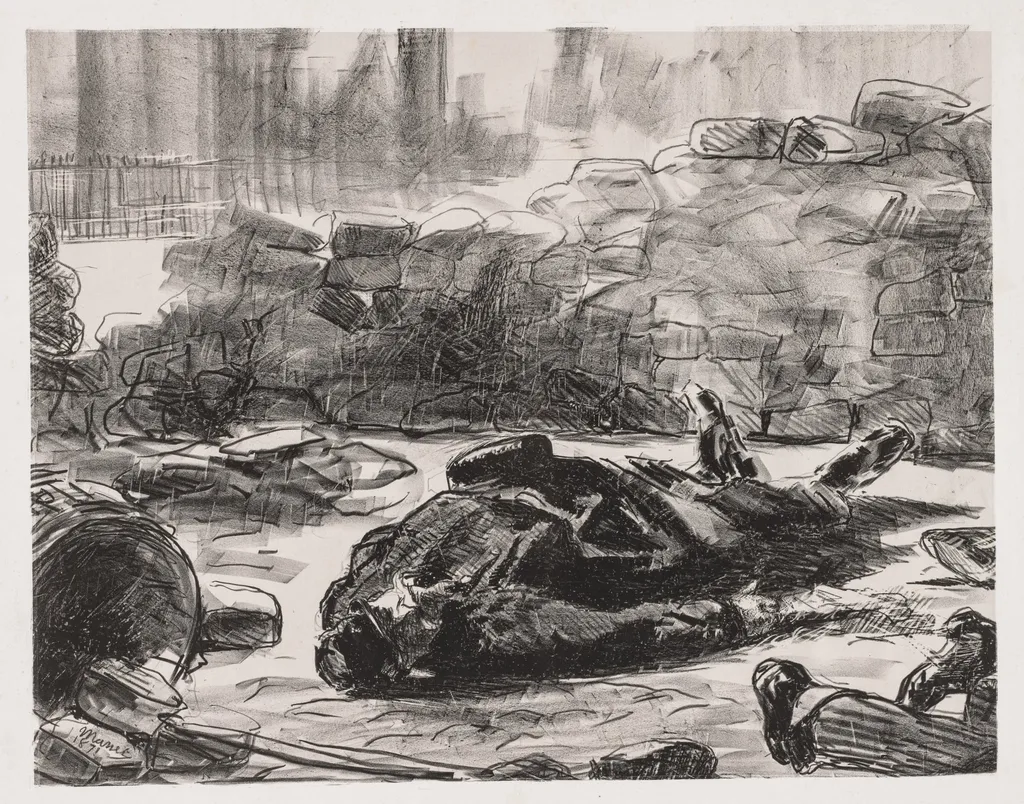
Civil War (Scene of the Commune of Paris) is a print by the Impressionist artist Edouard Manet. It dates from 1871 and is held in the collection of the Cleveland Museum of Art.
About this work
Overview
It resides in the collection of The Cleveland Museum of Art, one of few visual records made by a major artist during the immediate aftermath of the uprising.
Created in 1871, Civil War (Scene of the Commune of Paris) is a lithograph by Édouard Manet responding to the violent suppression of the Paris Commune. Though executed shortly after the events, the work avoids overt spectacle, instead presenting a muted, fragmented scene of urban conflict. It resides in the collection of The Cleveland Museum of Art, one of few visual records made by a major artist during the immediate aftermath of the uprising.
Subject & Meaning
The print depicts a moment of civil unrest in Paris, with indistinct figures caught in a tense, shadowed street. No clear heroes or villains emerge; the composition emphasizes confusion and collective suffering. Manet refrains from glorification or condemnation, suggesting instead the tragic ambiguity of internal conflict. The work reflects a quiet mourning for the breakdown of social order rather than a political statement.
Technique & Style
Manet employed lithography to achieve a somber, tonal range, using coarse lines and uneven ink application to evoke texture and disorder. Figures are rendered with minimal detail, blending into the background, while stark contrasts between light and dark heighten the sense of unease. The style departs from academic realism, favoring atmospheric suggestion over narrative clarity, aligning with his broader interest in modern visual language.
History & Provenance
Manet produced this print in the weeks following the fall of the Paris Commune in May 1871, a period of intense political repression. He did not publish it widely, and few impressions were made. The work remained in private hands until acquired by the Cleveland Museum of Art, where it is now preserved as a rare, early response to the events by a leading French artist of the time.
Context
The Paris Commune, a radical socialist government that briefly ruled Paris in 1871, was crushed by the French national army in a bloody week known as Bloody Week. Manet, though not a revolutionary, was deeply affected by the violence and loss. His print stands apart from contemporary propaganda, offering a restrained, almost anonymous portrayal of a society torn apart by ideological division.
Legacy
Civil War (Scene of the Commune of Paris) is recognized as one of the earliest artistic responses to modern urban insurrection. Its understated tone influenced later artists seeking to depict political trauma without sensationalism. Though not widely exhibited in Manet’s lifetime, it has since become a key example of how art can bear witness to upheaval through silence and suggestion rather than declaration.
Artist & collection

Artist
Édouard Manet didn’t have much time to make his mark—he died at 51—but he used every year.

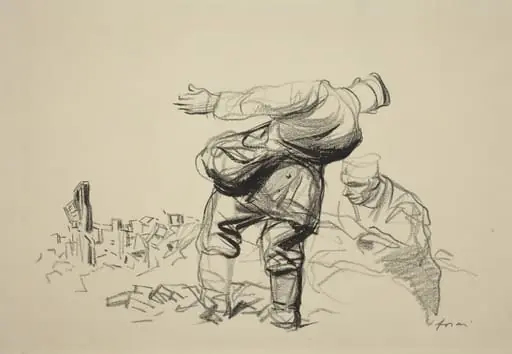 The Empire Destroys, The Republic Pays
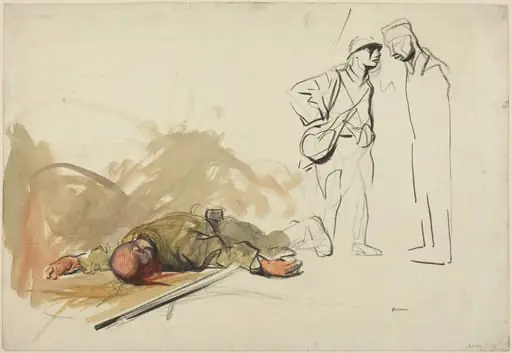 a) Dead German Soldier (recto); b) Head of a Soldier (verso)
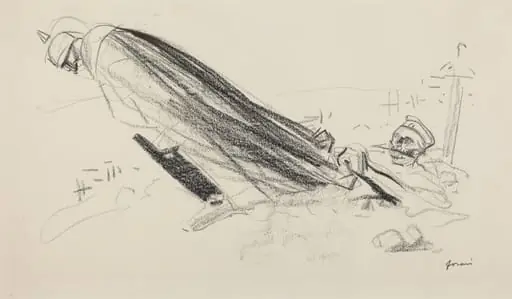 Ceux de la priemiere heure. "Sire! ou en somme-nous de "la guerre fraiche et joyeuse"?..."
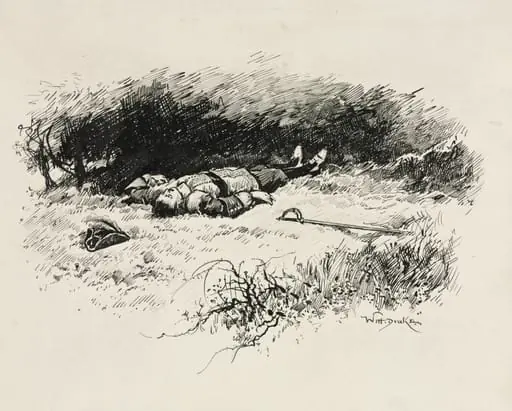 Tail Piece for Chapter XXI from "Lorna Doone"
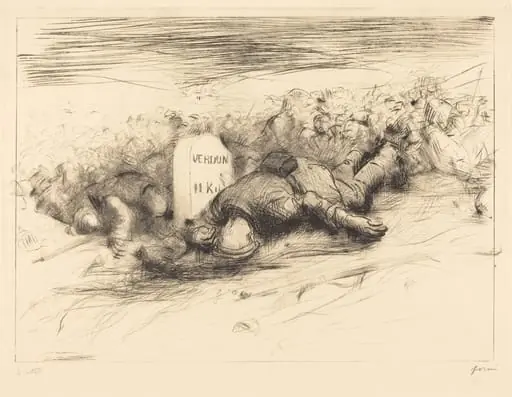 La Borne - Verdun (The End - Verdun)
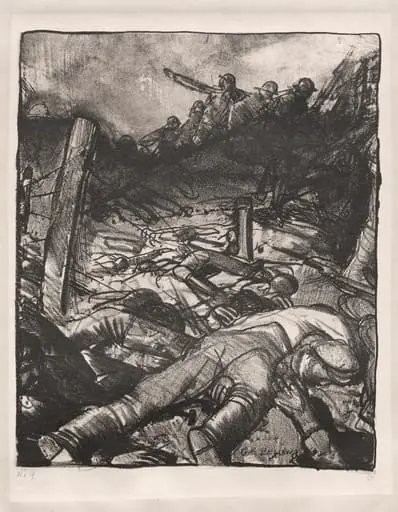 War Series: The Charge, Left Detail
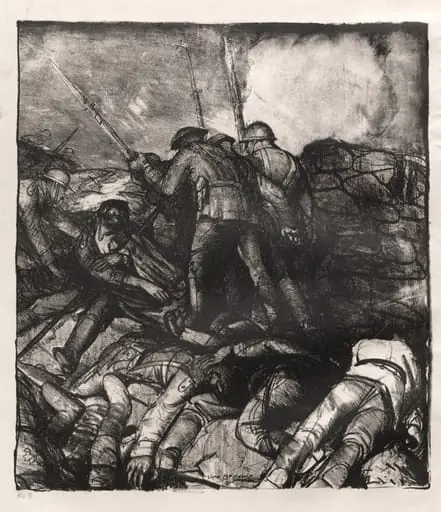 War Series: The Charge, Right Detail, first state
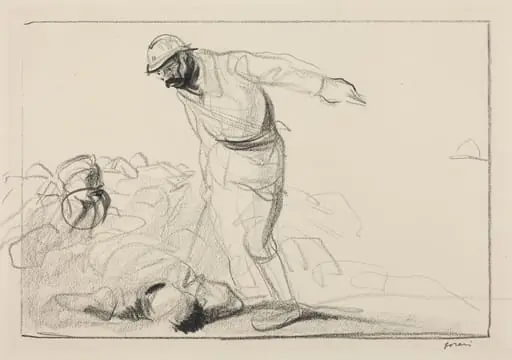 Lost Illusions
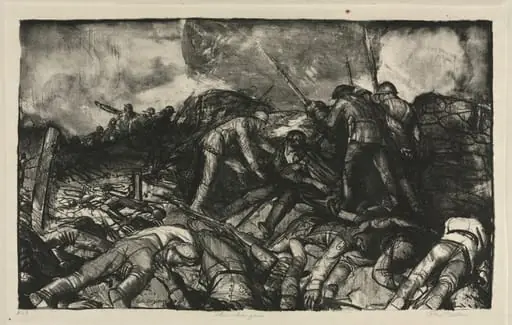 War Series: The Charge
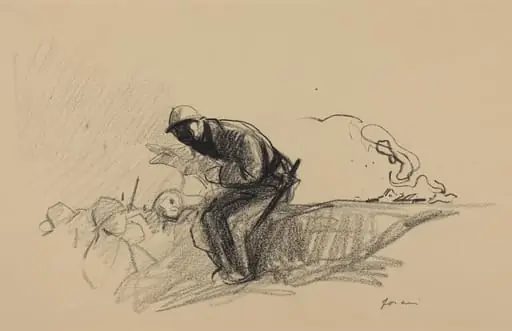 News in the Trenches
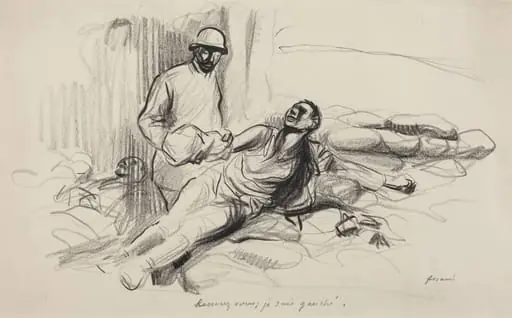 Rassurez vous; je suis gauché.
 Civil War (Guerre civile)