Artwork
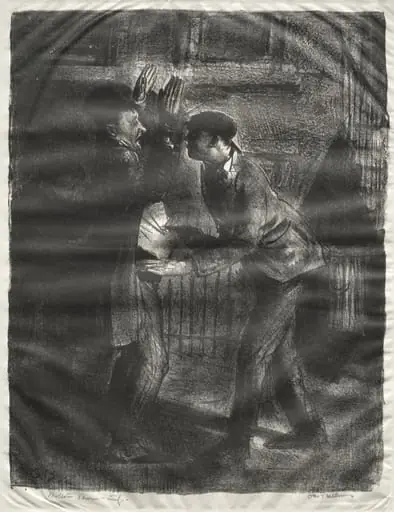
Au pied du Sinaï: La Halle aux Draps, Cracovie
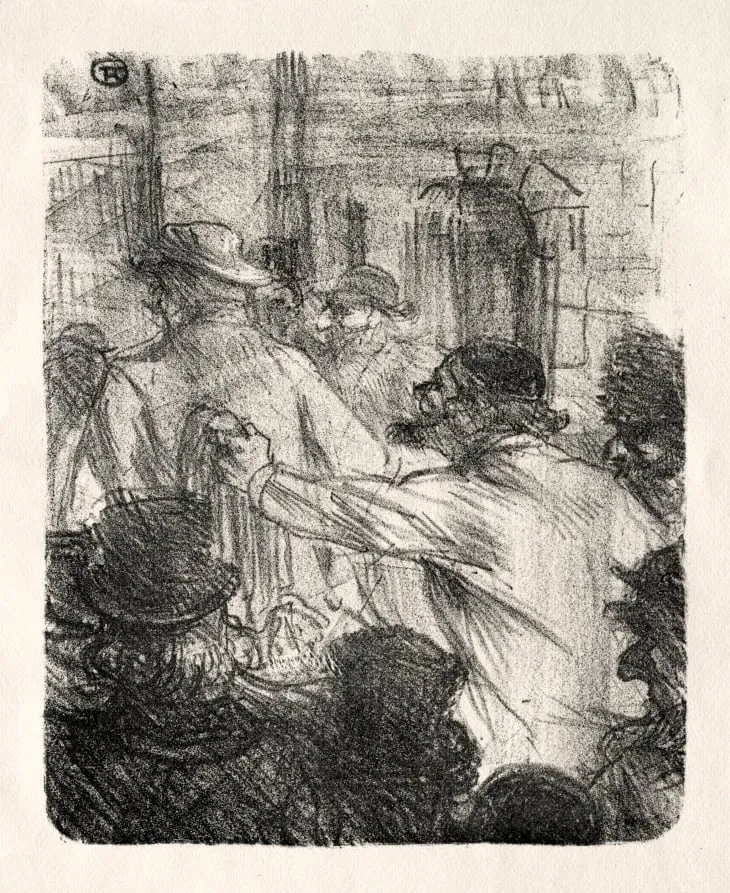
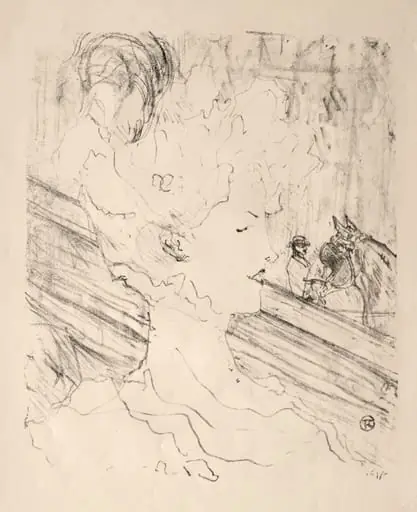
Au pied du Sinaï: La Halle aux Draps, Cracovie is a print by the Impressionist artist Henri de Toulouse-Lautrec. It dates from 1898 and is held in the collection of the Cleveland Museum of Art.
About this work
Overview
Au pied du Sinaï: La Halle aux Draps, Cracovie (1898) is a print by Henri de Toulouse-Lautrec, capturing a moment in the commercial activity of Kraków, Poland, within his thematic exploration of European urban life.
Subject & Meaning
The print depicts a bustling, dimly lit interior of a cloth hall, where figures in hats and long coats gather around a table, with one leaning over a basket. Faces are indistinct, emphasizing the scene’s everyday, communal nature.
Technique & Style
Characterized by loose, quick lines and scratchy, uneven strokes, the work conveys a sense of immediacy. Toulouse-Lautrec’s technique effectively captures the rough textures of clothing, hats, and architectural elements.
History & Provenance
Created in 1898 by Henri de Toulouse-Lautrec (1864–1901), a French artist known for documenting Parisian nightlife and marginalized groups through printmaking and illustration. Origins and later ownership history of this specific work are not detailed here.
Context
Part of Toulouse-Lautrec’s broader engagement with late 19th-century European social and commercial spaces, this print reflects his interest in urban, often lesser-documented, environments beyond his familiar Parisian subjects.
Legacy
While specific influence of *Au pied du Sinaï* is not highlighted, it contributes to Toulouse-Lautrec’s overall legacy in capturing the vibrancy and intimacy of everyday urban life, resonating with Impressionist themes of modern life observation.
Artist & collection
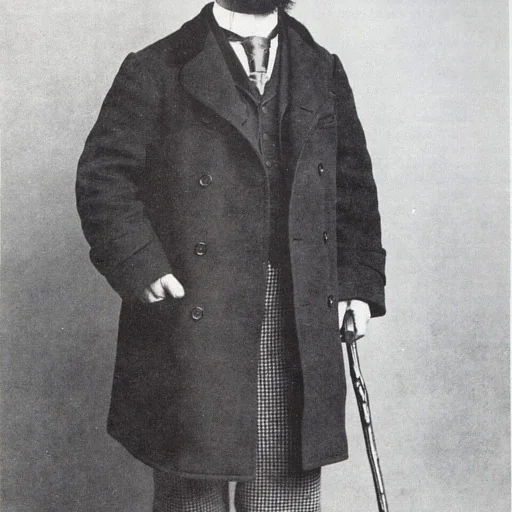
Artist
Comte Henri Marie Raymond de Toulouse-Lautrec-Montfa (24 November 1864 – 9 September 1901), known as Toulouse-Lautrec (French: ), was a French painter, printmaker, draughtsman, caricaturist, and illustrator.