Artwork
Elles: Woman with a Hand Mirror
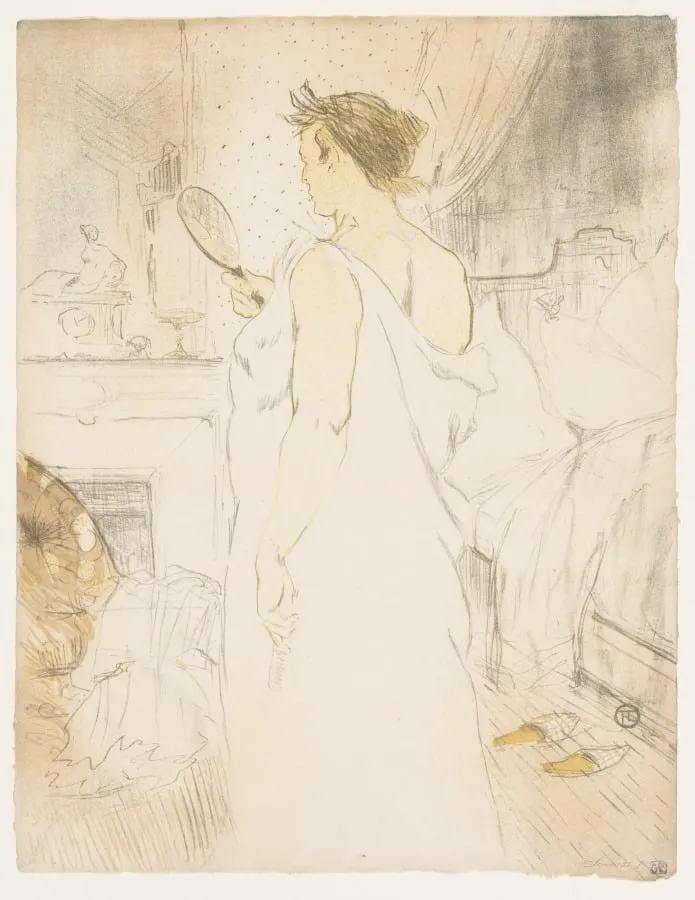
Elles: Woman with a Hand Mirror is a print by the Impressionist artist Henri de Toulouse-Lautrec. It dates from 1896 and is held in the collection of the Cleveland Museum of Art.
About this work
Overview
The print exemplifies his mature engagement with graphic media, where line and tone replace painterly brushwork to convey psychological nuance.
Henri de Toulouse-Lautrec created the lithograph 'Woman with a Hand Mirror' in 1896 as part of his series 'Elles,' which portrays women in private moments within Parisian brothels. Unlike his more public nightlife scenes, this work isolates a solitary figure in a quiet interior, emphasizing introspection over spectacle. The print exemplifies his mature engagement with graphic media, where line and tone replace painterly brushwork to convey psychological nuance.
Subject & Meaning
The woman, dressed in a white gown with one shoulder bare, gazes into a hand mirror, her body angled away from the viewer. Her reflection reveals her face, suggesting self-scrutiny rather than performance. The dimly lit room, with its bed and mantelpiece clock, frames an intimate, unguarded moment. Toulouse-Lautrec avoids moral judgment, presenting her not as a symbol of vice but as a person engaged in a private ritual, inviting quiet empathy.
Technique & Style
Rendered in lithography, the print uses bold, fluid lines and subtle tonal gradations to define form and space. Shadows pool around the figure, enhancing depth through chiaroscuro without heavy modeling. The sparse furnishings and flattened perspective reflect Japanese woodblock influences, while the cropped composition draws focus to the woman’s solitude. Toulouse-Lautrec’s control of ink and paper texture gives the image a tactile, intimate quality.
History & Provenance
Created during Toulouse-Lautrec’s most prolific printmaking period, 'Woman with a Hand Mirror' was part of a limited edition portfolio titled 'Elles,' published in 1896. The series was privately circulated among collectors and artists, avoiding public exhibition due to its subject matter. Original impressions were printed on fine paper with careful attention to registration and ink density, reflecting the artist’s hands-on involvement in the printing process.
Context
In 1890s Paris, brothels were both stigmatized and culturally embedded, often frequented by artists and writers. Toulouse-Lautrec, marginalized by his physical condition and aristocratic isolation, found kinship in these spaces. His depictions of sex workers diverged from sensationalist portrayals, instead capturing their daily routines with dignity. This work aligns with broader fin-de-siècle interests in psychological realism and the private lives of women.
Legacy
The 'Elles' series, including this print, redefined how female subjects in marginalized communities could be represented in art. Toulouse-Lautrec’s approach influenced later generations of graphic artists and photographers who sought to depict intimacy without exploitation. The work remains a key example of how printmaking could convey psychological depth, bridging the gap between documentary observation and artistic sensitivity.
Artist & collection
Artist
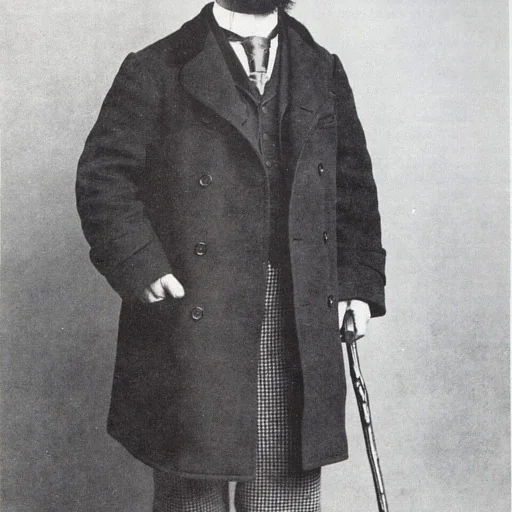
Comte Henri Marie Raymond de Toulouse-Lautrec-Montfa (24 November 1864 – 9 September 1901), known as Toulouse-Lautrec (French: ), was a French painter, printmaker, draughtsman, caricaturist, and illustrator.

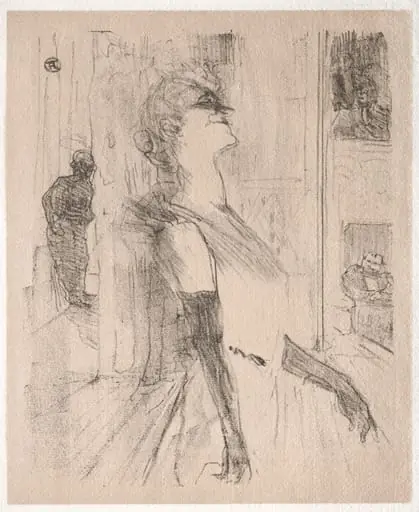 Yvette Guilbert: Sur la scène
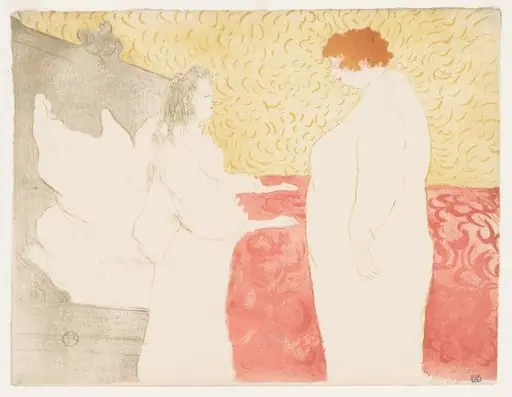 Elles: Woman in Bed
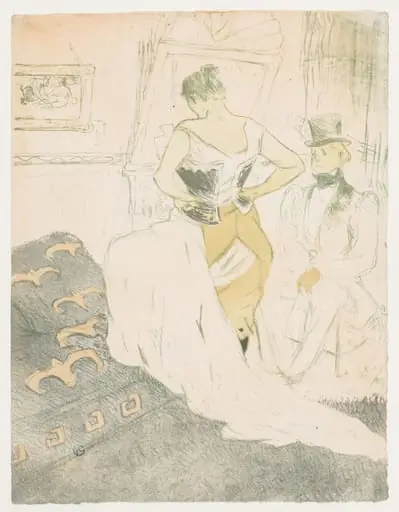 Elles: Woman In a Corset
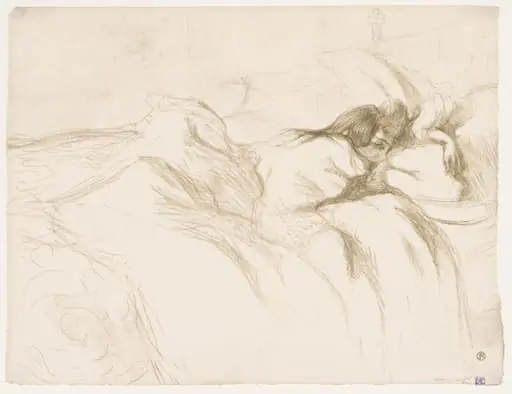 Elles: Woman Sleeping
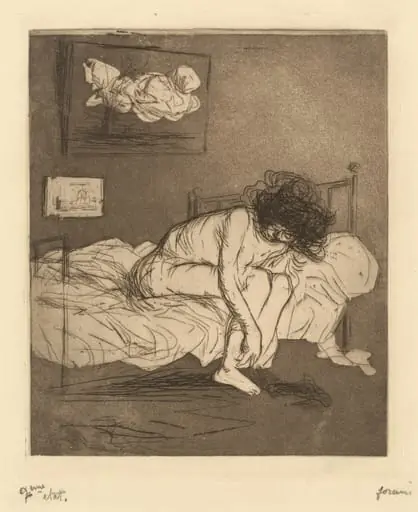 Femme mettant son bas (Woman Putting On Her Stockings)
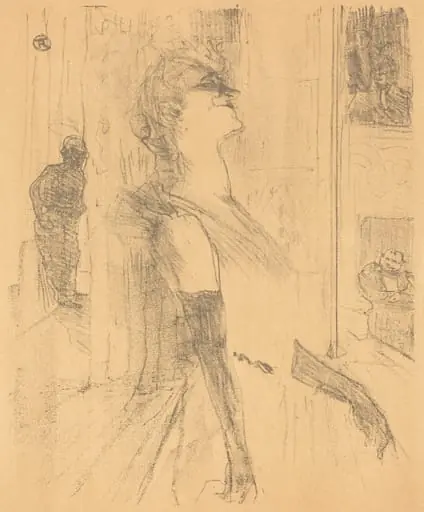 On the Stage (Sur la scène)
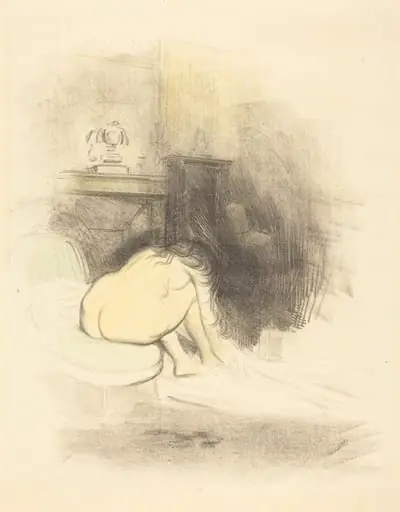 Femme nue, s'essuyant les pieds (planche en hauteur) (Nude Woman Drying Her Feet) (vertical plate)
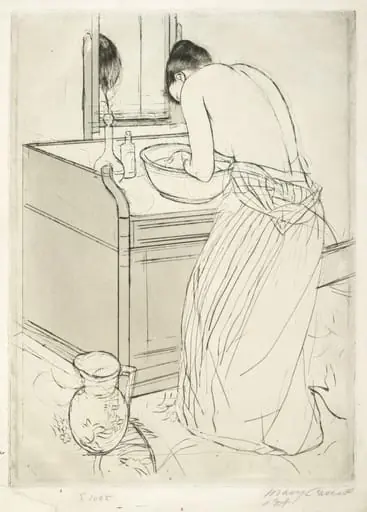 Woman Bathing
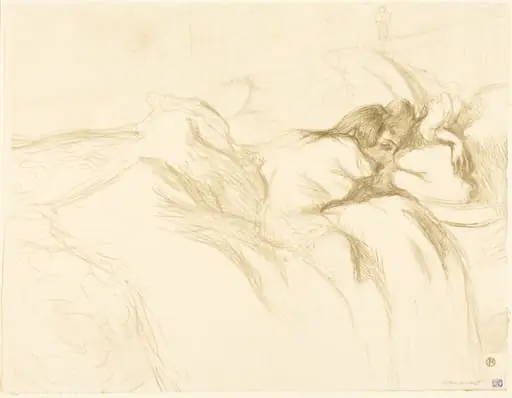 Woman Waking Up in Bed (Femme Couchée, Réveil)
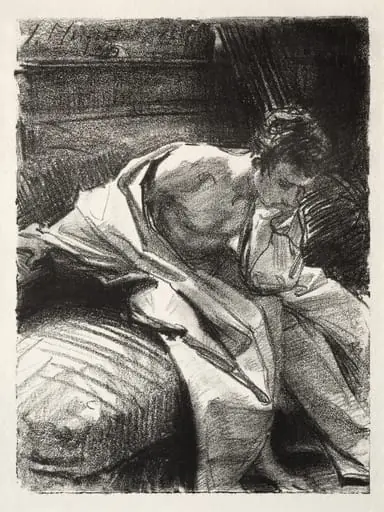 A Study