Artwork
Elsa, Dite la Viennoise
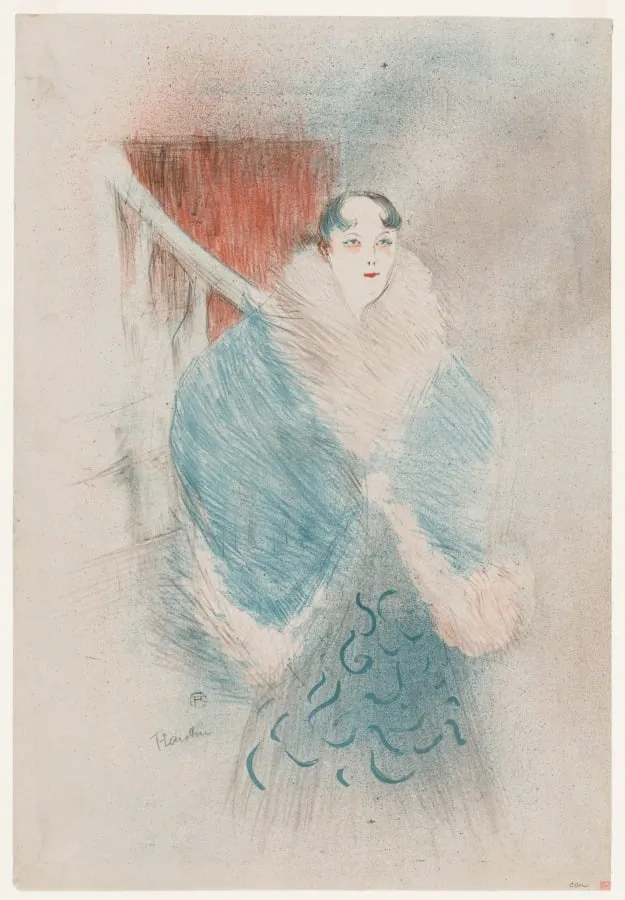
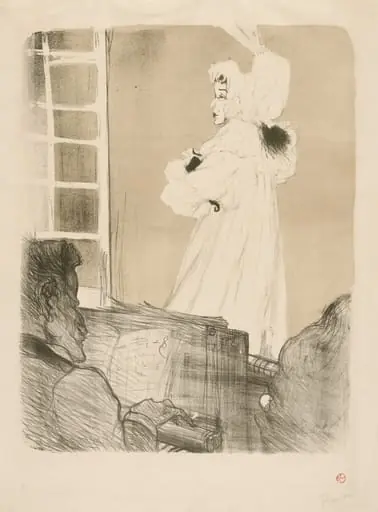
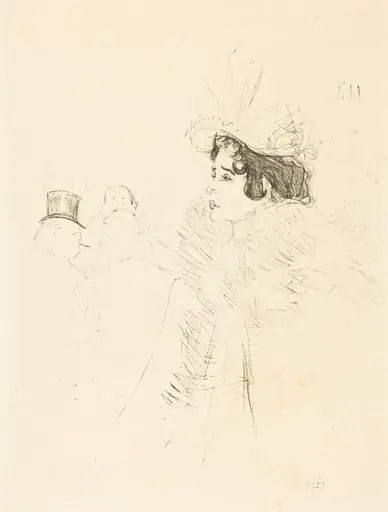
Elsa, Dite la Viennoise is a print by the Impressionist artist Henri de Toulouse-Lautrec. It dates from 1897 and is held in the collection of the Cleveland Museum of Art.
About this work
Overview
Elsa, Dite la Viennoise (1897) is a print by Henri de Toulouse-Lautrec, capturing a moment in the life of a woman within Paris's nightlife, a realm the artist frequently explored through his work.
Subject & Meaning
The subject, Elsa, is portrayed with a sense of quiet intimacy, her soft smile and direct gaze contrasting with the somewhat austere, simple backdrop. This contrast may reflect Toulouse-Lautrec's empathy for figures on the margins of society, a theme prevalent in his oeuvre.
Technique & Style
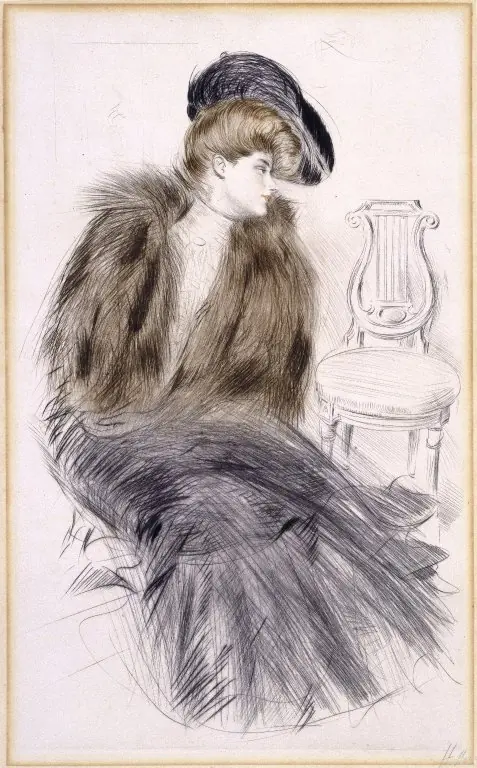
Characterized by quick, expressive lines, the piece conveys a sense of movement, particularly in the rendering of Elsa's fur shawl and flowing blue dress. The muted yet vibrant color palette (notably the red wall and darker blue dress accents) adds depth without overwhelming the subject.
History & Provenance
Created in 1897, this work is part of Toulouse-Lautrec's body of art focused on Paris's theatrical and nocturnal world. His unique perspective, influenced by his physical condition and aristocratic yet outsider status, lends the piece a distinctive viewpoint.
Context
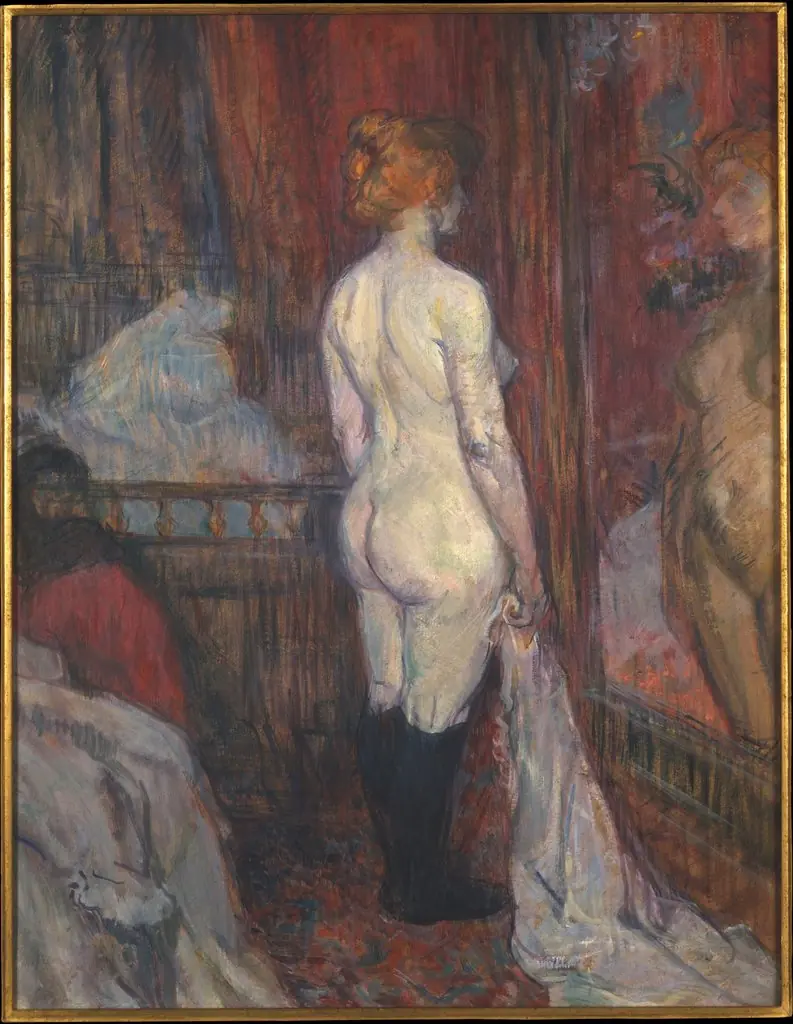
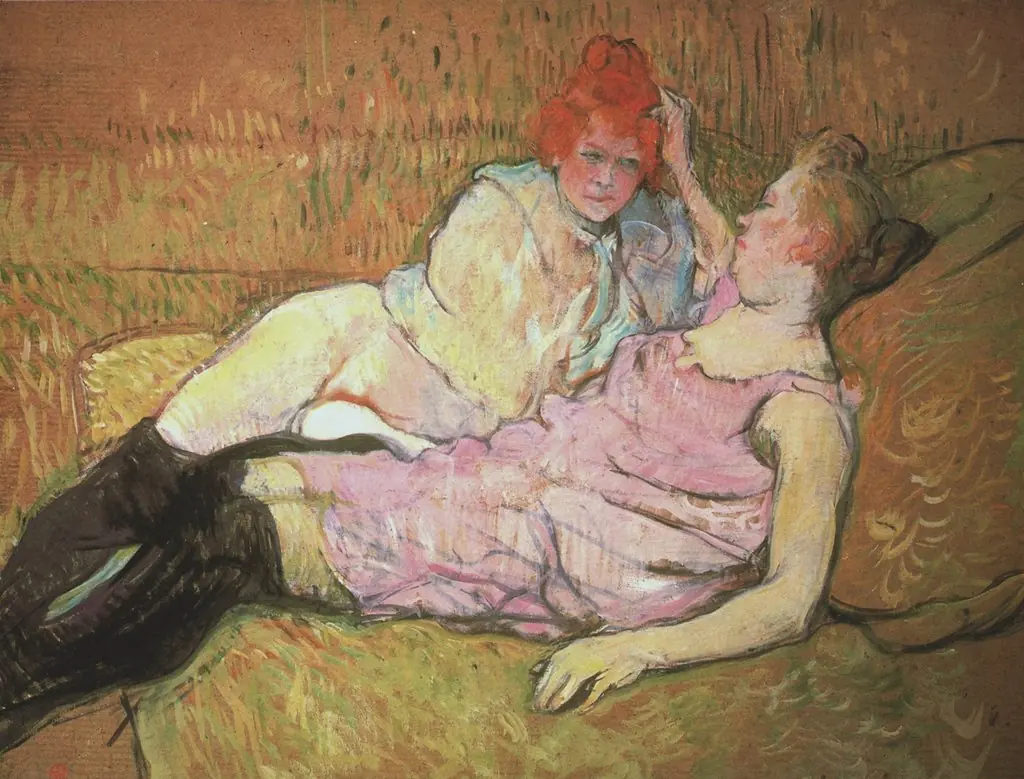
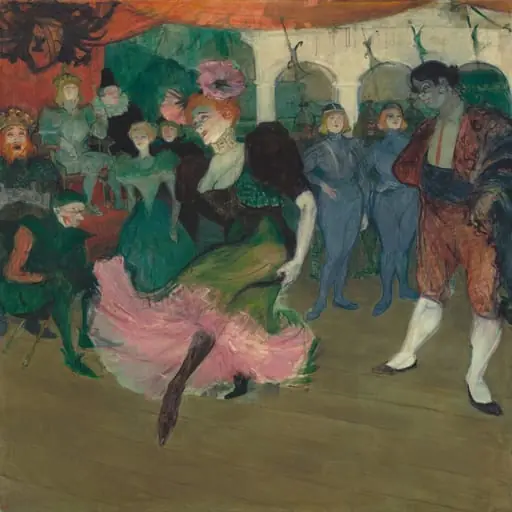
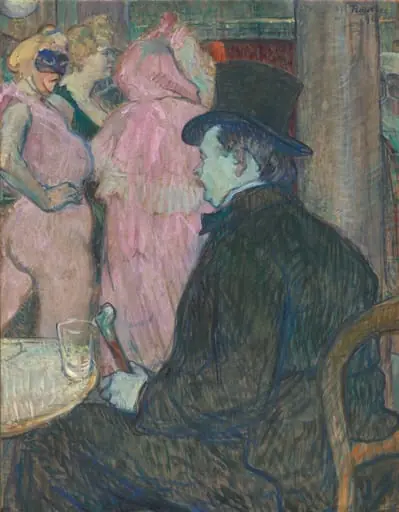
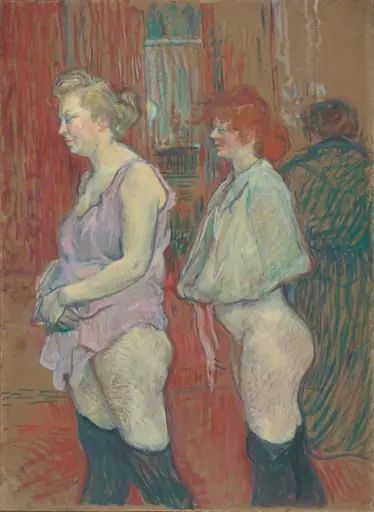
Elsa, Dite la Viennoise sits within Toulouse-Lautrec's broader exploration of late 19th-century Parisian nightlife, brothels, and theaters, offering a glimpse into the lives of those often overlooked by the aristocracy from which he came.
Legacy
As part of Toulouse-Lautrec's oeuvre, the piece contributes to his legacy as a chronicler of Paris's underbelly and a pioneer in capturing the lives of marginalized individuals with empathy and artistic innovation.
Artist & collection
Artist
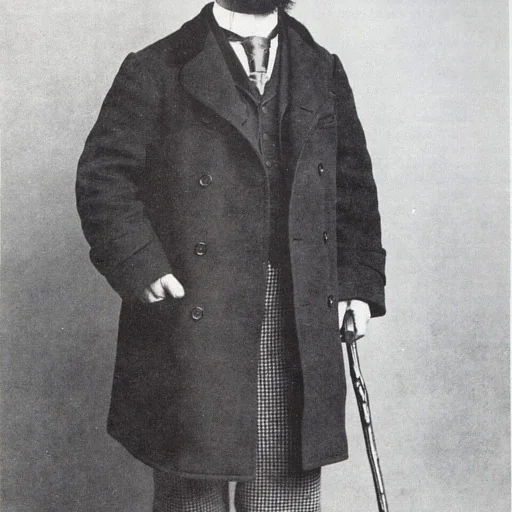
Comte Henri Marie Raymond de Toulouse-Lautrec-Montfa (24 November 1864 – 9 September 1901), known as Toulouse-Lautrec (French: ), was a French painter, printmaker, draughtsman, caricaturist, and illustrator.