Artwork
Study for the woodcut 'Bassin des Tuileries'
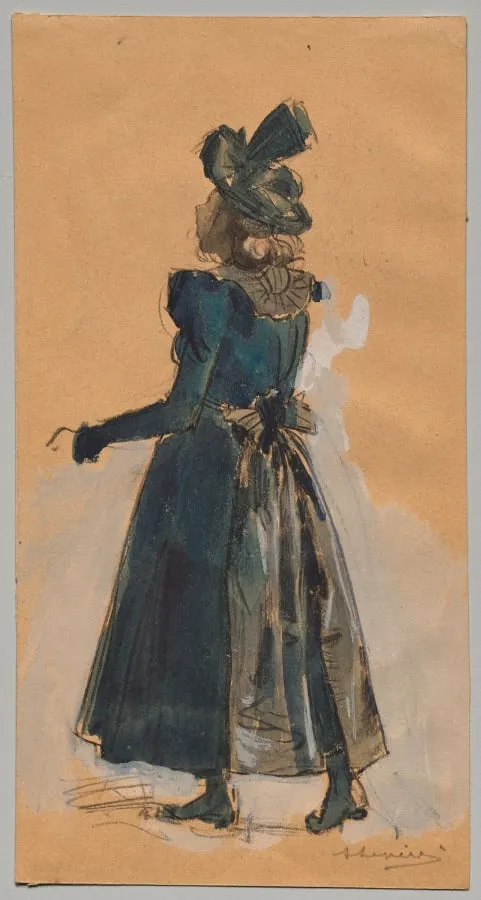
Study for the woodcut 'Bassin des Tuileries' is a drawing by the Impressionist artist Auguste Lepère. It dates from 1898 and is held in the collection of the Cleveland Museum of Art.
About this work
Look up more works about France, 19th/20th century to see how other artists showed Paris at the time.
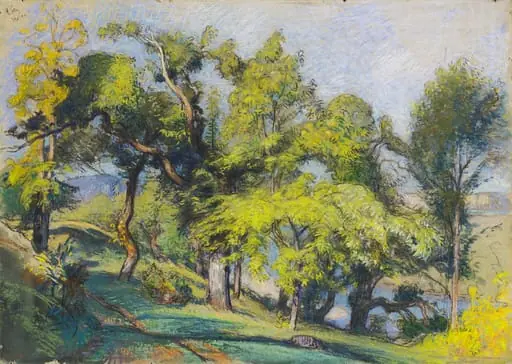
A young girl in a white dress stands near a fountain in a Paris park. Trees glow with autumn leaves. People stroll in the distance.
This is a practice sketch for a woodcut—a print carved from wood. Lepère brought the old method back to life in France when most artists had moved on. He drew every detail first, then cut the lines into wood to make the final print.
Look up more works about France, 19th/20th century to see how other artists showed Paris at the time.
Overview
This drawing is a preparatory study for a woodcut by Auguste Lepère, a printmaker who revived the woodcut technique in late 19th-century France.
Subject & Meaning
The drawing depicts a young girl in a white dress standing near a fountain in the Tuileries garden, a Parisian park, on an autumn day with vibrant foliage and strolling figures in the background.
Technique & Style
Lepère's meticulous approach involved creating detailed drawings before translating them into woodcuts, a labor-intensive process that required careful planning.
Context
The work reflects Lepère's focus on Parisian life and his efforts to revive a traditional printmaking technique that had fallen out of favor.
Artist & collection

Artist
Louis-Auguste Lepère (30 November 1849 – 20 November 1918) was a French painter and etcher. Lepère is also considered a leader in the creative revival of wood engraving in Europe.