Artwork
Judic in the Loge
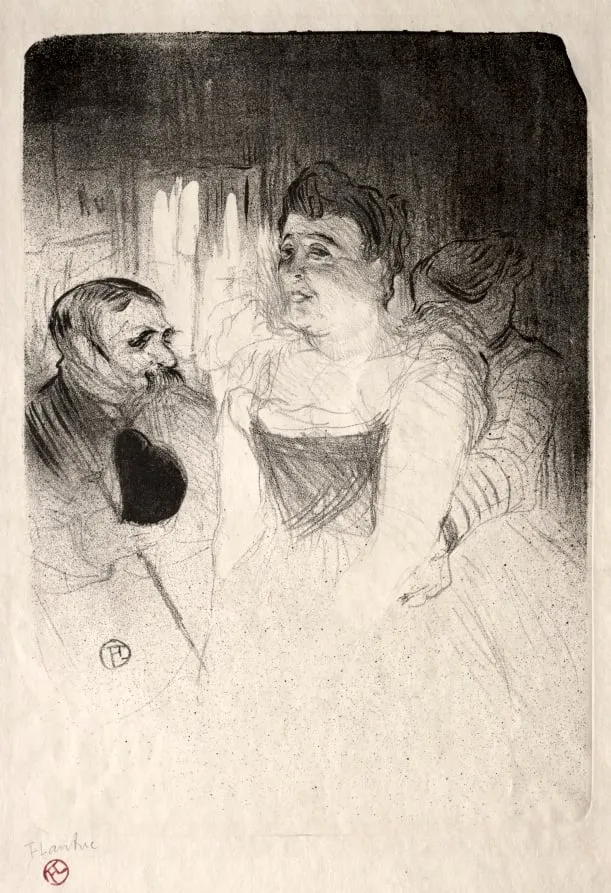
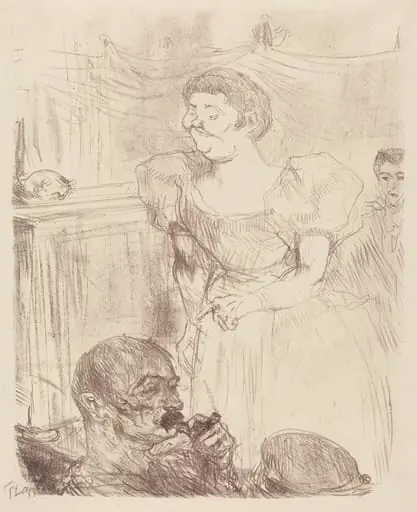
Judic in the Loge is a print by the Impressionist artist Henri de Toulouse-Lautrec. It dates from 1894 and is held in the collection of the Cleveland Museum of Art.
About this work
Overview
Though often associated with bold nightlife scenes, this piece reveals a more restrained, observational approach, emphasizing atmosphere over spectacle.
Henri de Toulouse-Lautrec’s 1894 lithograph *Judic in the Loge* captures a quiet moment in a Parisian theater box, portraying two figures in a dim, intimate setting. Executed in his signature graphic style, the work reflects his deep engagement with the city’s performance culture. Though often associated with bold nightlife scenes, this piece reveals a more restrained, observational approach, emphasizing atmosphere over spectacle.
Subject & Meaning
The figures are a woman in an elaborate evening gown, turned away with her face softened by smudged lines, and a man in formal attire—top hat, mustache, cane—gazing at her with focused stillness. Their interaction is unspoken, suggesting the subtle social rituals of theatergoers. Toulouse-Lautrec avoids narrative clarity, instead inviting viewers to infer the unspoken dynamics of class, attention, and performance that defined Parisian leisure.
Technique & Style
Toulouse-Lautrec employed rapid, fluid lines and selective ink washes to convey motion and mood rather than detail. Facial features are deliberately blurred, and the woman’s dress is suggested through loose contours rather than precise rendering. This sketchlike quality, influenced by Japanese prints and photographic immediacy, prioritizes emotional resonance over idealized form, aligning with his interest in candid human behavior.
History & Provenance
Created in 1894, the print was part of a series documenting Parisian theater life during a period of rapid cultural change. Toulouse-Lautrec, born into aristocracy but physically marked by childhood injuries, found kinship with performers and patrons on the margins of polite society. The work entered The Cleveland Museum of Art’s collection through established acquisition channels, reflecting its significance in late 19th-century printmaking.
Context
In 1890s Paris, the theater and cabaret were spaces where social boundaries blurred. Toulouse-Lautrec frequented these venues, documenting their inhabitants with empathy and precision. Unlike academic painters, he avoided idealization, focusing instead on the unguarded moments of ordinary spectators and performers. This print exemplifies his role as a chronicler of modern urban life, shaped by both personal experience and artistic innovation.
Legacy
Toulouse-Lautrec’s approach to printmaking influenced generations of artists seeking to capture fleeting moments with graphic economy. *Judic in the Loge* stands as an example of how lithography could convey psychological nuance without traditional realism. His work helped redefine portraiture by valuing authenticity over polish, leaving a lasting imprint on modern visual culture.
Artist & collection
Artist
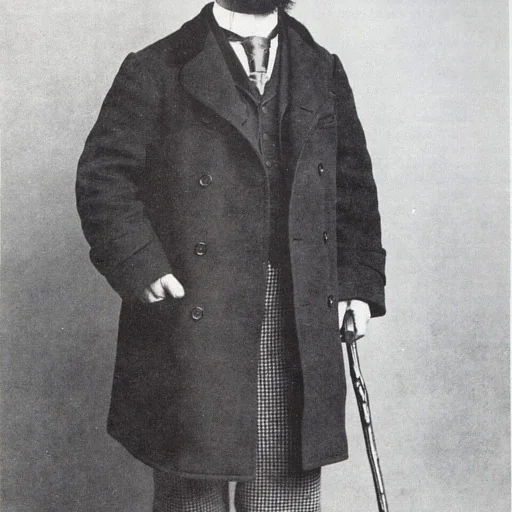
Comte Henri Marie Raymond de Toulouse-Lautrec-Montfa (24 November 1864 – 9 September 1901), known as Toulouse-Lautrec (French: ), was a French painter, printmaker, draughtsman, caricaturist, and illustrator.

 Di Ti Fellow - Englishmen at the Cafe-Concert (Di Ti Fellow - Anglaise au Café-Concert)
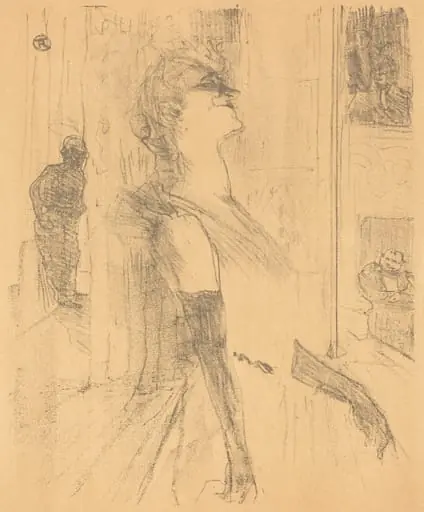 On the Stage (Sur la scène)
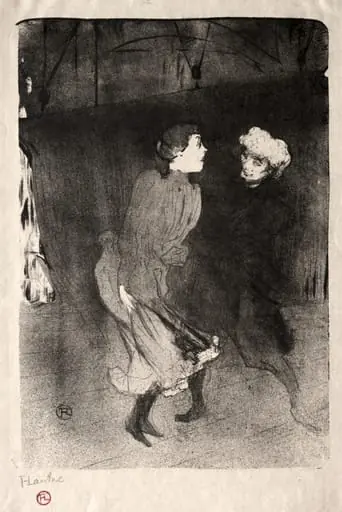 Emilienne d'Alecon and Mariquita of the Follies-Bergère
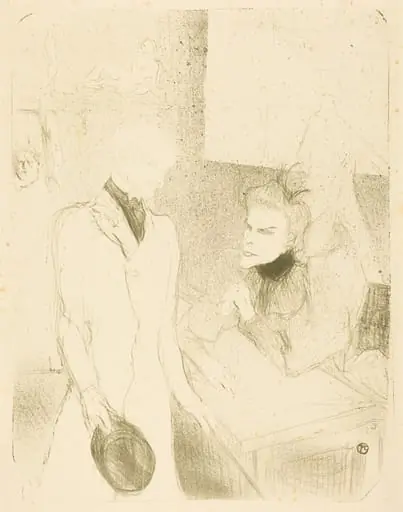 Brandes and Le Bargy in "Cabotins" (Brandès et Les Bargy dans "Cabotins")
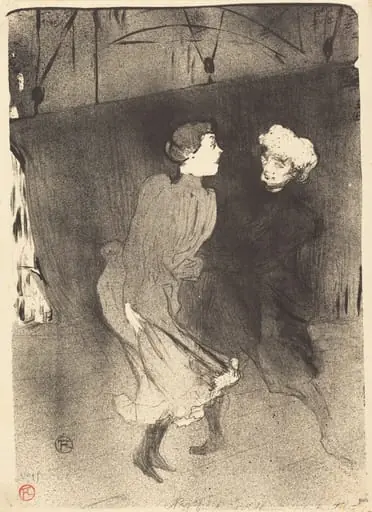 Dress Rehearsal at the Folies-Bergere (Répétition générale aux Folies-Bergère)
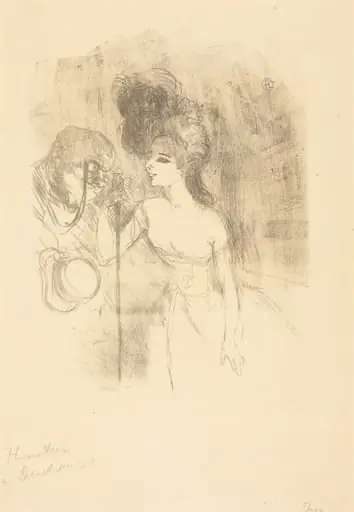 Anna Held and Baldy (Anna Held et Baldy)
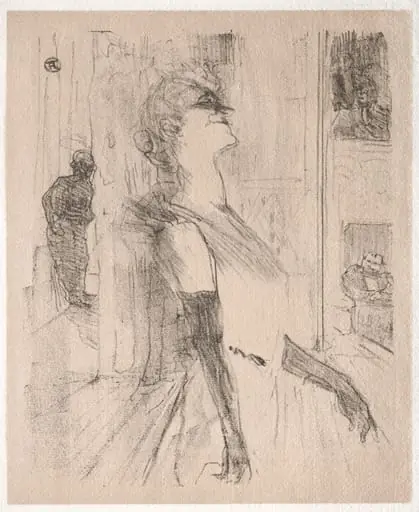 Yvette Guilbert: Sur la scène
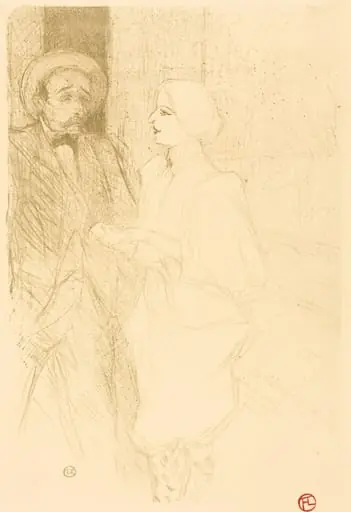 Yahne and Mayer in "L'age difficile" (Yahne et Mayer dans "L'age difficile")
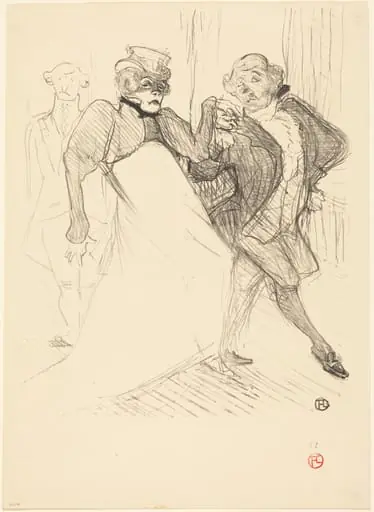 Rejane and Galipaux in "Madame Sans-Gêne" (Réjane et Galipaux dans "Madame Sans-Gêne")
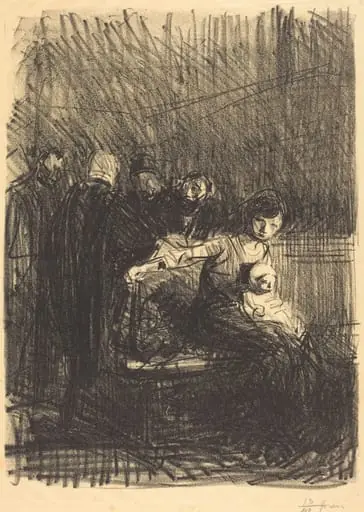 Suspension d'audience (Recess of the Hearing)
 Lugne Poe and Baldy in "Au-dessus des forces humaines" (Lugne Poe et Baldy dans "Au-desses des forces humaines")
 Lender from the Back Dancing the Bolero in "Chilperic" (Lender de dos, dansant le boléro dans "Chilpéric")