Artwork
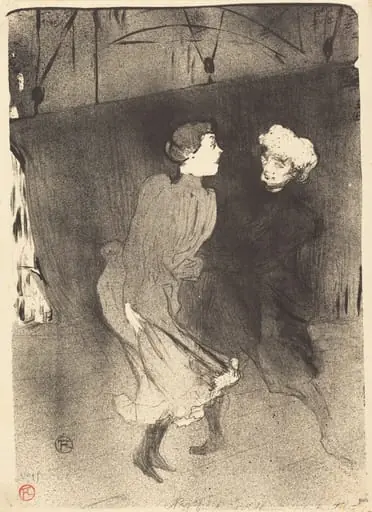
Emilienne d'Alecon and Mariquita of the Follies-Bergère
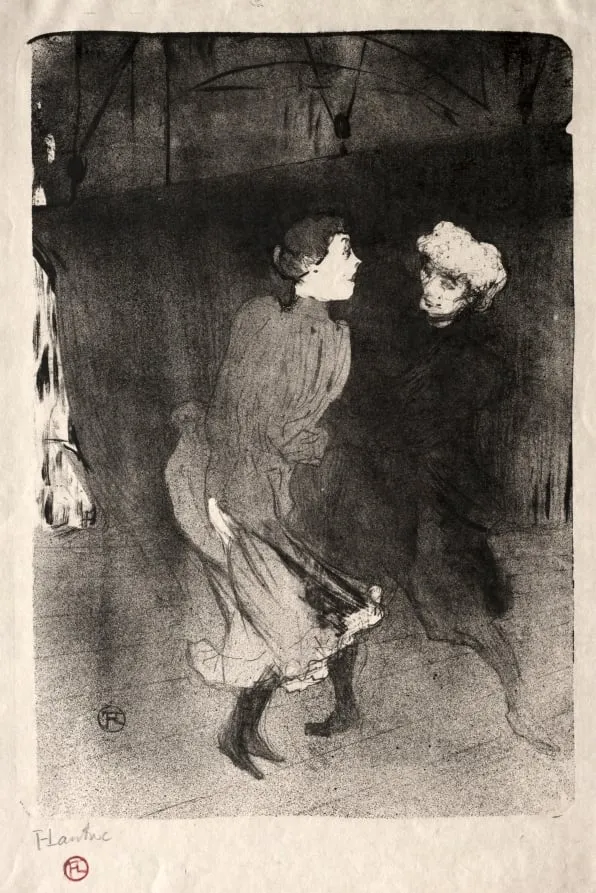
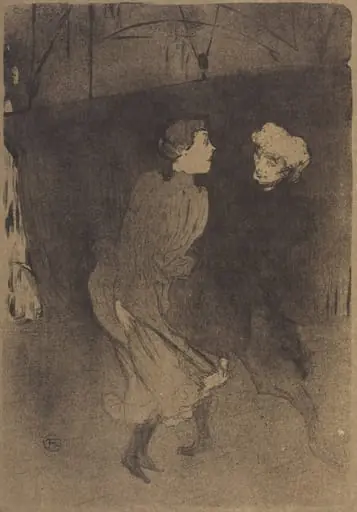
Emilienne d'Alecon and Mariquita of the Follies-Bergère is a print by the Impressionist artist Henri de Toulouse-Lautrec. It dates from 1893 and is held in the collection of the Cleveland Museum of Art.
About this work
Overview
Executed in ink and wash, the work reflects Lautrec’s deep engagement with the city’s entertainment scene.
Created in 1893, this black-and-white drawing by Henri de Toulouse-Lautrec portrays two performers associated with the Follies-Bergère, a popular Parisian music hall. Executed in ink and wash, the work reflects Lautrec’s deep engagement with the city’s entertainment scene. Though often associated with oil paintings and posters, his graphic works like this one reveal a keen interest in capturing fleeting, intimate moments behind the stage.
Subject & Meaning
The figures are Emilienne d’Alecon and Mariquita, dancers known for their roles at the Follies-Bergère. One stands with her back turned, dressed in a long gown and holding a fan, while the other faces her, her pale features and curly hair rendered with delicate precision. The composition suggests a quiet interlude between performances, emphasizing the human presence beneath the theatrical spectacle rather than the glamour of the stage.
Technique & Style
Lautrec employed bold contrasts of light and shadow, a technique known as chiaroscuro, to model form and evoke mood. The drawing’s limited palette of ink and wash allows the interplay of dark areas and stark highlights to define volume and atmosphere. Loose, confident lines suggest movement and texture, while the uneven lighting isolates the figures in a dim, intimate space, reinforcing the sense of solitude amid urban spectacle.
History & Provenance
The drawing was made during Lautrec’s most active period in Montmartre, when he regularly attended cabarets and sketched performers backstage. It likely originated as a preparatory study or independent work for his broader documentation of music hall life. While its early ownership is undocumented, it entered institutional collections in the 20th century, valued for its direct observation of Parisian theatrical culture.
Context
In the 1890s, Parisian music halls like the Follies-Bergère were centers of popular entertainment, attracting diverse audiences and offering visibility to working-class performers. Lautrec, an aristocrat who chose to live among the city’s marginalized artists and entertainers, documented these figures with empathy and without romanticization. His drawings served as both records and commentaries on the social fabric of fin-de-siècle Paris.
Legacy
This work exemplifies Lautrec’s contribution to modern graphic art, bridging traditional drawing with the immediacy of journalistic observation. His focus on performers as individuals, not mere icons, influenced later artists exploring urban life and identity. The drawing remains a quiet testament to his ability to find depth in the transient moments of nightlife, shaping how 20th-century art would portray the modern condition.
Artist & collection
Artist
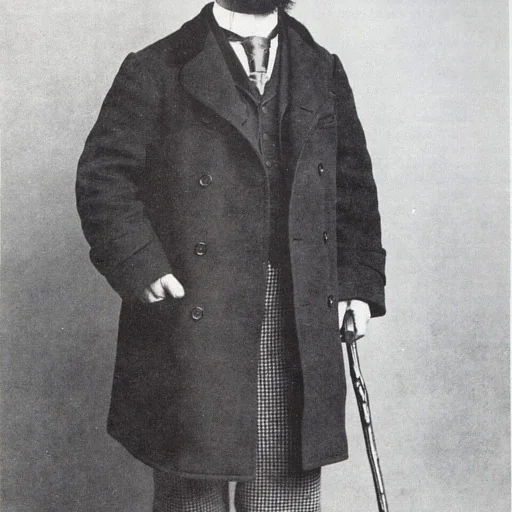
Comte Henri Marie Raymond de Toulouse-Lautrec-Montfa (24 November 1864 – 9 September 1901), known as Toulouse-Lautrec (French: ), was a French painter, printmaker, draughtsman, caricaturist, and illustrator.

 Dress Rehearsal at the Folies-Bergere (Répétition générale aux Folies-Bergère)
 Dress Rehearsal at the Folies-Bergere (Répétition générale aux Folies-Bergère)
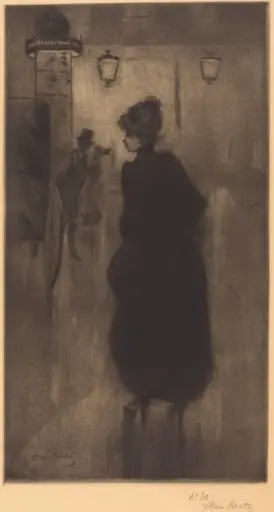 Parisian Woman (The Effect of the Night)
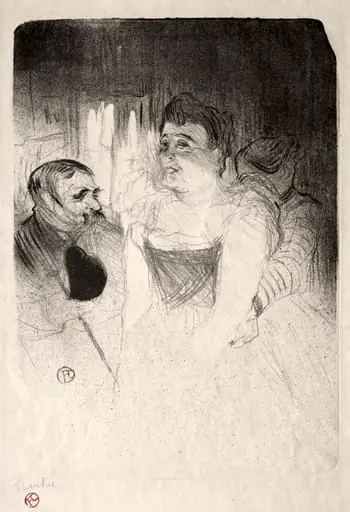 Judic in the Loge
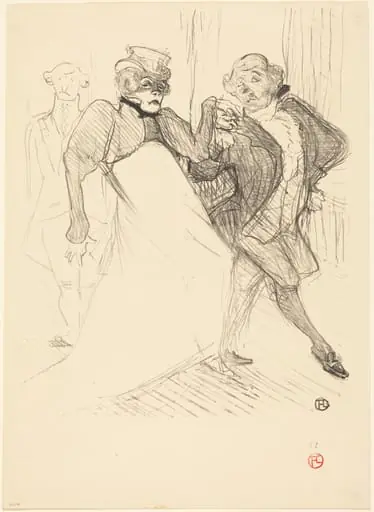 Rejane and Galipaux in "Madame Sans-Gêne" (Réjane et Galipaux dans "Madame Sans-Gêne")
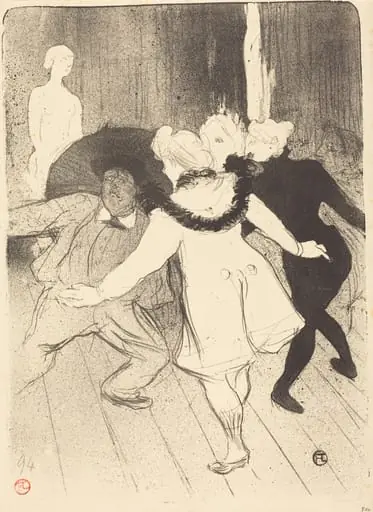 Folies-Bergere: The Censors of M. Prudhomme (Folies-Bergère: Les pudeurs de M. Prudhomme)
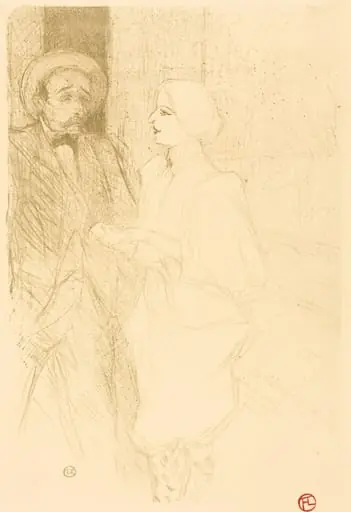 Yahne and Mayer in "L'age difficile" (Yahne et Mayer dans "L'age difficile")
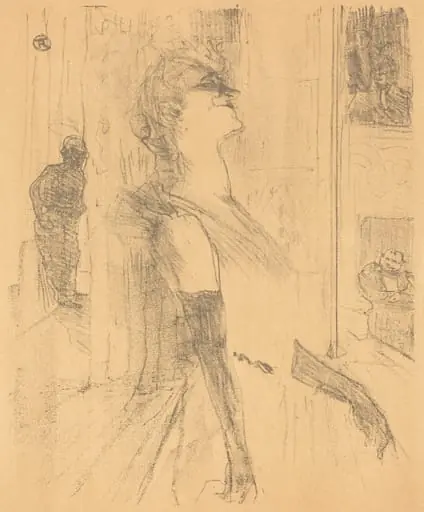 On the Stage (Sur la scène)
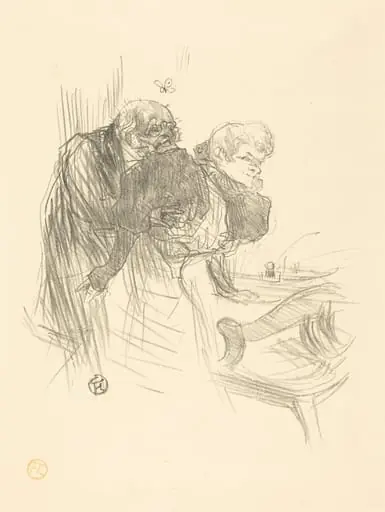 Les vieux papillons
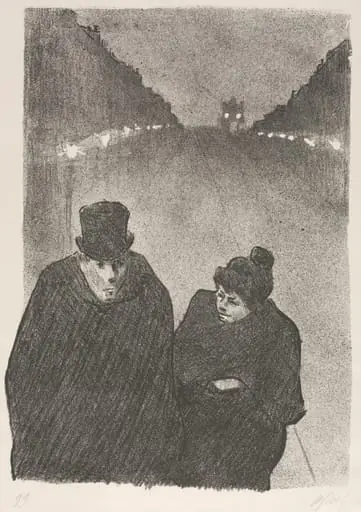 Ah, it's true, my poor old man, you would be the first to whom I would have made to miss his bus. "But I'll Miss My Bus" "My Customers Have Never Missed Their Bus"