Artwork
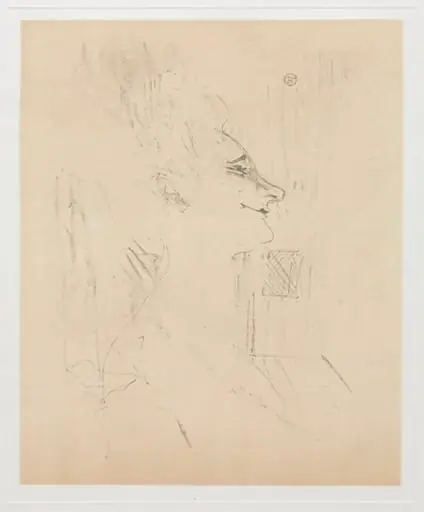
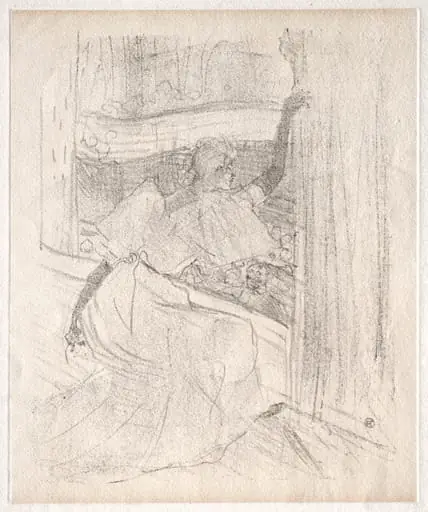
Yvette Guilbert: Dans la glu
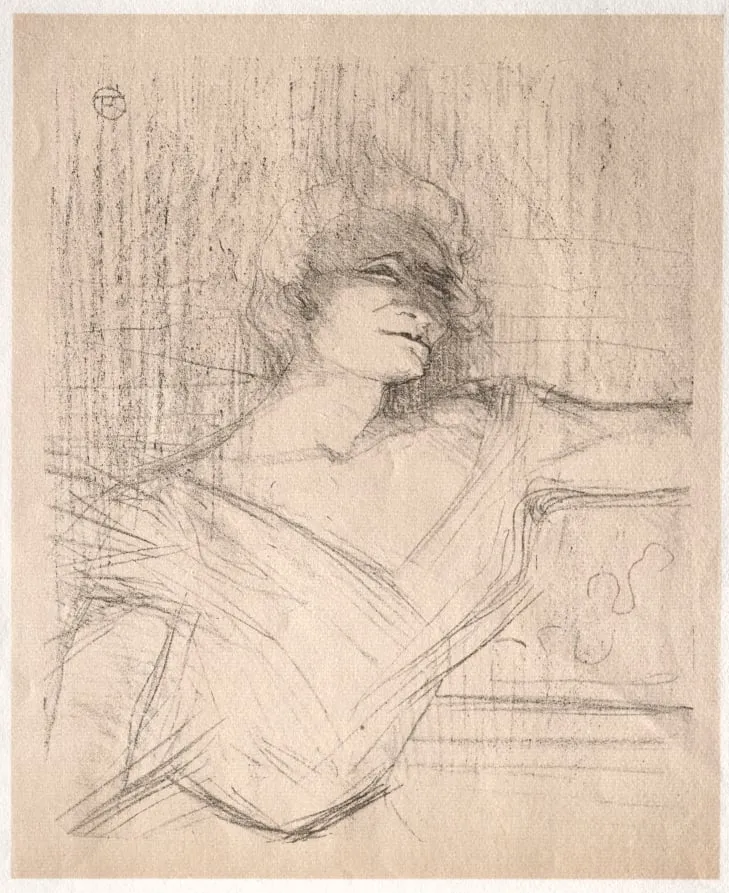
Yvette Guilbert: Dans la glu is a print by the Impressionist artist Henri de Toulouse-Lautrec. It dates from 1898 and is held in the collection of the Cleveland Museum of Art.
About this work
Overview
Toulouse-Lautrec, known for his focus on Parisian entertainers, used printmaking to explore the boundaries between public performance and private vulnerability.
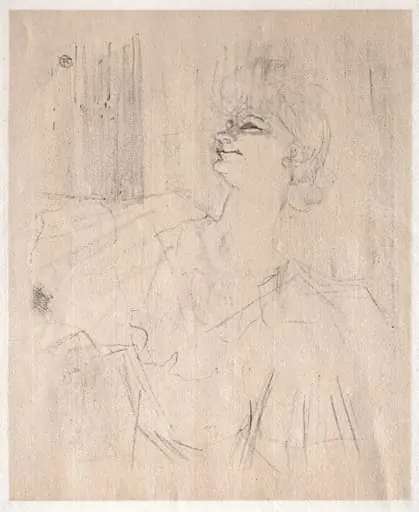
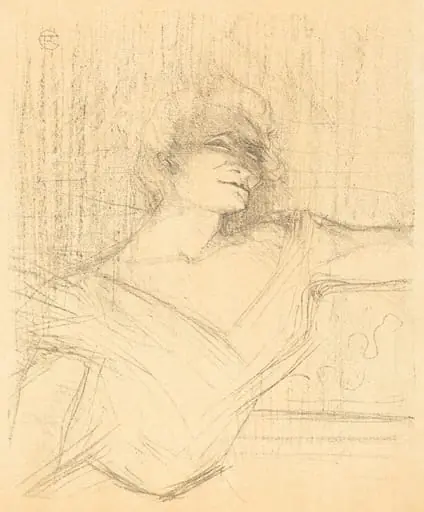
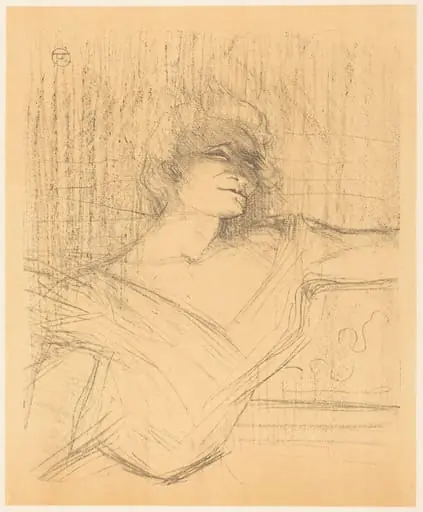
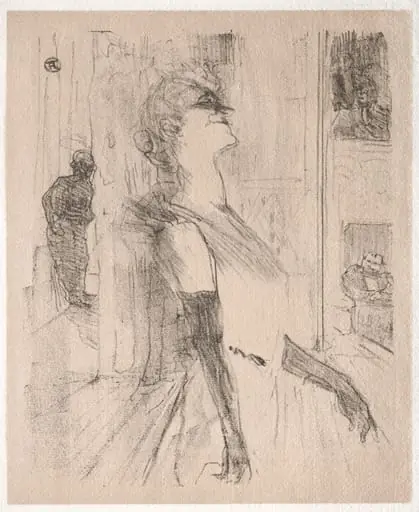
Created in 1898, this lithograph by Henri de Toulouse-Lautrec captures the French cabaret performer Yvette Guilbert in a moment of private repose. Unlike formal portraits, the image conveys spontaneity, rendered with rapid, expressive lines that suggest the immediacy of observation. Toulouse-Lautrec, known for his focus on Parisian entertainers, used printmaking to explore the boundaries between public performance and private vulnerability.
Subject & Meaning
Yvette Guilbert, a celebrated singer known for her distinctive style and ironic stage persona, is depicted not in performance but in a moment of unguarded rest. Her disheveled posture and partially disrobed attire suggest exhaustion or intimacy, contrasting with her public image. The image avoids idealization, instead presenting her as a figure caught between roles—artist and human, performer and individual.
Technique & Style
Toulouse-Lautrec employed a loose, gestural lithographic technique, using scratchy, uneven lines to define form and movement. The background is minimally suggested with faint, hurried marks, directing attention to the figure’s relaxed anatomy. The absence of detail in clothing and setting emphasizes emotional tone over realism, aligning the work with the immediacy of sketching and the expressive potential of print media.
History & Provenance
The print was produced during a period when Toulouse-Lautrec was deeply immersed in Montmartre’s cabaret culture, frequently attending performances and sketching performers backstage. Though the exact circumstances of this image’s creation are undocumented, it likely emerged from direct observation. It was part of a broader series of lithographs documenting the era’s entertainers, circulated among collectors and artists.
Context
In late 19th-century Paris, cabaret culture offered new spaces for artistic and social experimentation. Performers like Guilbert challenged conventional gender roles and class norms, becoming subjects of fascination for artists. Toulouse-Lautrec’s work reflects this shift, portraying entertainers not as spectacle but as complex individuals, shaped by their environment and the demands of their profession.
Legacy
This work exemplifies Toulouse-Lautrec’s influence on modern graphic art, demonstrating how lithography could convey psychological depth through economy of line. His approach to depicting performers—unembellished, intimate, and unidealized—paved the way for later artists exploring the intersection of portraiture and everyday life, leaving a lasting imprint on 20th-century visual culture.
Artist & collection
Artist
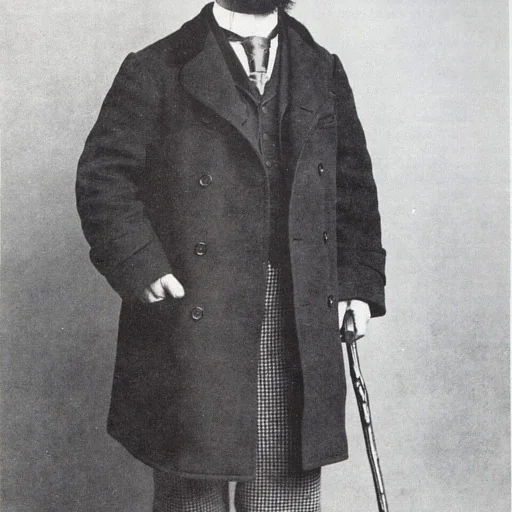
Comte Henri Marie Raymond de Toulouse-Lautrec-Montfa (24 November 1864 – 9 September 1901), known as Toulouse-Lautrec (French: ), was a French painter, printmaker, draughtsman, caricaturist, and illustrator.