Artwork
In "La glu" (Dans "La glu")
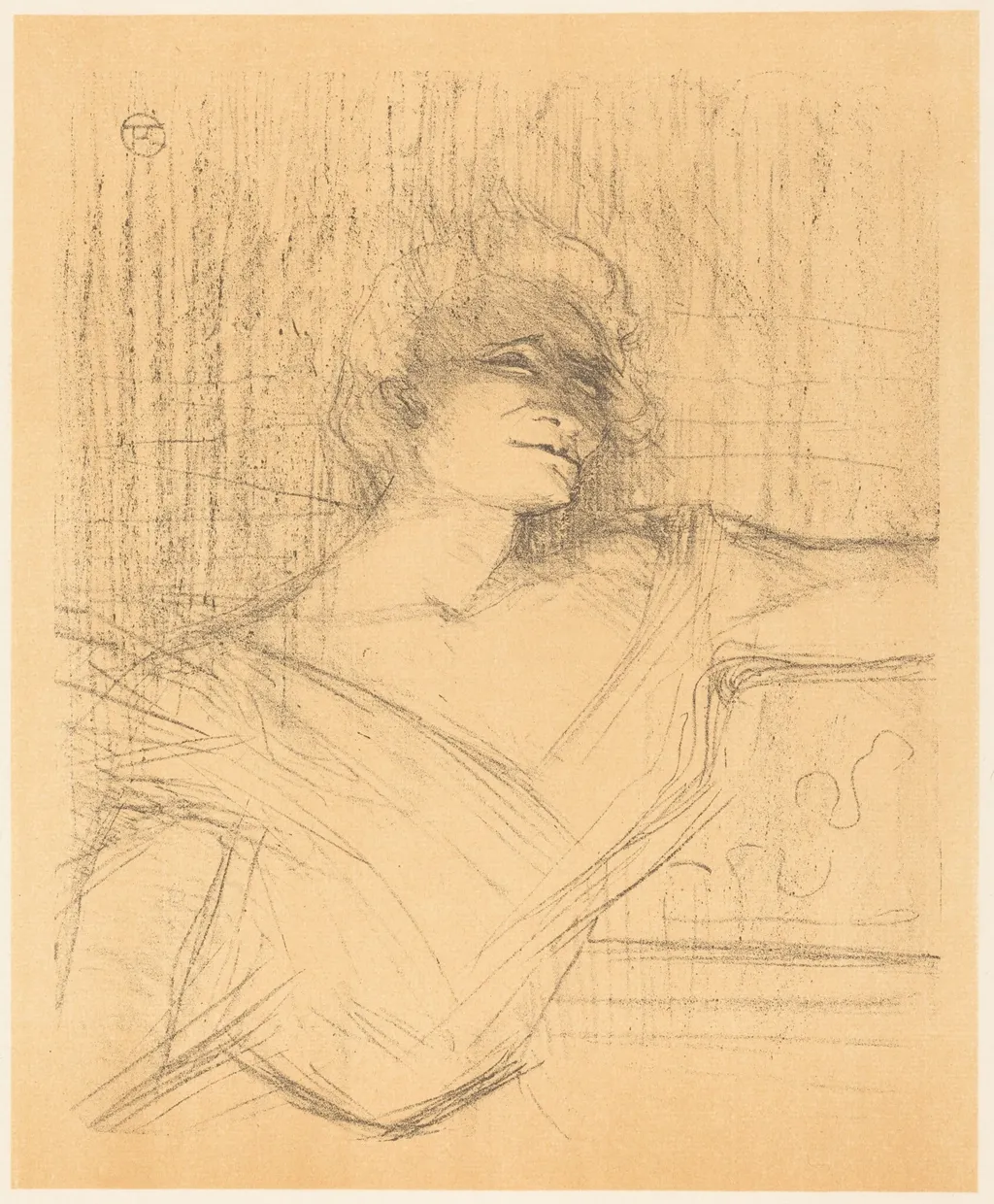
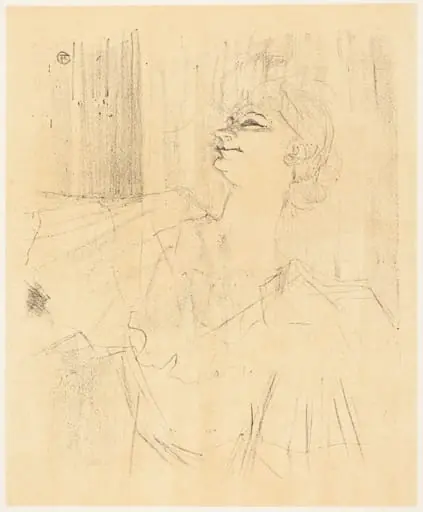
In "La glu" (Dans "La glu") is an ink print by the Impressionist artist Henri de Toulouse-Lautrec. It dates from 1898 and is held in the collection of the National Gallery of Art.
About this work
Overview
The medium allowed Lautrec to translate the immediacy of his drawings into printed form, preserving the energy of his sketchbook studies.
Created in 1898, *In 'La glu'* is a lithograph by Henri de Toulouse-Lautrec, rendered in black and beige ink. The work belongs to a series of prints capturing intimate moments from Parisian nightlife. Executed with rapid, gestural lines, it presents a figure in repose, suggesting spontaneity rather than formal composition. The medium allowed Lautrec to translate the immediacy of his drawings into printed form, preserving the energy of his sketchbook studies.
Subject & Meaning
The figure is a reclining woman, her posture relaxed and unguarded, suggesting a private, unposed moment. Likely drawn from life in a brothel or backstage setting, the image avoids idealization, focusing instead on physical presence and quiet solitude. Lautrec’s choice to depict such scenes without moral judgment reflects his interest in the everyday lives of marginalized individuals, portraying them with unembellished humanity.
Technique & Style
Lautrec employed lithography to mimic the spontaneity of pencil on paper. The lines are loose, uneven, and heavily smudged, with areas of dense shading suggesting volume through tone rather than contour. The rough texture and apparent haste imply a single-session drawing, capturing motion and weight through gesture. The limited palette of black and beige enhances the sense of immediacy, stripping away ornament to emphasize form and mood.
History & Provenance
Produced in 1898, the print was part of Lautrec’s broader exploration of printmaking during the final years of his life. He often worked from direct observation in Montmartre’s entertainment districts, translating sketches into lithographs for limited editions. While the exact provenance of this specific impression is not widely documented, it aligns with his practice of distributing such works among friends and patrons, circulating privately rather than for public exhibition.
Context
In late 19th-century Paris, lithography became a favored medium for artists seeking to break from academic traditions. Lautrec, influenced by Japanese woodcuts and modernist experimentation, used it to document the city’s underbelly—cabarets, dancers, and sex workers—with empathy and precision. His prints circulated among avant-garde circles, offering an alternative to grand historical painting by elevating the transient and the ordinary.
Legacy
Lautrec’s *In 'La glu'* exemplifies his contribution to modern printmaking: transforming sketch-like immediacy into reproducible art. His unidealized portrayals of marginalized subjects influenced later generations of artists seeking authenticity over polish. Though not widely exhibited in his lifetime, such works gained recognition for their psychological depth and technical innovation, securing his place in the evolution of 20th-century graphic art.
Artist & collection
Artist
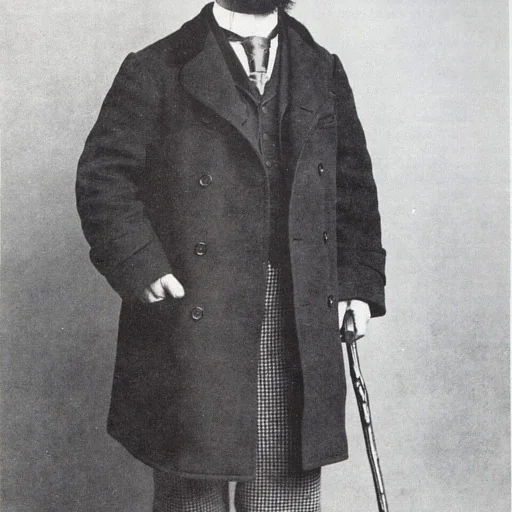
Comte Henri Marie Raymond de Toulouse-Lautrec-Montfa (24 November 1864 – 9 September 1901), known as Toulouse-Lautrec (French: ), was a French painter, printmaker, draughtsman, caricaturist, and illustrator.

 To Menilmontant from Bruant (A Ménilmontant, de Bruant)
 Polaire
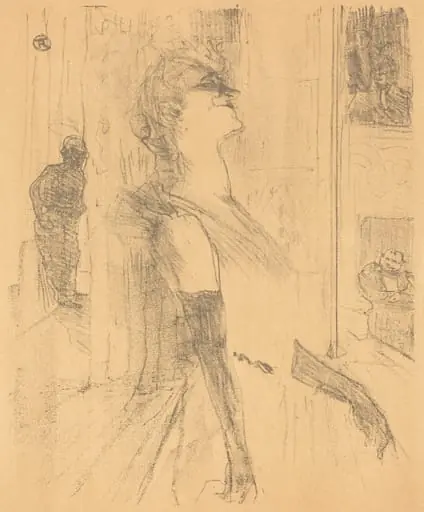 On the Stage (Sur la scène)
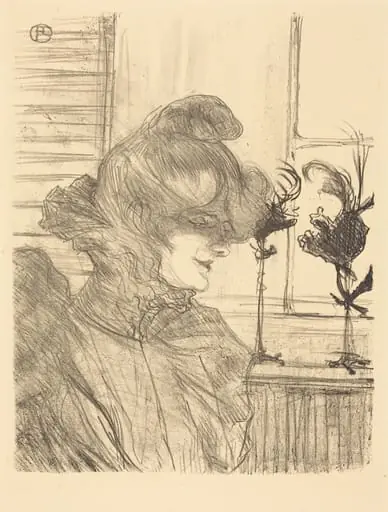 Mme. Le Marguoin, Milliner (Mme. Le Marguoin, modiste)
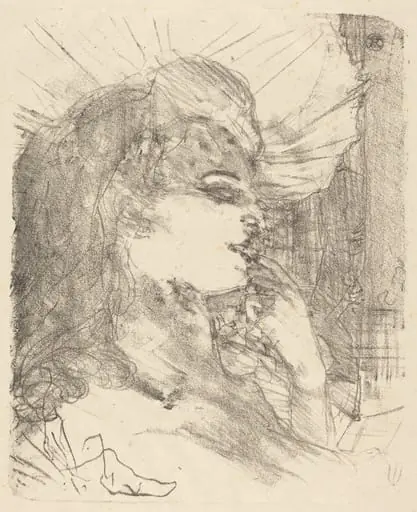 Anna Held
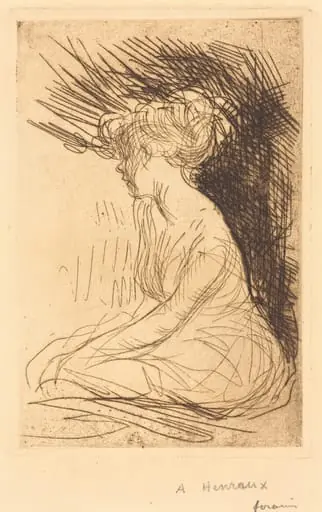 Femme assise de profil (Woman Seated in Profile)
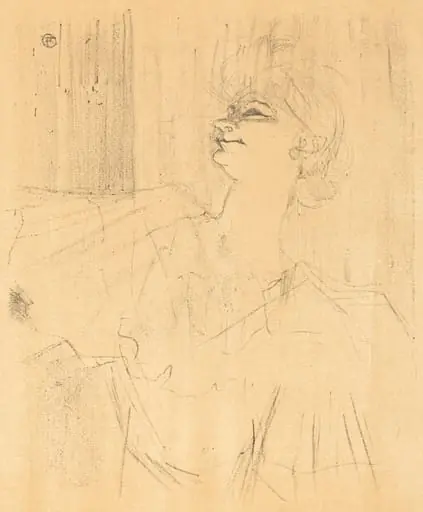 To Menilmontant from Bruant (A Ménilmontant, de Bruant)
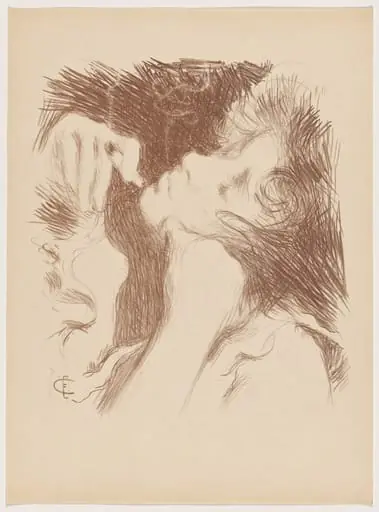 Intimité (Privacy)
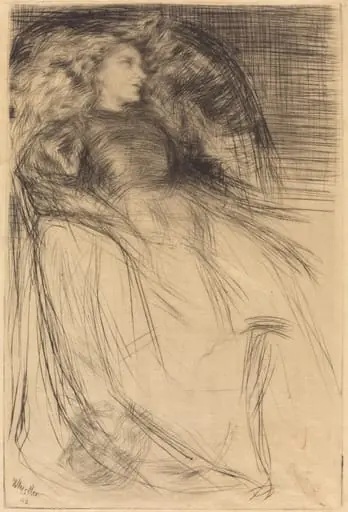 Weary
Weary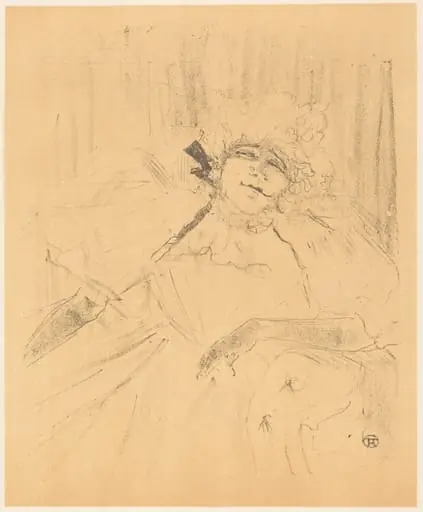 Old Song (Chanson ancienne)