Artwork
Madame Thadée Natanson (Misia Godebska, 1872–1950) at the Theater
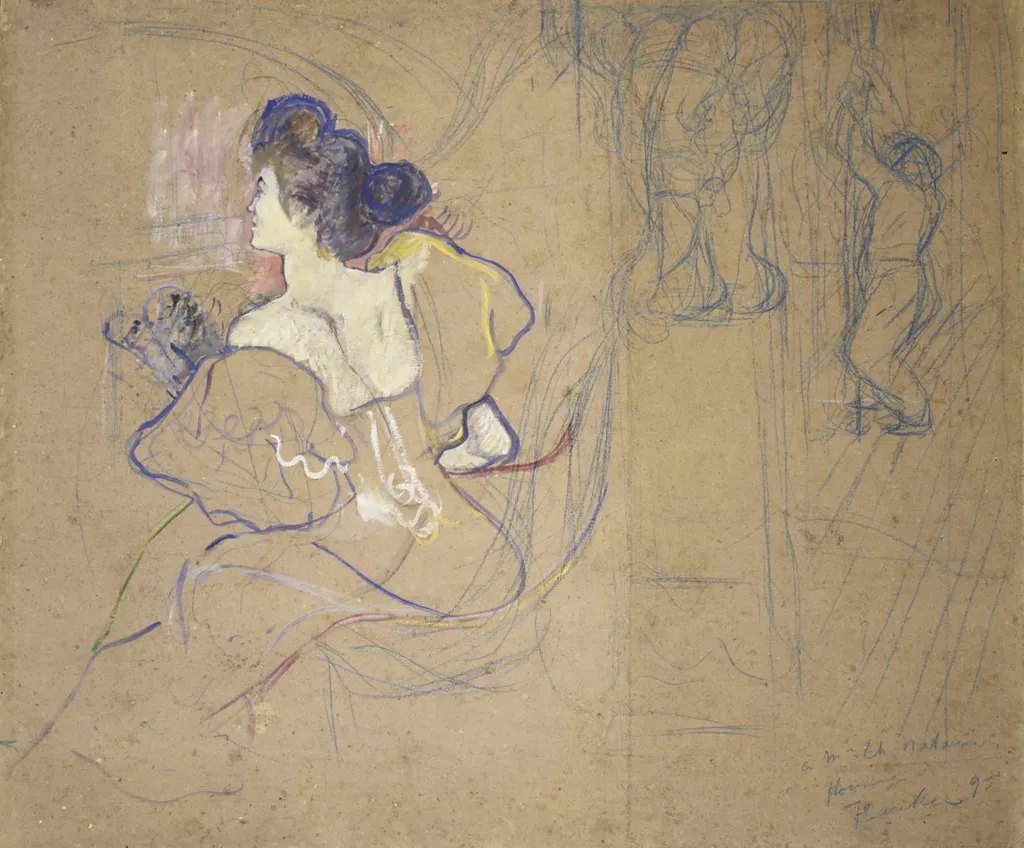
Madame Thadée Natanson (Misia Godebska, 1872–1950) at the Theater is an unspecified painting by the Post-Impressionist artist Henri de Toulouse-Lautrec. It dates from 1898 and is held in the collection of the Metropolitan Museum of Art.
About this work
Overview
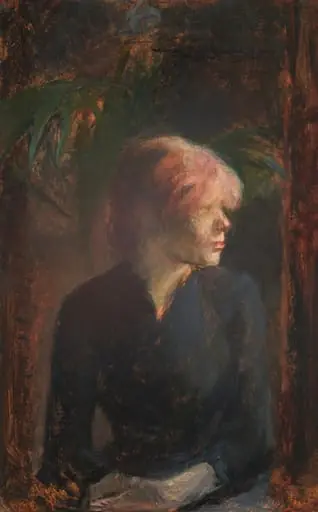
Henri de Toulouse-Lautrec's 1898 painting, Madame Thadée Natanson (Misia Godebska, 1872–1950) at the Theater, captures a notable figure of Parisian society.
Henri de Toulouse-Lautrec's 1898 painting, Madame Thadée Natanson (Misia Godebska, 1872–1950) at the Theater, captures a notable figure of Parisian society. The work portrays Misia Sert, a significant patron and musician, within a theatrical setting. This piece exemplifies the Post-Impressionist movement and is part of the collection at The Metropolitan Museum of Art, offering insight into the late 19th-century Parisian cultural scene through the artist's distinctive lens.
Subject & Meaning
The painting features Misia Sert, born Misia Godebska, a central personality in fin-de-siècle Parisian artistic and literary circles. Her presence in the theater reflects her role as a socialite and muse, often frequenting the city's vibrant cultural venues. Toulouse-Lautrec frequently depicted individuals from this milieu, capturing their essence and the atmosphere of their public lives. Her contemplative posture suggests a moment of quiet observation amidst the bustling environment.
Technique & Style
Toulouse-Lautrec rendered this scene with a spontaneous, almost sketch-like quality. The composition focuses on Misia Sert in profile, her form defined by a dark dress and light collar, while the background dissolves into loose, energetic lines. These quick, uneven strokes suggest movement and the indistinct presence of other figures, conveying the lively yet fleeting nature of a theatrical moment. This approach aligns with the Post-Impressionist emphasis on subjective interpretation and expressive brushwork.
Context
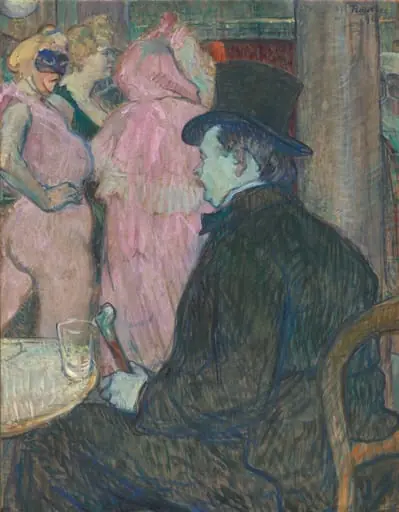
Born into an aristocratic family, Henri de Toulouse-Lautrec became renowned for his candid portrayals of Parisian nightlife. His art often explored the social dynamics of performers, patrons, and socialites in cabarets, circuses, and theaters. His personal experience, marked by physical challenges from childhood injuries, fostered a unique perspective and deep immersion in the city's vibrant, often unconventional, theatrical world, which he depicted with keen observation.
Artist & collection
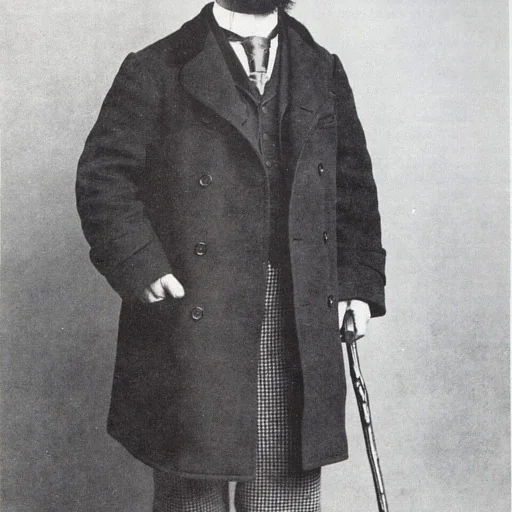
Artist
Comte Henri Marie Raymond de Toulouse-Lautrec-Montfa (24 November 1864 – 9 September 1901), known as Toulouse-Lautrec (French: ), was a French painter, printmaker, draughtsman, caricaturist, and illustrator.