Artwork
The Englishman (William Tom Warrener, 1861–1934) at the Moulin Rouge
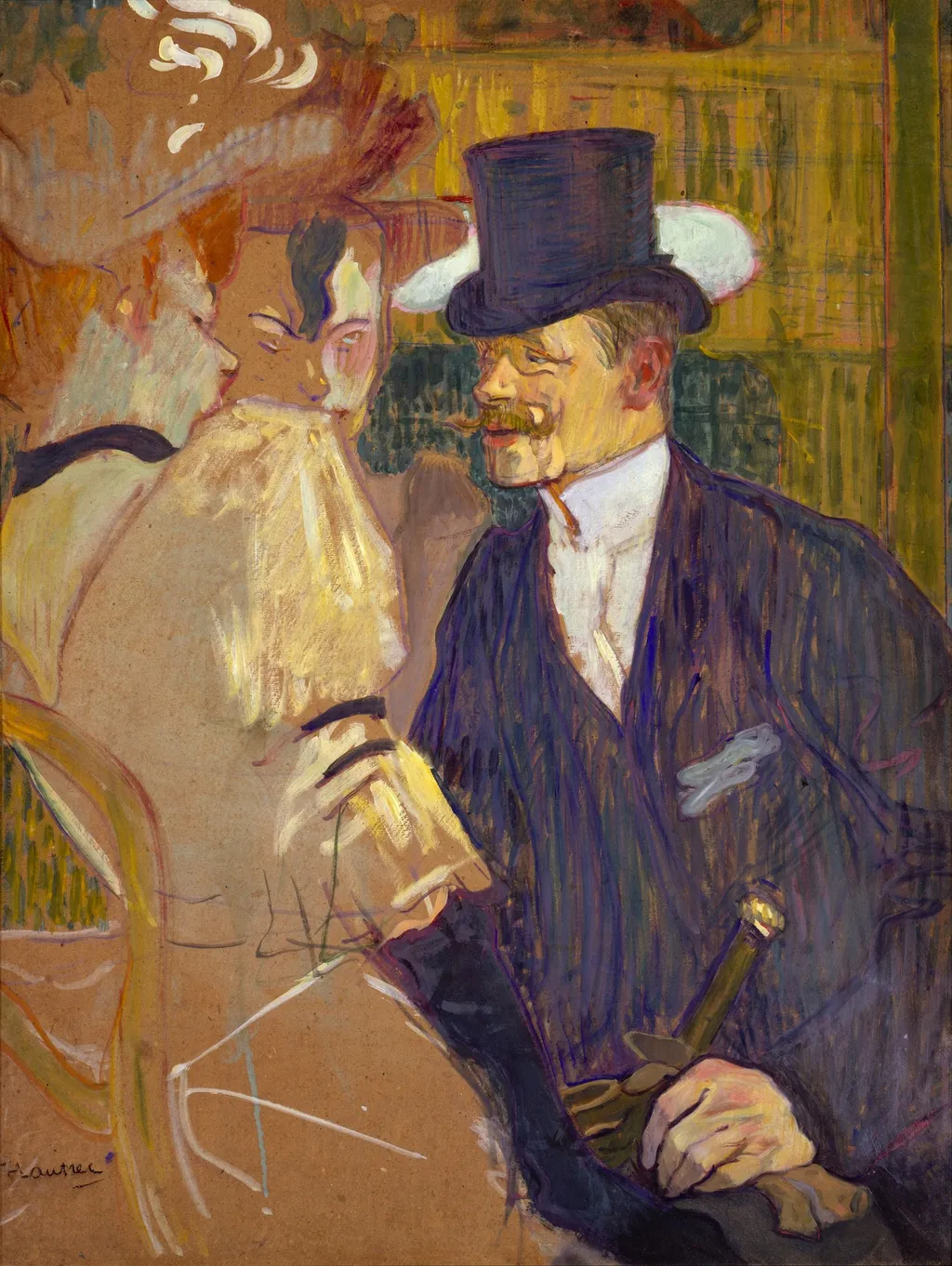
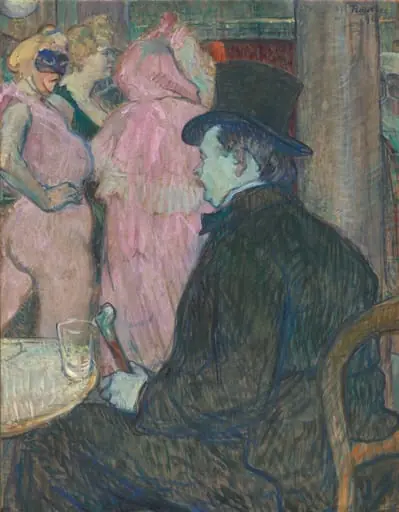
The Englishman (William Tom Warrener, 1861–1934) at the Moulin Rouge is an oil painting by the Post-Impressionist artist Henri de Toulouse-Lautrec. It dates from 1896 and is held in the collection of the Metropolitan Museum of Art.
About this work
Henri de Toulouse‑Lautrec painted *The Englishman (William Tom Warrener, 1861–1934) at the Moulin Rouge* in 1892.
Henri de Toulouse‑Lautrec painted *The Englishman (William Tom Warrener, 1861–1934) at the Moulin Rouge* in 1892. It’s an oil work on cardboard that shows his British friend William T. Warrener with two women inside the famous Paris cabaret.
The picture was actually a study for a color lithograph he made the same year. The museum bought it in 1967, adding it to its collection of late‑19th‑century French art.
museum: The Metropolitan Museum of Art
Overview
Henri de Toulouse-Lautrec's 1892 painting, The Englishman (William Tom Warrener, 1861–1934) at the Moulin Rouge, captures a scene within the renowned Parisian cabaret. Executed in oil on cardboard, the work features the British artist William T. Warrener, a personal acquaintance of Lautrec, accompanied by two women. This piece served as a preliminary study for a subsequent color lithograph and is now part of The Metropolitan Museum of Art's collection.
Subject & Meaning
The painting portrays William T. Warrener, a British artist and close friend of Toulouse-Lautrec, amidst the lively atmosphere of the Moulin Rouge. Situated in Paris, this popular cabaret was a frequent haunt and subject for Lautrec, who often depicted its performers and patrons. The inclusion of Warrener with two female companions offers a glimpse into the social interactions and vibrant nightlife characteristic of fin-de-siècle Parisian entertainment venues.
Technique & Style
Rendered in oil paint on cardboard, this work demonstrates Toulouse-Lautrec's direct and spontaneous approach. The choice of cardboard as a support, rather than canvas, often indicates a more immediate or experimental phase in an artist's process. Indeed, The Englishman functioned as a preparatory study, allowing Lautrec to refine his composition and color palette before translating the image into a more widely reproducible medium, a color lithograph, later that same year.
History & Provenance
This depiction of Parisian nightlife by Henri de Toulouse-Lautrec entered the collection of The Metropolitan Museum of Art in 1967. Its acquisition further enriched the museum's holdings of late-19th-century French art, particularly works reflecting the cultural milieu of the Belle Époque. The painting's journey to a major public institution ensures its preservation and accessibility for study and appreciation by a broad audience.
Own this work as a print
Artist & collection
Artist
Comte Henri Marie Raymond de Toulouse-Lautrec-Montfa (24 November 1864 – 9 September 1901), known as Toulouse-Lautrec (French: ), was a French painter, printmaker, draughtsman, caricaturist, and illustrator.