Artwork
Untitled
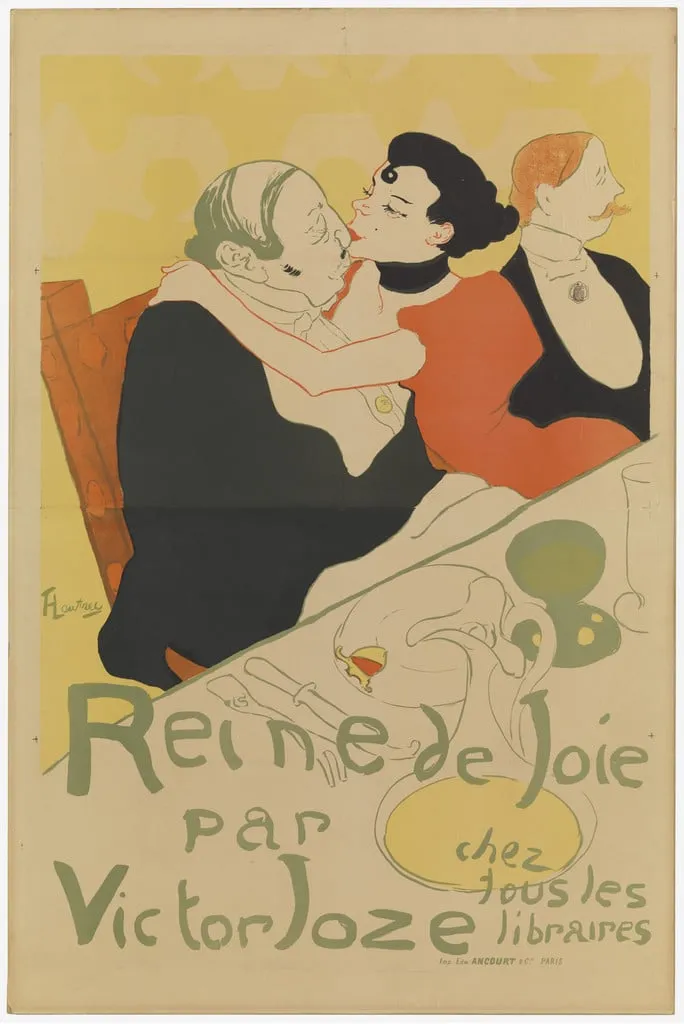
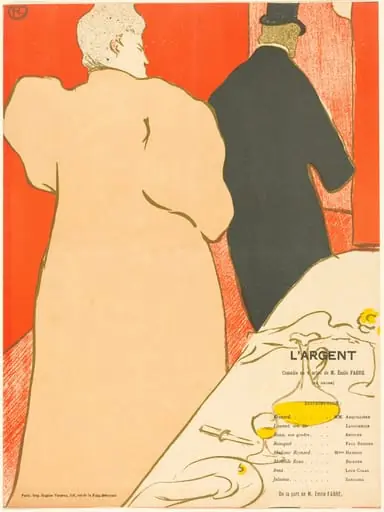
Untitled is an ink print by the Impressionist artist Henri de Toulouse-Lautrec. It dates from 1892 and is held in the collection of the Museum of Modern Art.
About this work
Overview
Though untitled, its composition and inscribed text suggest it was produced as an advertisement for a theatrical performance.
Created in 1892, this lithograph by Henri de Toulouse-Lautrec captures a quiet moment in a Parisian nightlife setting. Though untitled, its composition and inscribed text suggest it was produced as an advertisement for a theatrical performance. Toulouse-Lautrec, known for his keen observation of urban subcultures, used the medium of lithography to translate the energy of cabarets and social gatherings into accessible printed images.
Subject & Meaning
The scene depicts an intimate encounter between a man and a woman in a red dress, while a second man observes from the periphery. The gesture suggests romance or seduction, framed within a domesticated yet ambiguous space. The presence of wine and a cigarette implies a moment of pause amid performance culture. The inscription points to a play titled 'Reine de Joie,' linking the image to the commercial theater world of fin-de-siècle Paris.
Technique & Style
Toulouse-Lautrec employed bold outlines and flat areas of color, characteristic of lithographic poster design. The composition avoids depth, favoring graphic clarity to capture attention. The soft yellow background and restrained palette enhance the intimacy of the scene. His technique merged illustration with printmaking, allowing for mass reproduction while preserving the spontaneity of hand-drawn lines.
History & Provenance
The print was produced as a commercial poster, distributed through booksellers as part of a campaign for the play 'Reine de Joie' by Victor Joze. Such posters were common in 1890s Paris, blending art with advertising. Toulouse-Lautrec’s association with theater and cabaret culture made him a sought-after designer for promotional materials, though few of these prints were preserved as fine art at the time.
Context
In 1890s Montmartre, the boundaries between art, entertainment, and vice blurred. Toulouse-Lautrec, an aristocrat with a physical condition that isolated him from conventional society, found kinship among performers and patrons of nightlife. His work documented a world often ignored by mainstream art, offering a candid, unsentimental view of urban leisure and its participants.
Legacy
This lithograph exemplifies how Toulouse-Lautrec elevated commercial printmaking into a serious artistic form. His use of simplified forms and expressive line influenced later graphic design and modernist illustration. Though created for ephemeral purposes, such works are now recognized as vital records of Parisian social life and the evolution of visual communication in the modern age.
Artist & collection
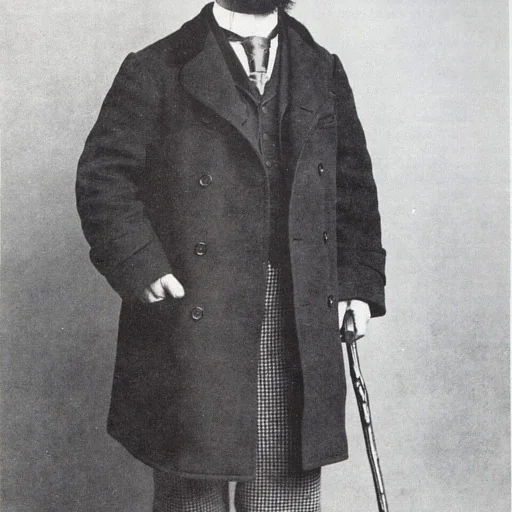
Artist
Comte Henri Marie Raymond de Toulouse-Lautrec-Montfa (24 November 1864 – 9 September 1901), known as Toulouse-Lautrec (French: ), was a French painter, printmaker, draughtsman, caricaturist, and illustrator.