Artwork
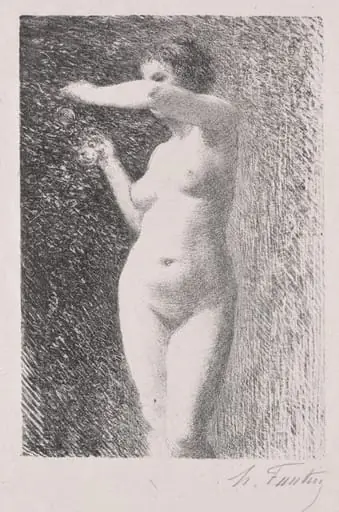
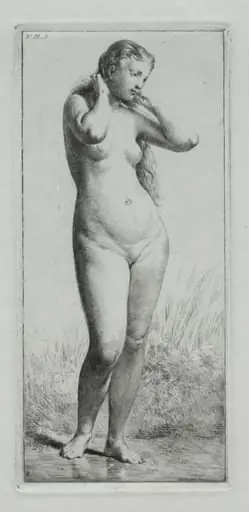
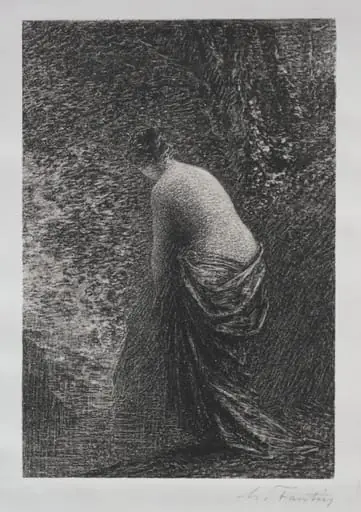
Bather Standing
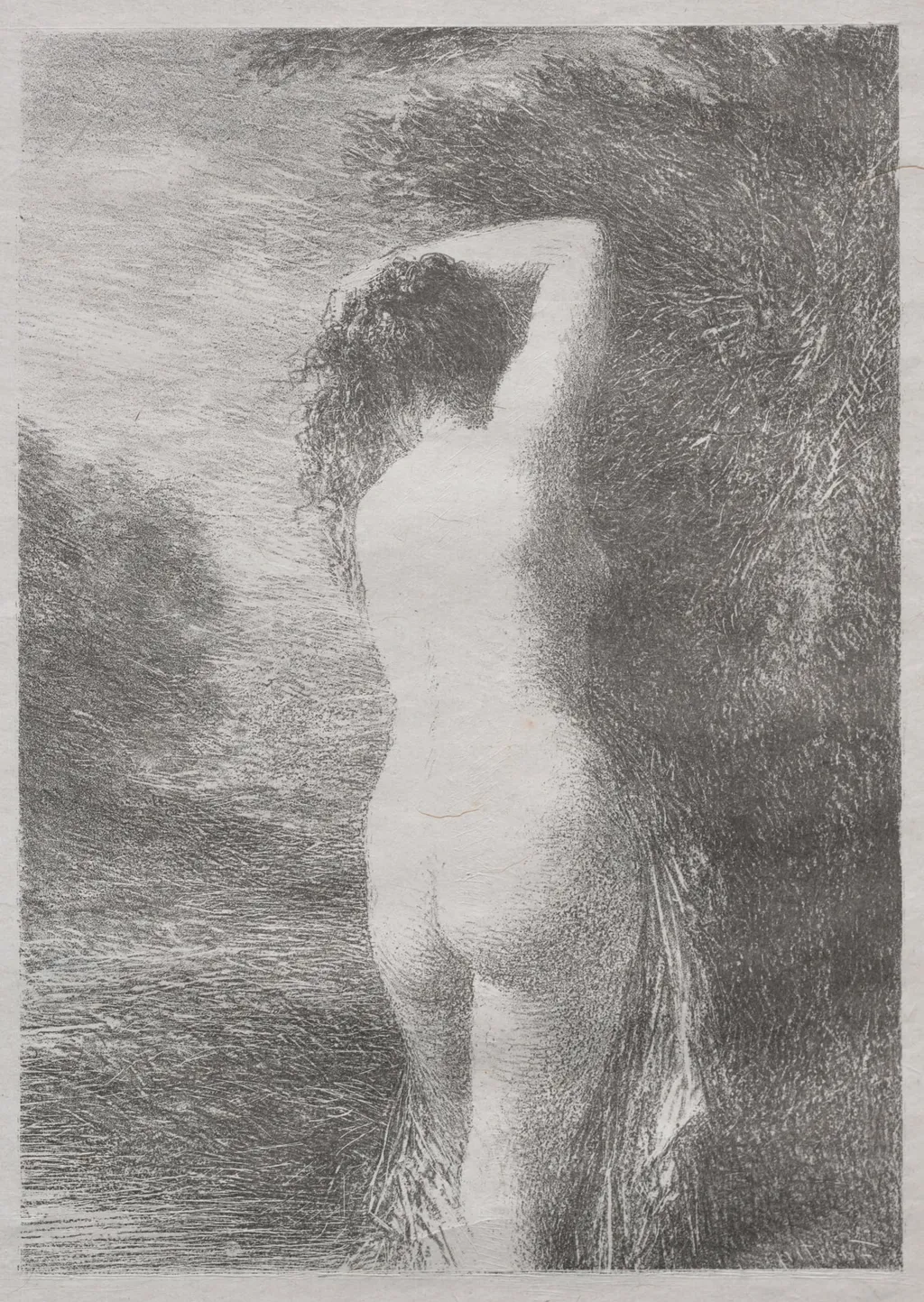
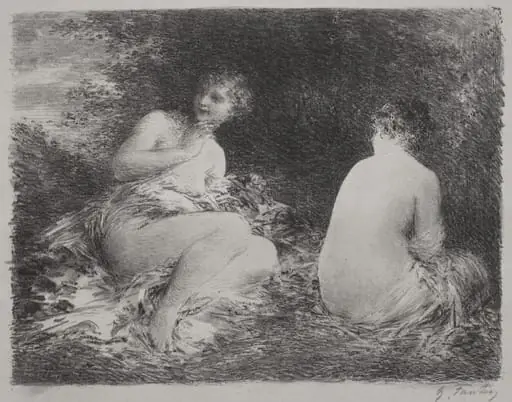
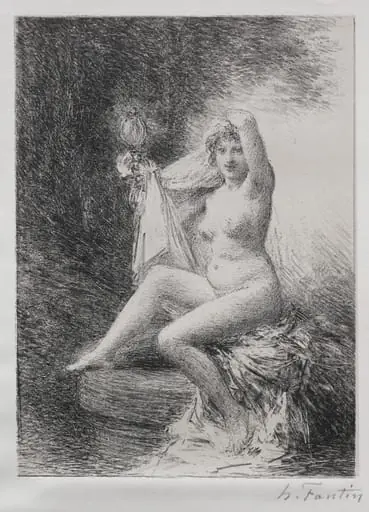
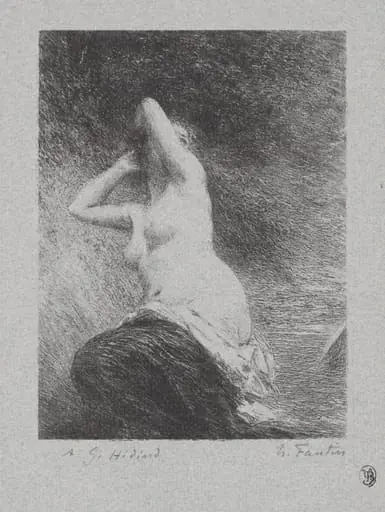
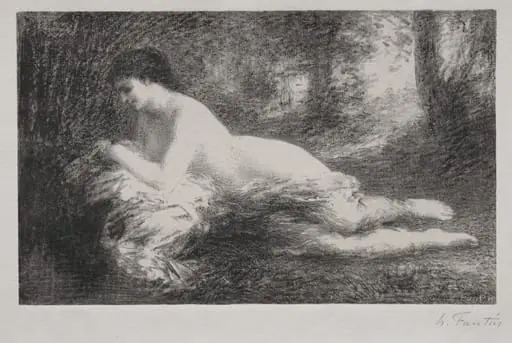
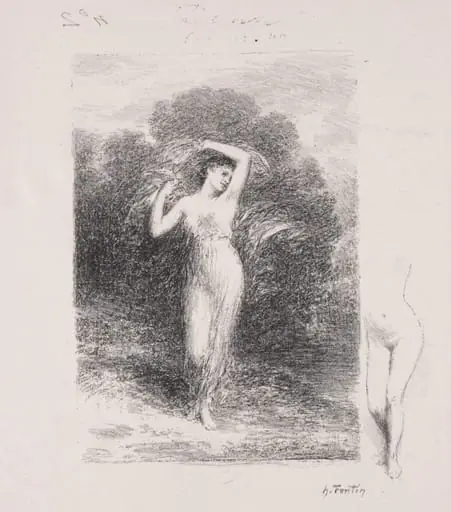
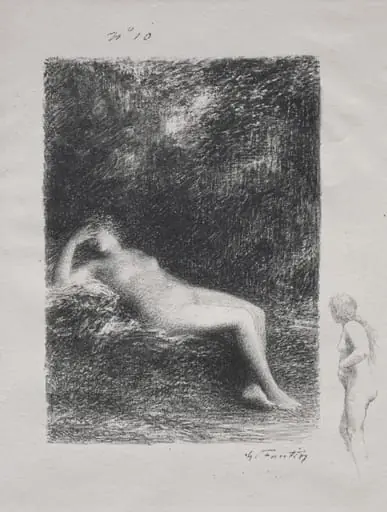
Bather Standing is a print by the Impressionist artist Henri Fantin-Latour. It dates from 1899 and is held in the collection of the Cleveland Museum of Art.
About this work
Overview
The piece reflects his late-career interest in the expressive potential of monochrome printmaking.
Created in 1899, *Bather Standing* is a lithograph by Henri Fantin-Latour, a French artist known for his quiet, introspective approach to figure and still-life subjects. Unlike his more celebrated floral still lifes and group portraits of literary figures, this work isolates the human form in a minimal setting, emphasizing atmosphere over narrative. The piece reflects his late-career interest in the expressive potential of monochrome printmaking.
Subject & Meaning
The subject is a woman seen from behind and slightly to the side, her body rendered in subtle tonal shifts rather than defined contours. Her face is obscured, and her identity remains anonymous, inviting focus on the physical presence of the figure rather than individual character. The pose is unposed, suggesting a private, unguarded moment, reinforcing a sense of intimacy without sentimentality.
Technique & Style
Fantin-Latour employed loose, uneven lithographic strokes to suggest form through shadow and tone rather than outline. The dark background absorbs detail, leaving only faint traces of skin and muscle. This restrained handling aligns with late 19th-century tendencies toward atmospheric suggestion, prioritizing mood and texture over precise rendering, though it diverges from the color-driven experiments of mainstream Impressionism.
History & Provenance
The work emerged from Fantin-Latour’s later years, when he increasingly turned to printmaking as a medium for personal exploration. It was likely produced in his Paris studio, where he maintained a disciplined practice separate from the avant-garde circles he once frequented. No major public collection records its early ownership, suggesting it was circulated privately among collectors of graphic art.
Context
While Fantin-Latour was associated with Realism and had early ties to the Impressionists, *Bather Standing* reflects a more solitary artistic path. His focus on tonal subtlety and restrained composition contrasts with the bright, broken brushwork of Monet or Renoir. The work aligns more closely with the introspective figure studies of Degas or the shadowed nudes of Whistler, reflecting a broader European shift toward psychological quietude in late-century art.
Legacy
Though not widely exhibited during his lifetime, *Bather Standing* exemplifies Fantin-Latour’s commitment to understated elegance in figure representation. It influenced later printmakers who valued tonal nuance over dramatic effect. Today, it stands as a quiet testament to his enduring interest in the human form as a vessel for light and silence, rather than narrative or spectacle.
Artist & collection
Artist
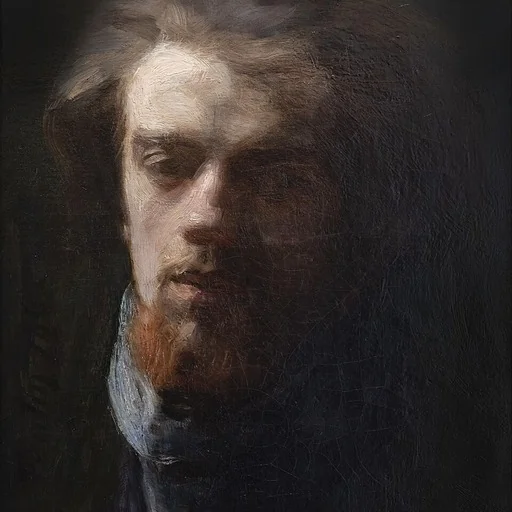
Ignace Henri Jean Theodore Fantin-Latour (French pronunciation: ; 14 January 1836 – 25 August 1904) was a French painter and lithographer best known for his flower paintings and group portraits of Parisian artists and writers.