Artwork
Young Woman Bathing
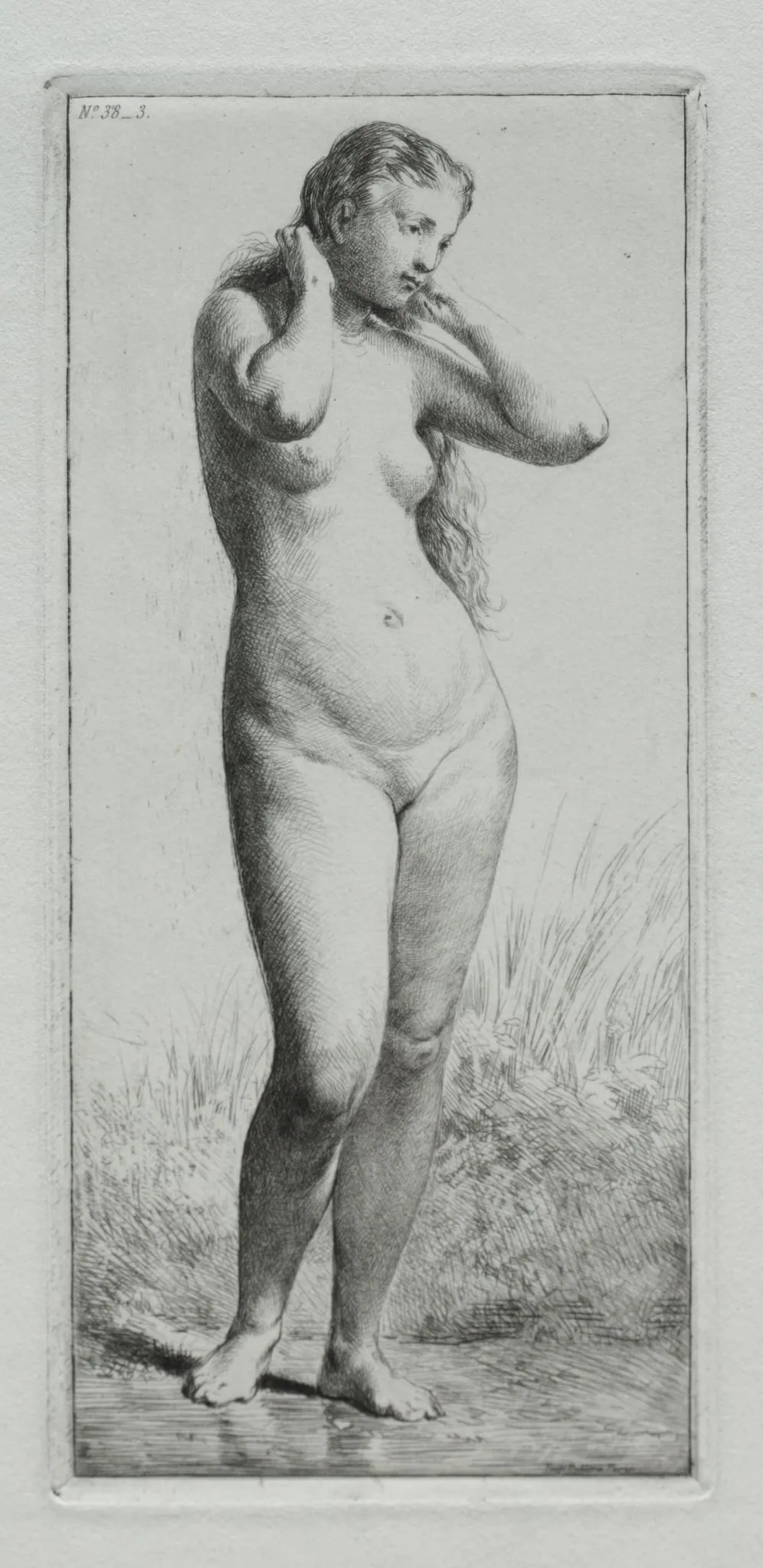
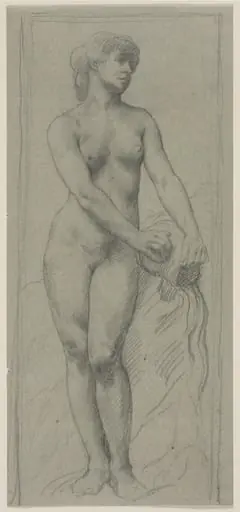
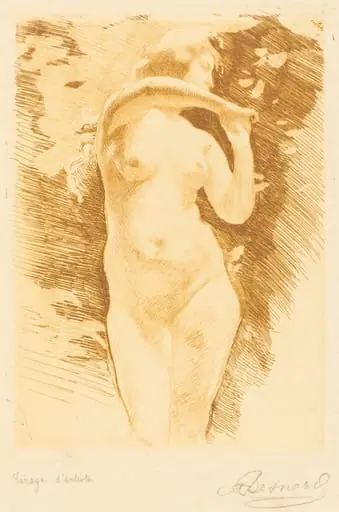
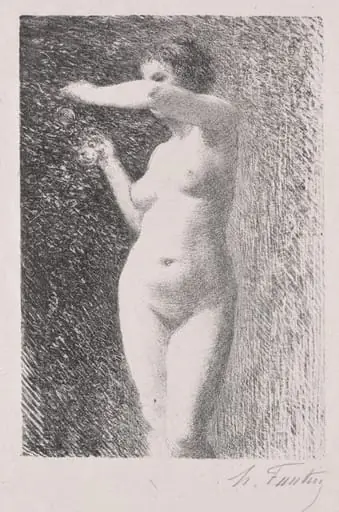
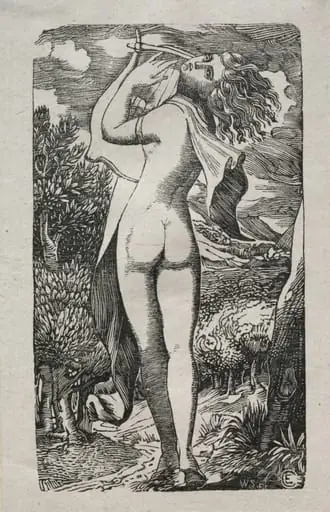
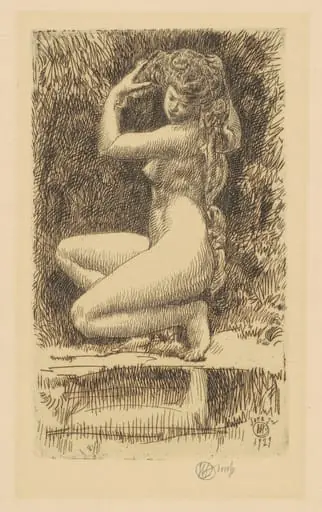
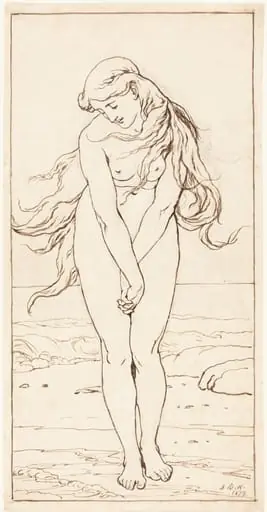
Young Woman Bathing is a print by the Impressionist artist Charles Jacque. It dates from 1866 and is held in the collection of the Cleveland Museum of Art.
About this work
Overview
Young Woman Bathing, a print by French artist Charles-Émile Jacque, dates to around 1866. Unlike his typical pastoral scenes, this work belongs to the nude genre and is part of The Cleveland Museum of Art's collection.
Subject & Meaning
The print depicts a serene, everyday moment of a barefoot young woman standing in shallow water, her body partially turned, with one hand holding her hair back. The scene conveys a sense of quiet intimacy.
Technique & Style
Jacque employs soft shading to render the subject's skin and suggest the gentle movement of the water. The simple background, featuring grass and wavy lines, further emphasizes the figure and the tranquil atmosphere.
History & Provenance
Created by Charles-Émile Jacque, a Barbizon School-associated artist, around 1866. Previously a map engraver during his seven-year service in the French Army, Jacque later applied his skills to artistic prints like this one. Now held in The Cleveland Museum of Art's collection.
Context
While Jacque is known for pastoral themes, Young Woman Bathing aligns with the Realist movement's emphasis on straightforward, everyday life depictions, differing from his more common landscape focus.
Legacy
As a lesser-known work within Jacque's oeuvre, its significance lies in showcasing the artist's versatility beyond pastoral scenes and its representation of mid-19th-century Realist tendencies in French art.
Artist & collection
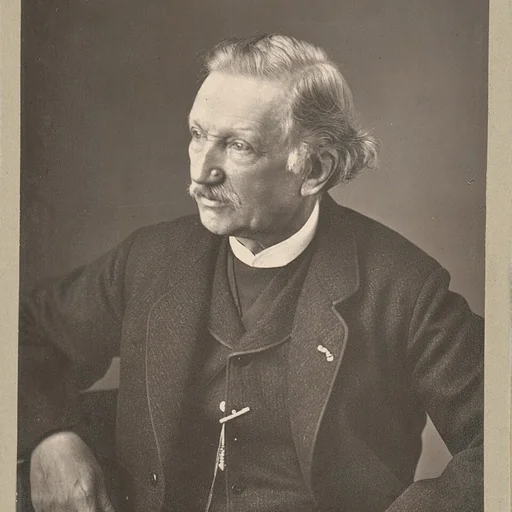
Artist
Charles-Émile Jacque (23 May 1813 – 7 May 1894) was a French painter of Pastoralism and engraver who was, with Jean-François Millet, part of the Barbizon School. He first learned to engrave maps when he spent seven years in the French Army.