Artwork
Debut from Paradise and the Peri (Second Plate)
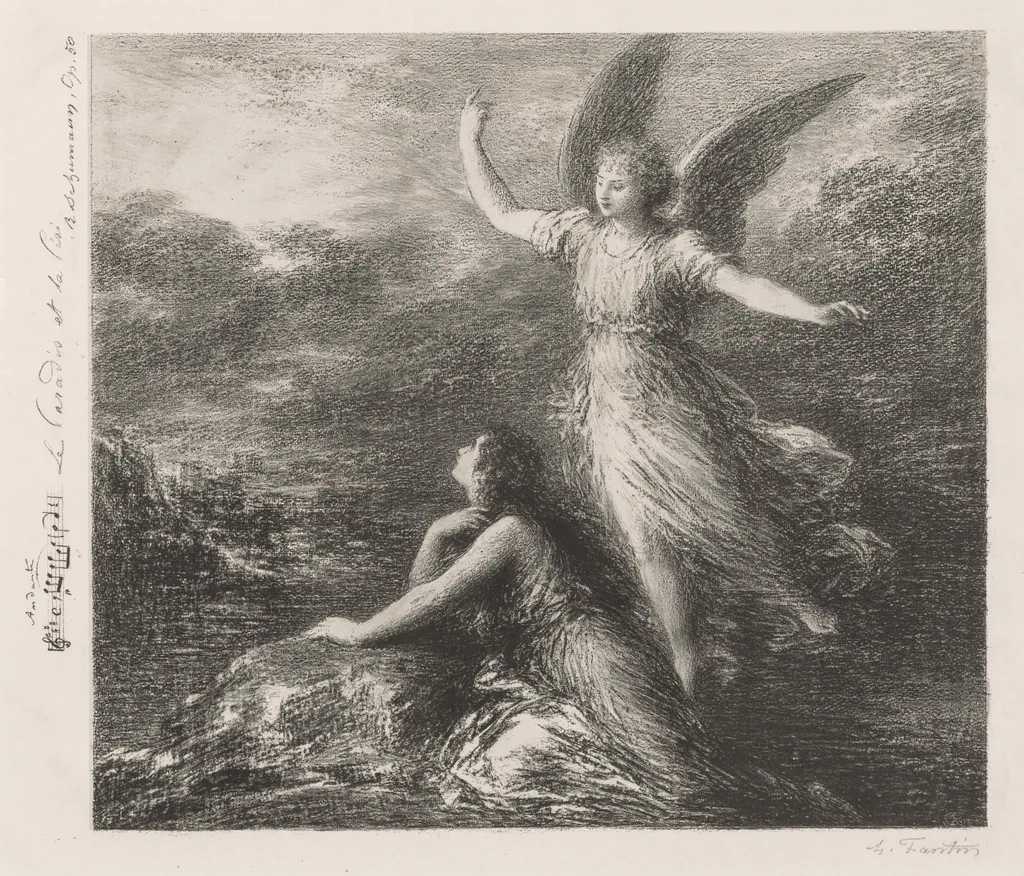
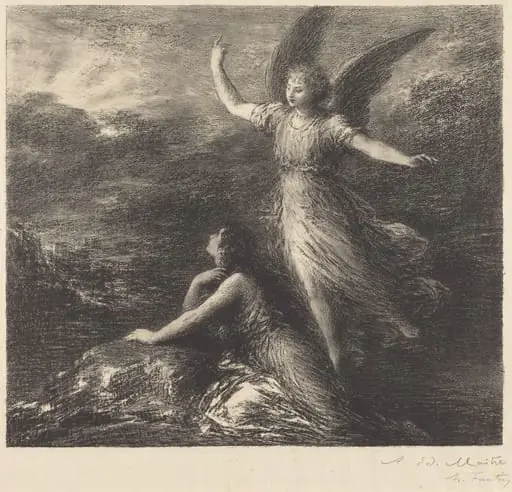
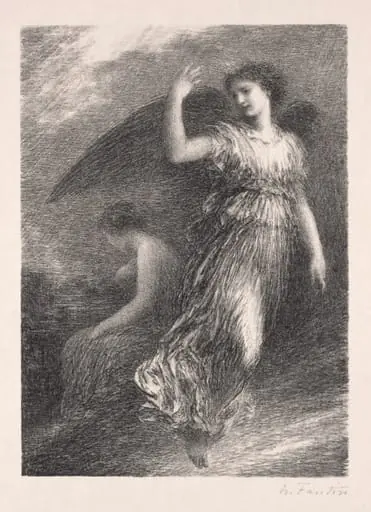
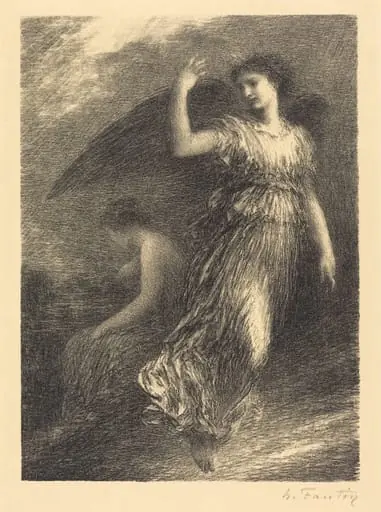
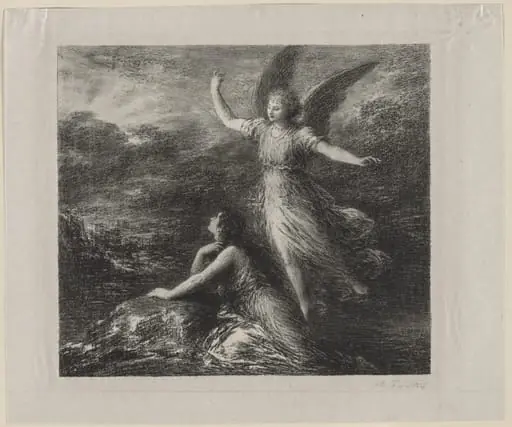
Debut from Paradise and the Peri (Second Plate) is a print by the Impressionist artist Henri Fantin-Latour. It dates from 1894 and is held in the collection of the Cleveland Museum of Art.
About this work
Overview
The print reflects his engagement with Romantic and Symbolist themes, moving beyond realism toward emotional resonance.
Created in 1894, this lithograph by Henri Fantin-Latour is the second plate in a series inspired by the poetic myth of the Peri, a celestial being from Persian tradition. Though best known for still lifes and group portraits, Fantin-Latour turned in his later years to allegorical subjects, blending literary symbolism with quiet, introspective imagery. The print reflects his engagement with Romantic and Symbolist themes, moving beyond realism toward emotional resonance.
Subject & Meaning
The image portrays a winged figure, likely a Peri, descending toward a hunched, shadowed form on the ground, suggesting a soul or fallen spirit. The Peri, a mythic entity from Persian lore, was believed to seek entry into paradise through acts of virtue. Here, the gesture implies a moment of judgment or offering, evoking themes of redemption, loss, and the boundary between the divine and the earthly without explicit narrative.
Technique & Style
Fantin-Latour employed loose, expressive lithographic lines to convey motion and psychological tension. The contrast between the softly rendered, luminous angel and the dark, smudged mass below creates a sense of weight and unease. The background, deliberately rough and indeterminate, suggests a liminal space—neither sky nor sea—enhancing the dreamlike quality. The technique prioritizes mood over detail, aligning with Symbolist ideals.
History & Provenance
The print was produced in 1894 as part of a small series exploring mythological subjects, a departure from Fantin-Latour’s earlier commercial success in portraiture. It was likely printed in limited numbers for private collectors and art societies. The work entered the collection of The Cleveland Museum of Art through a later acquisition, where it remains as an example of the artist’s lesser-known symbolic phase.
Context
In the 1890s, French artists increasingly turned to myth and poetry as alternatives to naturalism. Fantin-Latour, though rooted in academic tradition, responded to Symbolist currents championed by writers like Baudelaire and Mallarmé. This print reflects a broader cultural shift toward introspective, allegorical imagery, where myth served as a vehicle for exploring inner states rather than telling stories.
Legacy
Though not widely exhibited during his lifetime, this lithograph exemplifies Fantin-Latour’s late artistic evolution. It stands as a quiet testament to his engagement with literary symbolism and his willingness to abandon commercial success for personal expression. Today, it is recognized as a nuanced contribution to the Symbolist print tradition, valued for its emotional restraint and poetic ambiguity.
Own this work as a print
Artist & collection
Artist
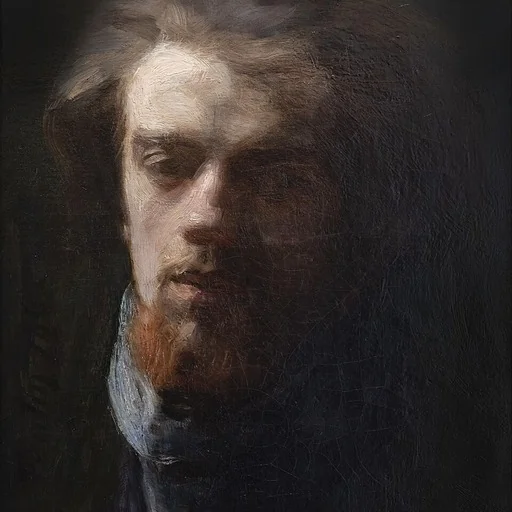
Ignace Henri Jean Theodore Fantin-Latour (French pronunciation: ; 14 January 1836 – 25 August 1904) was a French painter and lithographer best known for his flower paintings and group portraits of Parisian artists and writers.