Artwork
Le Paradis et la Peri
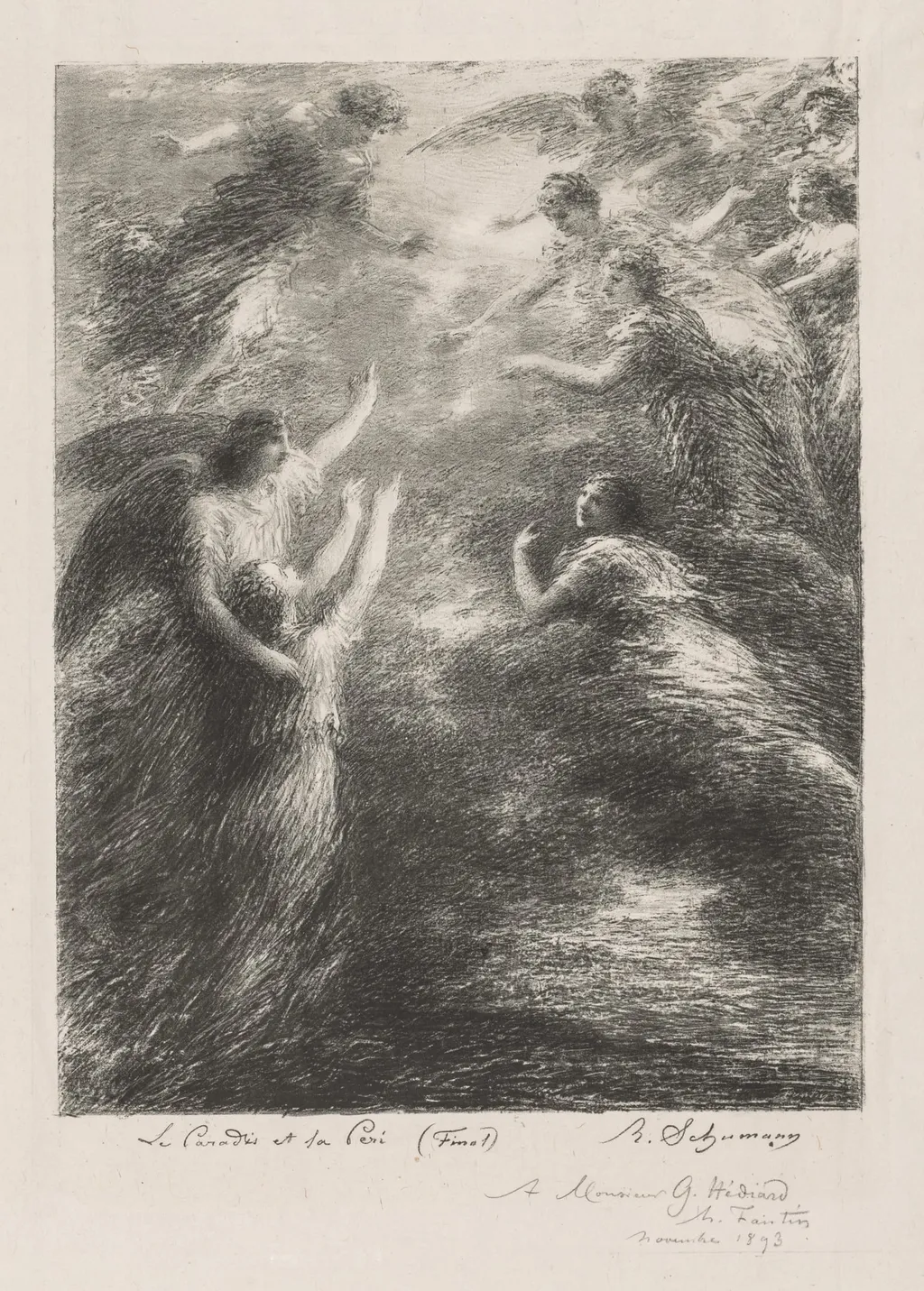
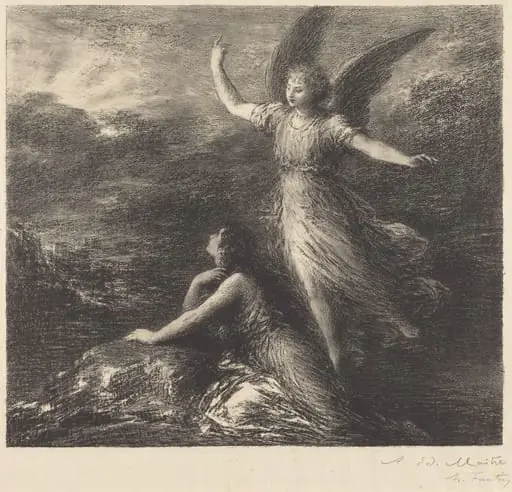
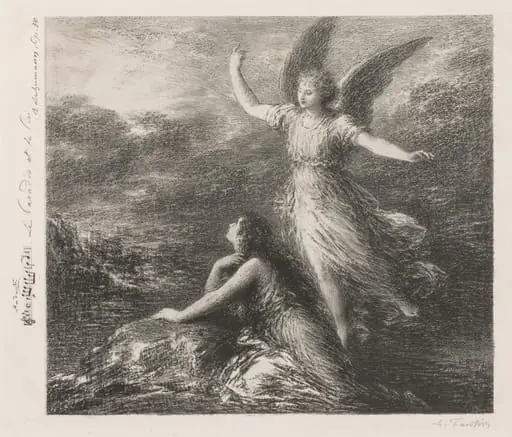
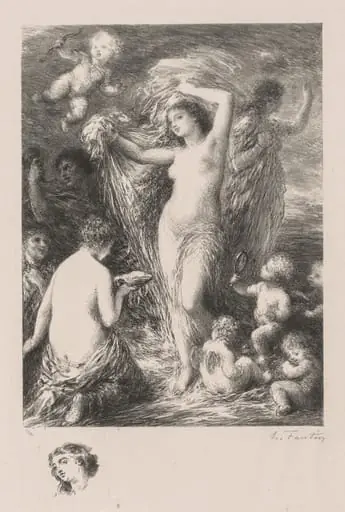
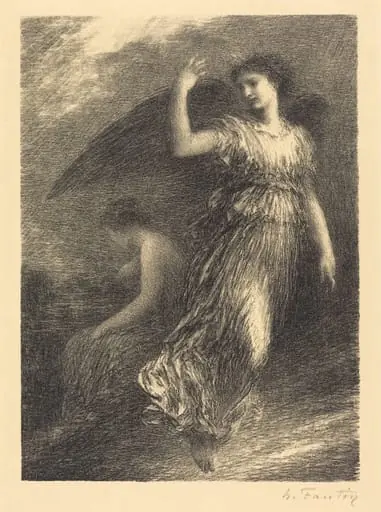
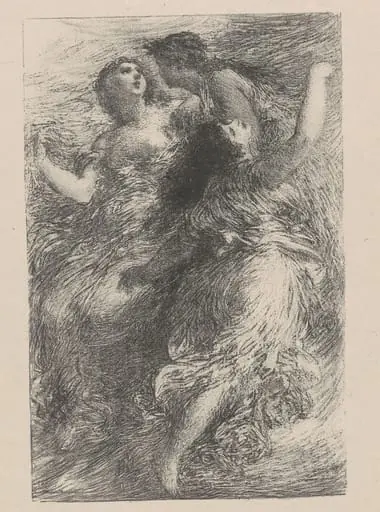
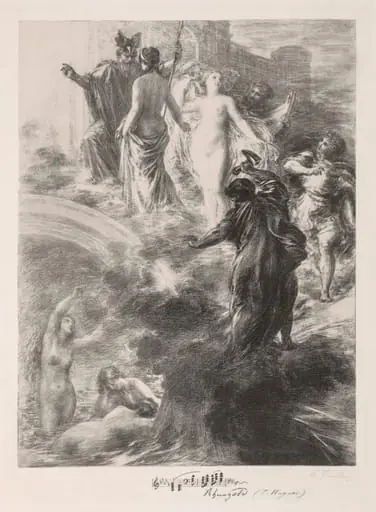
Le Paradis et la Peri is a print by the Impressionist artist Henri Fantin-Latour. It dates from 1893 and is held in the collection of the Cleveland Museum of Art.
About this work
Overview
Henri Fantin-Latour produced the lithograph *Le Paradis et la Peri* in 1893, marking a departure from his more familiar still lifes and artist group portraits.
Henri Fantin-Latour produced the lithograph *Le Paradis et la Peri* in 1893, marking a departure from his more familiar still lifes and artist group portraits. This work belongs to a series of mythological and literary subjects he explored later in his career. Executed in lithography, it reflects his interest in poetic, otherworldly themes. The piece is held in the collection of the Cleveland Museum of Art, where it is recognized for its delicate tonal range and symbolic composition.
Subject & Meaning
The image illustrates a scene from a Persian legend, in which a peri—a celestial, winged spirit—enters paradise to seek redemption. The central woman, dressed in white, embodies the peri, while the robed man may represent a guardian or divine figure. Surrounding figures suggest a celestial court, their forms blurred to evoke spiritual presence. The composition conveys a quiet moment of moral reckoning, emphasizing grace over drama, and silence over narrative climax.
Technique & Style
Fantin-Latour employed lithography to achieve subtle gradations of gray, using fine lines and soft washes to model forms without harsh contours. The flowing drapery of the woman’s gown is rendered with delicate, fluid strokes, suggesting motion within stillness. The background dissolves into hazy light, minimizing spatial depth to enhance the dreamlike atmosphere. His technique prioritizes mood over detail, aligning with Symbolist ideals of evoking emotion through ambiguity.
History & Provenance
Created near the end of Fantin-Latour’s career, *Le Paradis et la Peri* emerged from his engagement with literary sources, including the poetry of Théophile Gautier. It was likely printed in a small edition, typical of artist lithographs of the period. The work entered the Cleveland Museum of Art’s collection in the 20th century, where it has remained a quiet but significant example of his later symbolic phase, distinct from his earlier Realist works.
Context
In the 1890s, Fantin-Latour turned increasingly toward myth and allegory, responding to the Symbolist movement’s rise in France. While his peers embraced bold color and expressive distortion, he retained a restrained palette and classical composition. His choice of a Persian tale reflects broader European fascination with Eastern literature. The work stands apart from his portraits, revealing a private engagement with themes of purity, exile, and transcendence.
Legacy
Though less known than his group portraits, *Le Paradis et la Peri* exemplifies Fantin-Latour’s quiet evolution as an artist seeking spiritual resonance beyond realism. Its influence is subtle, found in later Symbolist printmakers who valued mood over narrative. The lithograph remains a testament to his mastery of tone and his ability to convey inner states through restrained, luminous form, bridging 19th-century tradition and emerging modern sensibilities.
Artist & collection
Artist
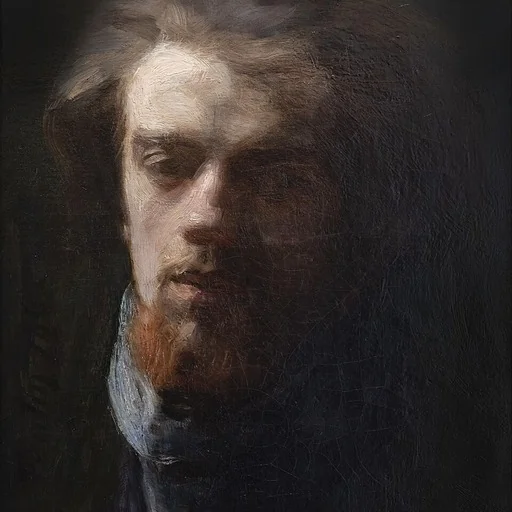
Ignace Henri Jean Theodore Fantin-Latour (French pronunciation: ; 14 January 1836 – 25 August 1904) was a French painter and lithographer best known for his flower paintings and group portraits of Parisian artists and writers.