Artwork
The Embroideres (Les Brodeuses),
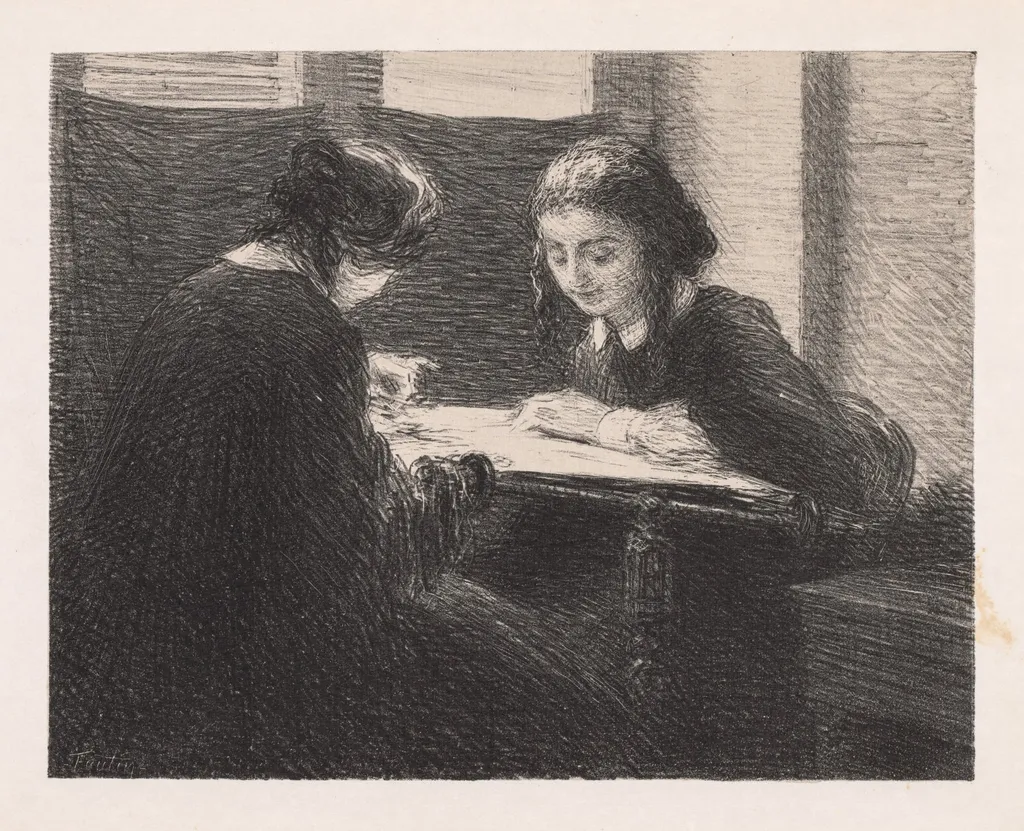
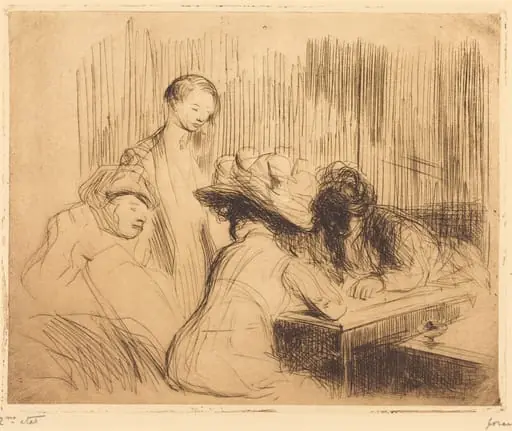
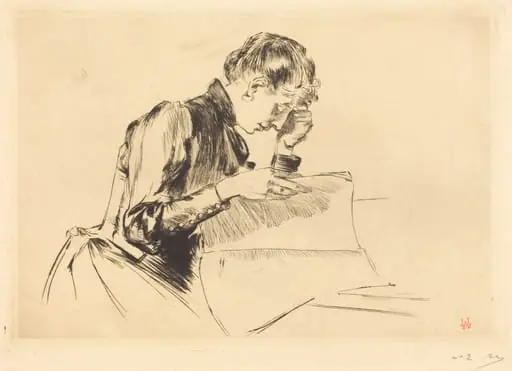
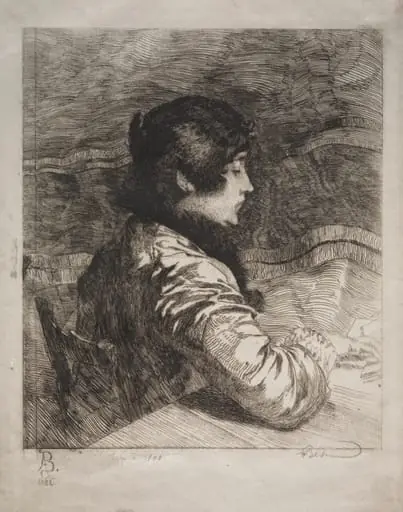
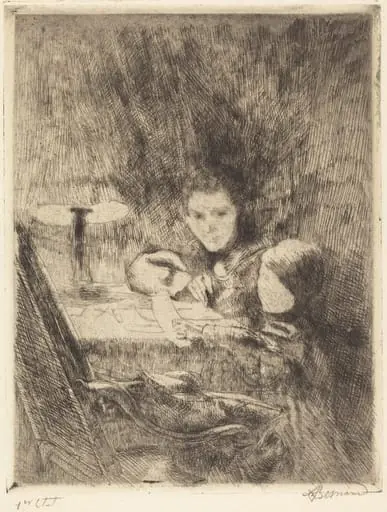
The Embroideres (Les Brodeuses), is a print by the Impressionist artist Henri Fantin-Latour. It dates from 1898 and is held in the collection of the Cleveland Museum of Art.
About this work
Overview
Though best known for floral still lifes and group portraits of literary figures, Fantin-Latour turned here to an intimate domestic scene.
Created in 1898, *The Embroiderers (Les Brodeuses)* is a lithograph by Henri Fantin-Latour, capturing two women absorbed in needlework. Though best known for floral still lifes and group portraits of literary figures, Fantin-Latour turned here to an intimate domestic scene. The work reflects his continued interest in quiet, contemplative moments, rendered with a restrained tonal palette and delicate line work characteristic of his later prints.
Subject & Meaning
The two women, seated in close proximity, are engaged in the quiet, repetitive labor of embroidery. Their focused postures suggest a rhythm of daily life rather than a staged performance. The absence of narrative or ornamentation emphasizes the dignity of ordinary female labor, a theme present in 19th-century realism. The intimacy of their interaction, unadorned and unobserved, invites reflection on solitude and shared routine.
Technique & Style
Fantin-Latour employed loose, expressive lithographic lines to suggest form without definition, allowing shadows to dissolve into the surrounding darkness. The light entering from the right window is subdued, casting a soft glow that models the figures without harsh contrast. The background remains indistinct, focusing attention on the hands and fabric. This approach aligns with a tonalist sensibility, prioritizing mood over detail.
History & Provenance
The print entered the collection of The Cleveland Museum of Art in the 20th century, following its creation in 1898. It was likely produced as part of a limited edition, consistent with Fantin-Latour’s practice of publishing prints to reach broader audiences. No significant exhibition history or ownership changes are documented prior to its acquisition by the museum, suggesting it remained in private hands for decades.
Context
In late 19th-century France, domestic scenes of women at work gained traction among artists seeking alternatives to grand historical or mythological subjects. Fantin-Latour’s depiction aligns with a broader trend toward realism, though his approach avoids the social commentary of contemporaries like Degas or Millet. His focus on stillness and subtlety reflects a personal aesthetic rooted in quiet observation rather than public narrative.
Legacy
Though less celebrated than his floral compositions, *The Embroiderers* exemplifies Fantin-Latour’s enduring interest in intimate, unembellished moments. The work contributes to a quieter strand of late 19th-century printmaking that valued emotional resonance over dramatic effect. Its preservation in a major public collection ensures its continued presence in discussions of gender, labor, and the aesthetics of stillness in modern art.
Own this work as a print
Artist & collection
Artist
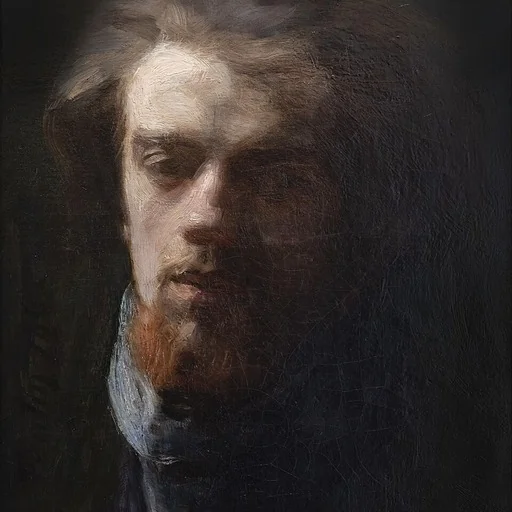
Ignace Henri Jean Theodore Fantin-Latour (French pronunciation: ; 14 January 1836 – 25 August 1904) was a French painter and lithographer best known for his flower paintings and group portraits of Parisian artists and writers.