Artwork
The Music Room
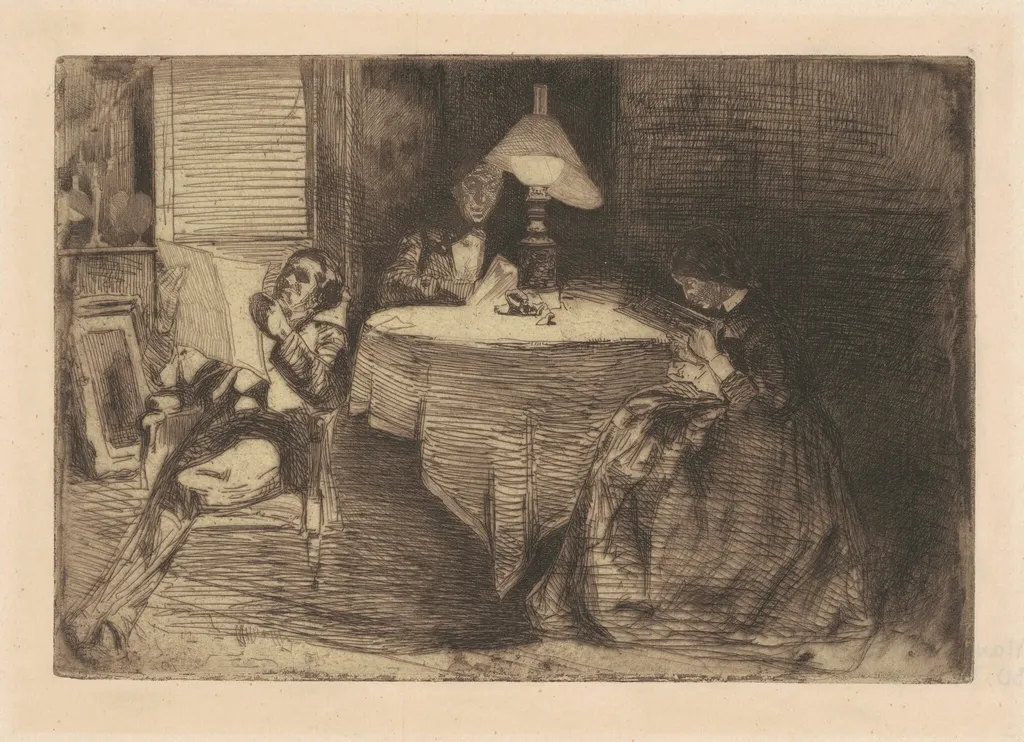
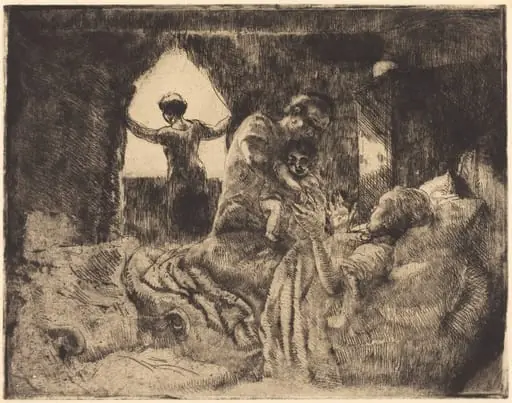
The Music Room is an ink print by the Impressionist artist James McNeill Whistler. It dates from 1859 and is held in the collection of the National Gallery of Art.
About this work
Overview
This print by James McNeill Whistler, titled 'The Music Room,' is an etching and drypoint on wove paper, rendered in brown-black ink.
This print by James McNeill Whistler, titled 'The Music Room,' is an etching and drypoint on wove paper, rendered in brown-black ink. It portrays three figures gathered around a circular table under the soft glow of a single lamp. The composition emphasizes stillness and quiet engagement, avoiding dramatic action in favor of subtle, contemplative presence. The medium’s fine lines and tonal depth contribute to an atmosphere of restrained intimacy.
Subject & Meaning
The figures—two women and a man—are engaged in unobtrusive, private activities: one reads, another listens, and the third sits in quiet reflection. No conversation is depicted, and gestures are minimal, suggesting an unspoken harmony. The scene conveys a sense of domestic tranquility, not as a narrative moment but as an enduring mood. Whistler treats the room as a vessel for emotional resonance rather than storytelling.
Technique & Style
Whistler employed etching and drypoint to achieve nuanced gradations of tone and texture. The lamp’s glow is suggested through delicate, incised lines that fade into shadow, while the figures emerge from the darkness with soft, blurred contours. Drypoint’s burr adds a velvety richness to the darkest areas, enhancing the sense of enclosure. His approach prioritizes atmospheric effect over detail, aligning with his broader aesthetic of tonal harmony.
History & Provenance
Created in the early 1880s, this print belongs to Whistler’s series of interior scenes made during his time in London. It was likely produced for his personal print portfolio, intended for collectors who appreciated his experimental printmaking. The work was not widely exhibited at the time but circulated among connoisseurs of print culture. Its survival in private and institutional collections reflects its quiet influence on modern printmaking.
Context
In the 1880s, Whistler was shifting focus from portraiture to intimate interiors, influenced by Japanese prints and the Aesthetic Movement’s emphasis on beauty over moral narrative. 'The Music Room' reflects this turn: it rejects anecdotal content in favor of sensory experience. The scene’s subdued palette and compositional balance echo contemporary European trends toward lyrical, mood-driven imagery in both painting and print.
Legacy
Though less celebrated than Whistler’s portraits, 'The Music Room' exemplifies his mature printmaking style and his commitment to tonal subtlety. It influenced later artists exploring mood through minimalism and controlled light, particularly in early 20th-century American etchers. The work remains a quiet reference point in discussions of print as a medium for emotional nuance rather than spectacle.
Artist & collection
Artist
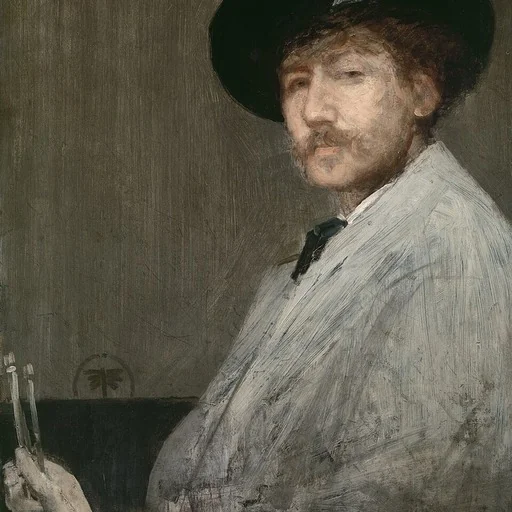
James Abbott McNeill Whistler was an American painter in oils and watercolor, and printmaker, active during the American Gilded Age and based primarily in the United Kingdom.

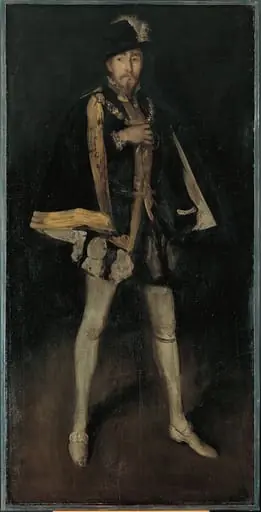 Arrangement in Black, No. 3: Sir Henry Irving as Philip II of Spain
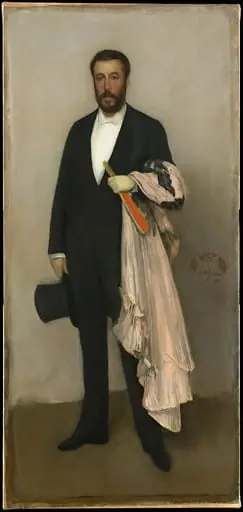 Arrangement in Flesh Colour and Black: Portrait of Theodore Duret
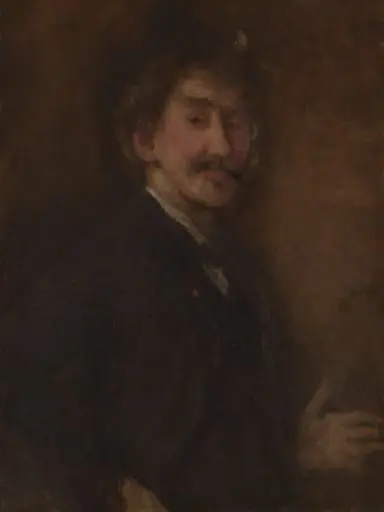 Gold and Brown: Self-Portrait
 Edward Guthrie Kennedy
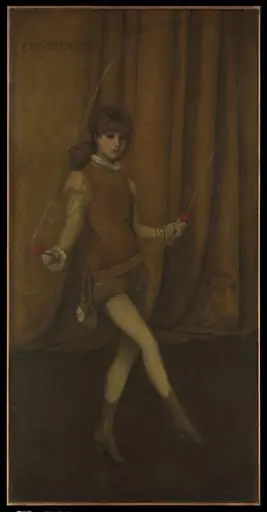 Harmony in Yellow and Gold: The Gold Girl—Connie Gilchrist
 George W. Vanderbilt
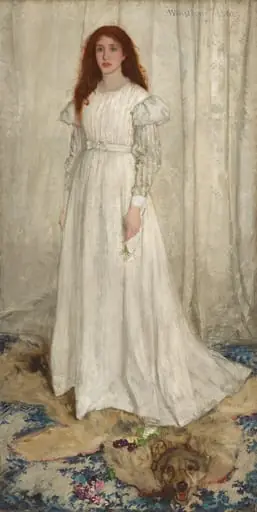 Symphony in White, No. 1: The White Girl
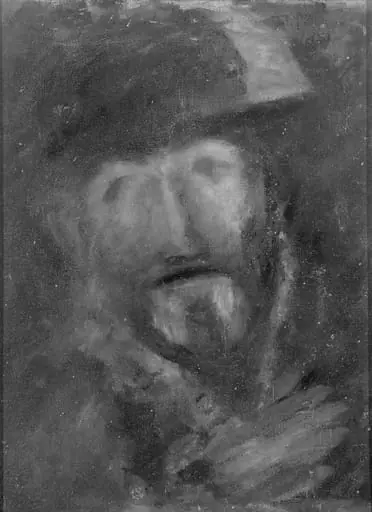 Henry Irving as Philip II of Spain
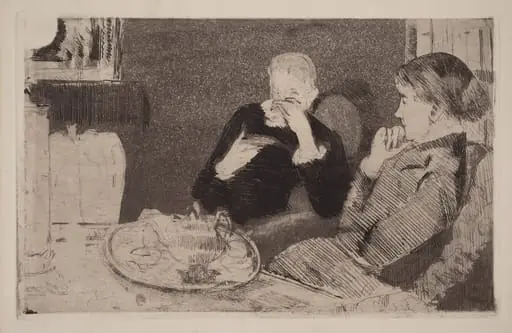 Lydia and Her Mother at Tea
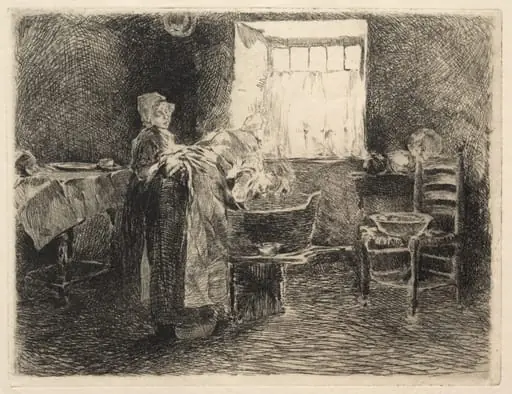 Monday Morning, Holland
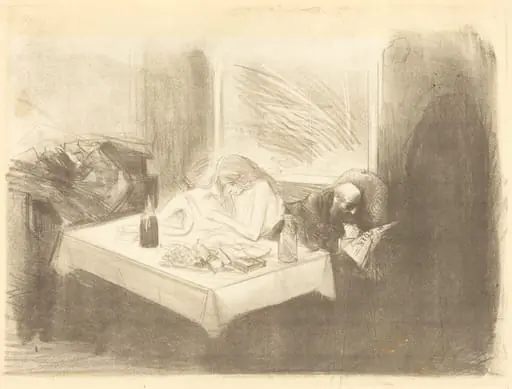 Le cabinet particulier (4e planche) (The Private Room) (fourth plate)
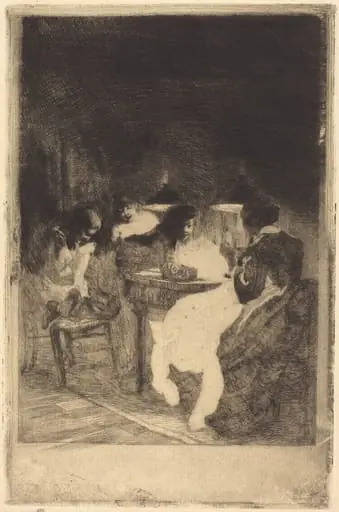 The Childhood of Pierre Clémenceau (L'Enfance de Pierre Clémenceau)
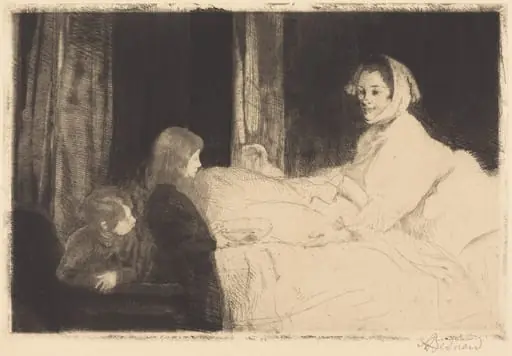 The Sick Mother (La mère malade)
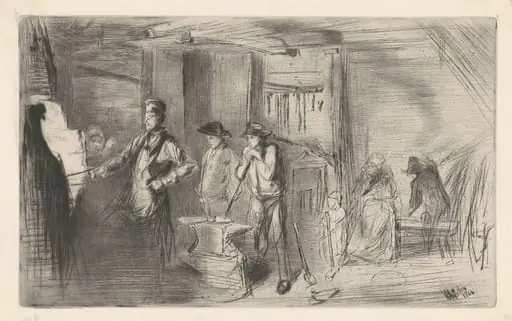 The Forge
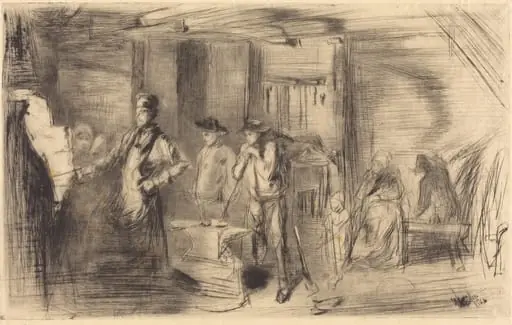 The Forge
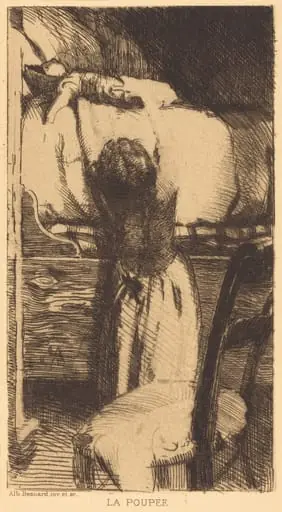 The Doll (La Poupée)
 Greeting Grandmother (Le Bonjour à la Grand-mère)