Artwork
Les Fossiles (Program from Théâtre Libre)
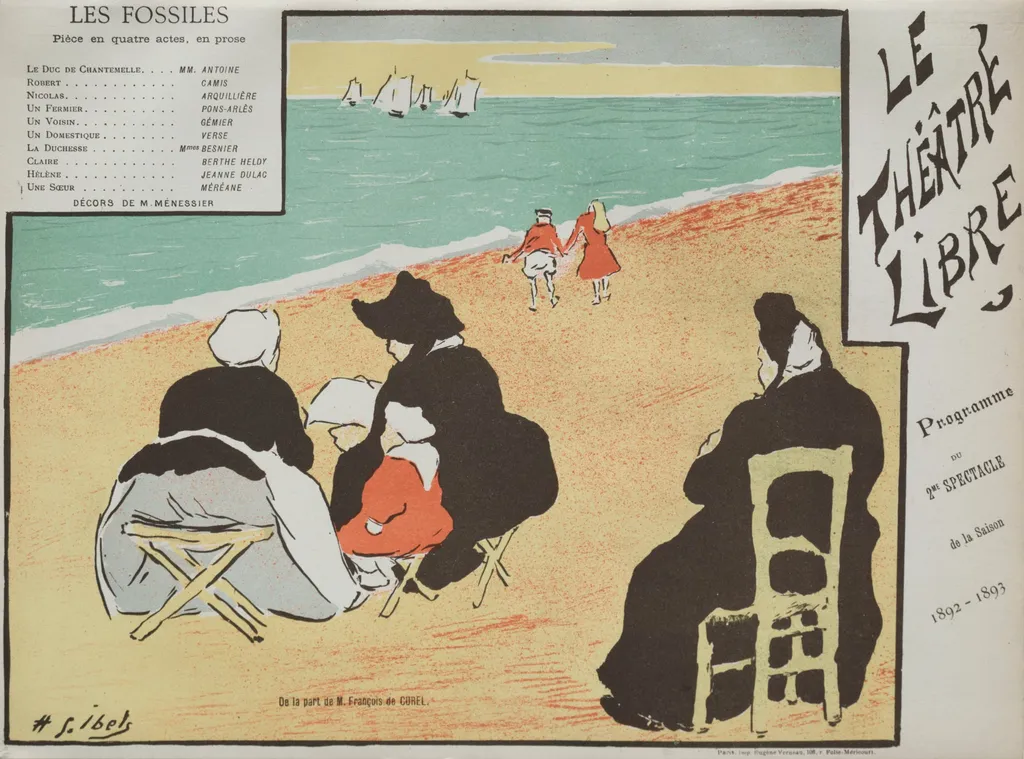
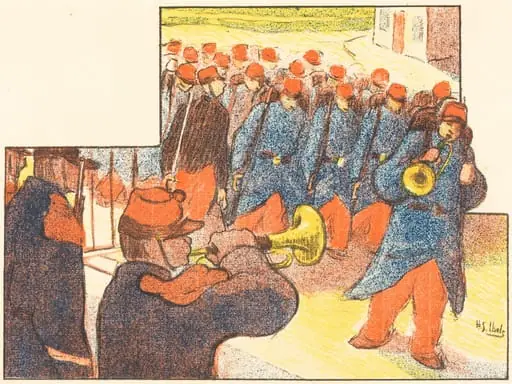
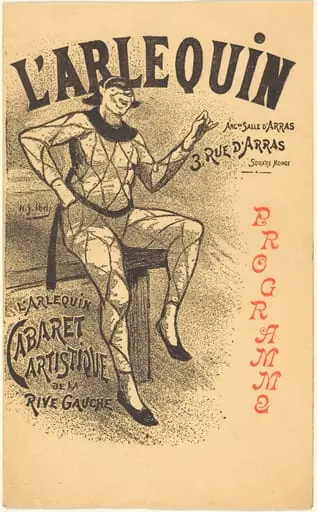
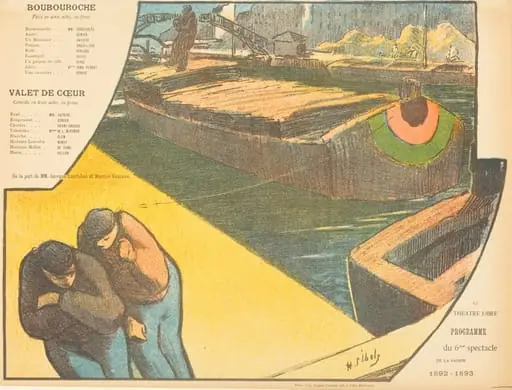
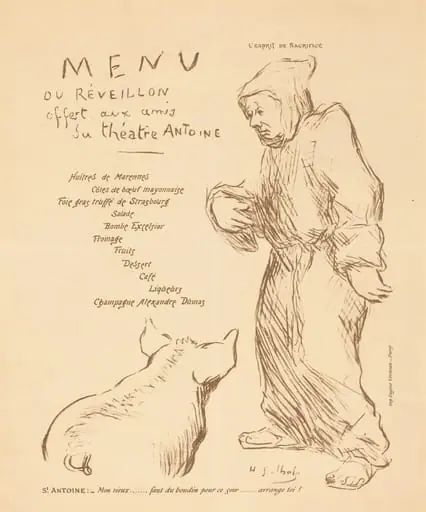
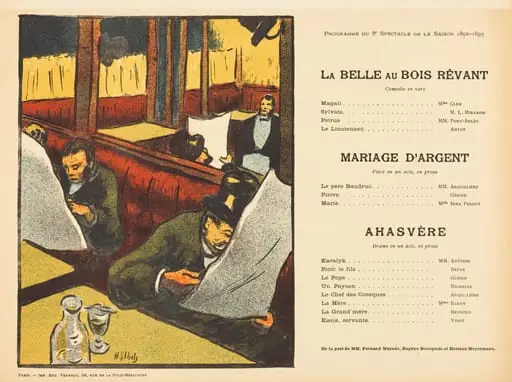
Les Fossiles (Program from Théâtre Libre) is a print by the Impressionist artist Henri-Gabriel Ibels. It dates from 1892 and is held in the collection of the Cleveland Museum of Art.
About this work
Overview
The piece reflects Ibels’s engagement with contemporary French cultural life and his interest in capturing everyday social scenes with restrained elegance.
Created in 1892 by Henri Gabriel Ibels, Les Fossiles is a printed program for Théâtre Libre, a Parisian theater known for staging naturalist dramas. Designed as a lithograph, it functions both as a theatrical advertisement and a standalone graphic work. The piece reflects Ibels’s engagement with contemporary French cultural life and his interest in capturing everyday social scenes with restrained elegance.
Subject & Meaning
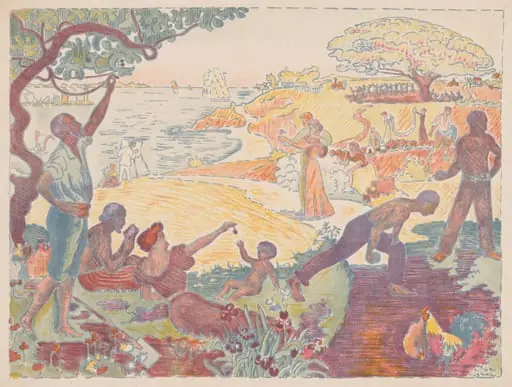
The image depicts a quiet beach scene with figures seated in dark attire, their postures suggesting contemplation. A solitary figure in a red coat walks along the shore, contrasting subtly with the muted tones around them. The title, meaning 'The Fossils,' implies a commentary on societal stagnation or the weight of tradition, aligning with Théâtre Libre’s mission to challenge conventional theater and expose social inertia.
Technique & Style
Ibels employed lithography to achieve a flat, graphic quality with minimal shading. The palette is restrained—dominated by grays, browns, and soft blues—enhancing the somber mood. Forms are simplified, outlines are deliberate, and spatial depth is suggested rather than rendered realistically. This approach aligns with late 19th-century graphic art trends that favored clarity and symbolic resonance over naturalistic detail.
History & Provenance
The print was produced as part of a series of programs for Théâtre Libre, founded by André Antoine to promote naturalist plays. Ibels, a frequent collaborator with the theater, designed several of its promotional materials. The Cleveland Museum of Art acquired the work as part of its broader collection of French graphic art from the fin de siècle, recognizing its significance in the evolution of modern poster design.
Context
In the 1890s, Parisian avant-garde circles embraced art that engaged with modern life and social critique. Théâtre Libre rejected melodrama in favor of psychological realism, mirroring the naturalist literature of Zola and Ibsen. Ibels’s program design echoed this ethos: understated, observational, and quietly subversive, reflecting a broader cultural shift toward art that questioned societal norms through restraint rather than spectacle.
Legacy
Les Fossiles stands as an example of how graphic design became a vehicle for artistic and ideological expression in the late 19th century. Ibels’s work influenced later poster artists by demonstrating that simplicity and symbolic weight could convey complex themes. Though not widely known today, the print remains a quiet testament to the intersection of theater, print culture, and social commentary in fin-de-siècle France.
Artist & collection
Artist
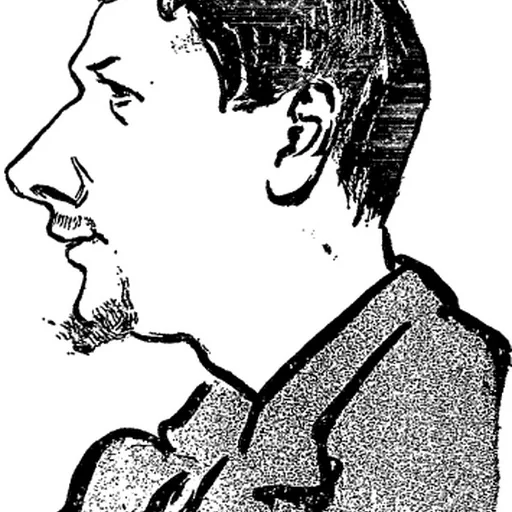
Henri-Gabriel Ibels (1867–1936) was a French artist, born in 10ᵗʰ arrondissement of Paris.

![Men Towing a Barge [Study for Boubourouche], by Henri-Gabriel Ibels](https://artifactworldgallery.com/img/henri-gabriel-ibels--men-towing-a-barge-study-for-boubourouche--2afc843c43c02cba-w320.webp)