Artwork
Traité des arbres fruitiers: Rambour d'été
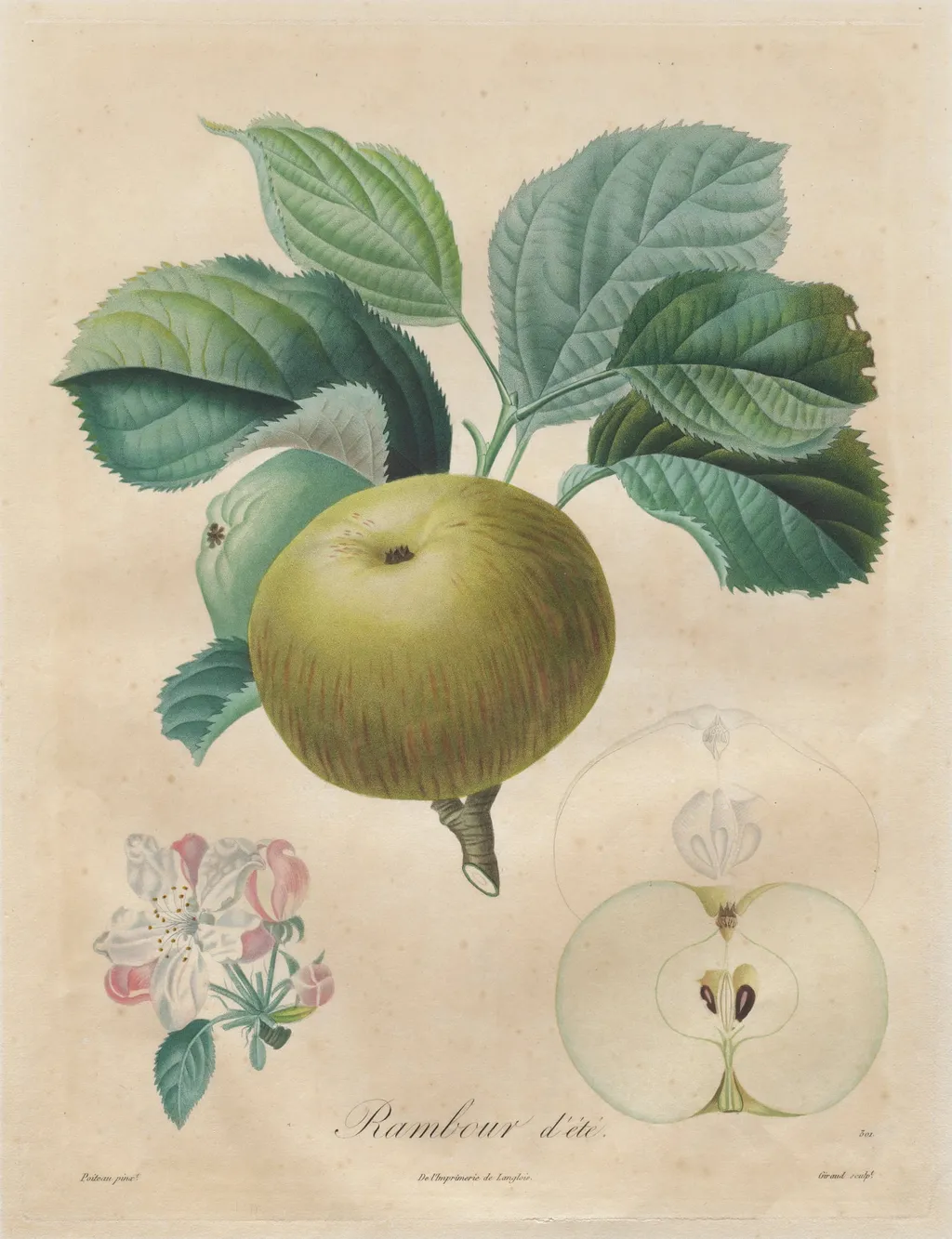
Traité des arbres fruitiers: Rambour d'été is a print by the Romanticist artist Henri Louis Duhamel du Monceau. It is held in the collection of the Cleveland Museum of Art.
About this work
The artist painted it life-size, with a plain white background that keeps your focus on the fruit.
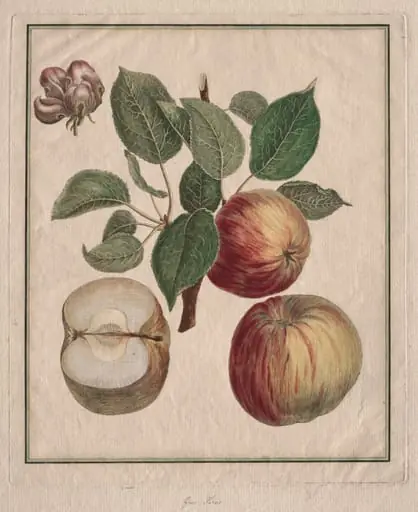
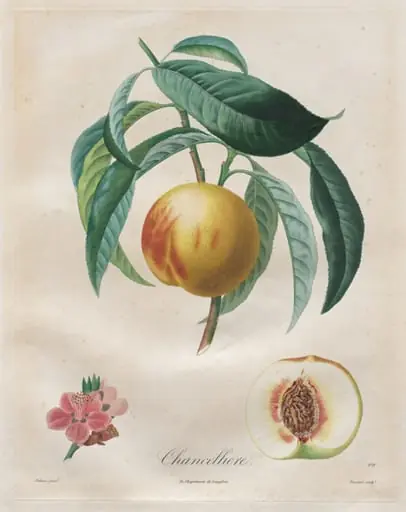
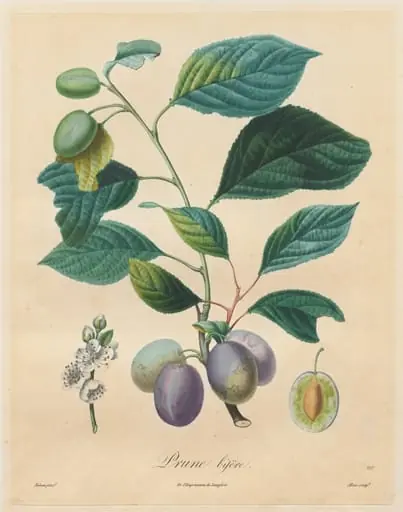
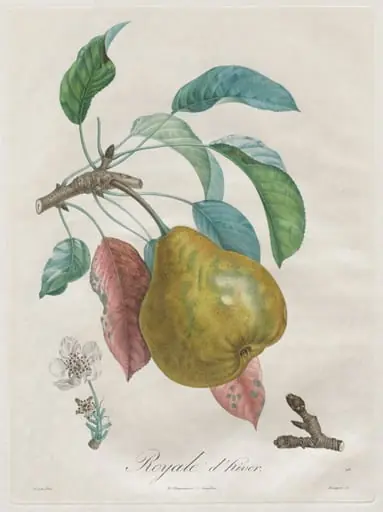
This painting shows a single pear, its skin dotted with freckles and a small brown spot. The artist painted it life-size, with a plain white background that keeps your focus on the fruit.
Duhamel du Monceau wrote a whole book about fruit trees, and this image comes from that project. He worked in the 1700s, but this print wasn’t made until later—between 1808 and 1835.
Look up Henri Louis Duhamel du Monceau (French, 1700–1782) for more of his plant studies.
Overview
This print is one of many illustrations from Henri Louis Duhamel du Monceau’s comprehensive study of fruit trees, originally compiled in the 18th century. Though the text was published earlier, this specific plate was produced between 1808 and 1835, long after the author’s death. It was later acquired by The Cleveland Museum of Art as part of a collection documenting botanical science through visual record.
Subject & Meaning
The image depicts a single summer Rambour pear, rendered with precise attention to its natural markings—freckles and a subtle blemish on the skin. The plain white background eliminates distraction, emphasizing the fruit’s form and texture. This was not decorative art but a scientific record, intended to aid identification and cultivation by capturing the pear’s distinctive features at life scale.
Technique & Style
The print employs fine line work and subtle tonal gradations to mimic the pear’s surface with botanical accuracy. No shading or color is used beyond ink, relying on precision of contour and texture to convey realism. The composition is deliberately minimal, reflecting the methodical approach of 18th-century scientific illustration, where clarity and fidelity outweigh aesthetic flourish.
History & Provenance
Duhamel du Monceau authored the original treatise in the 1700s, but this print was produced posthumously during a period when his work was being republished. The plate likely emerged from a reissue of his botanical volumes between 1808 and 1835. Its presence in The Cleveland Museum of Art reflects 19th-century interest in preserving and disseminating Enlightenment-era scientific documentation.
Context
Duhamel du Monceau was a French scientist whose work bridged agriculture and natural history. His fruit tree treatise was part of a broader movement to systematize horticultural knowledge for practical use. These illustrations served as reference tools for farmers, nurserymen, and scholars, aligning with Enlightenment ideals of observation, classification, and utility in the natural world.
Legacy
Though not widely known outside botanical circles, Duhamel’s illustrations contributed to the standardization of plant documentation in Europe. His method of life-size, unembellished depiction influenced later botanical atlases. This print endures as an example of how scientific rigor shaped visual representation in natural history, long before photography became a tool for such records.
Artist & collection
Artist
Henri Louis Duhamel du Monceau
Henri Louis Duhamel du Monceau (1700–1782) was a French artist.