Artwork
Collection des fleurs et des fruits: Branches de rousselet, pêche, prune et raisin
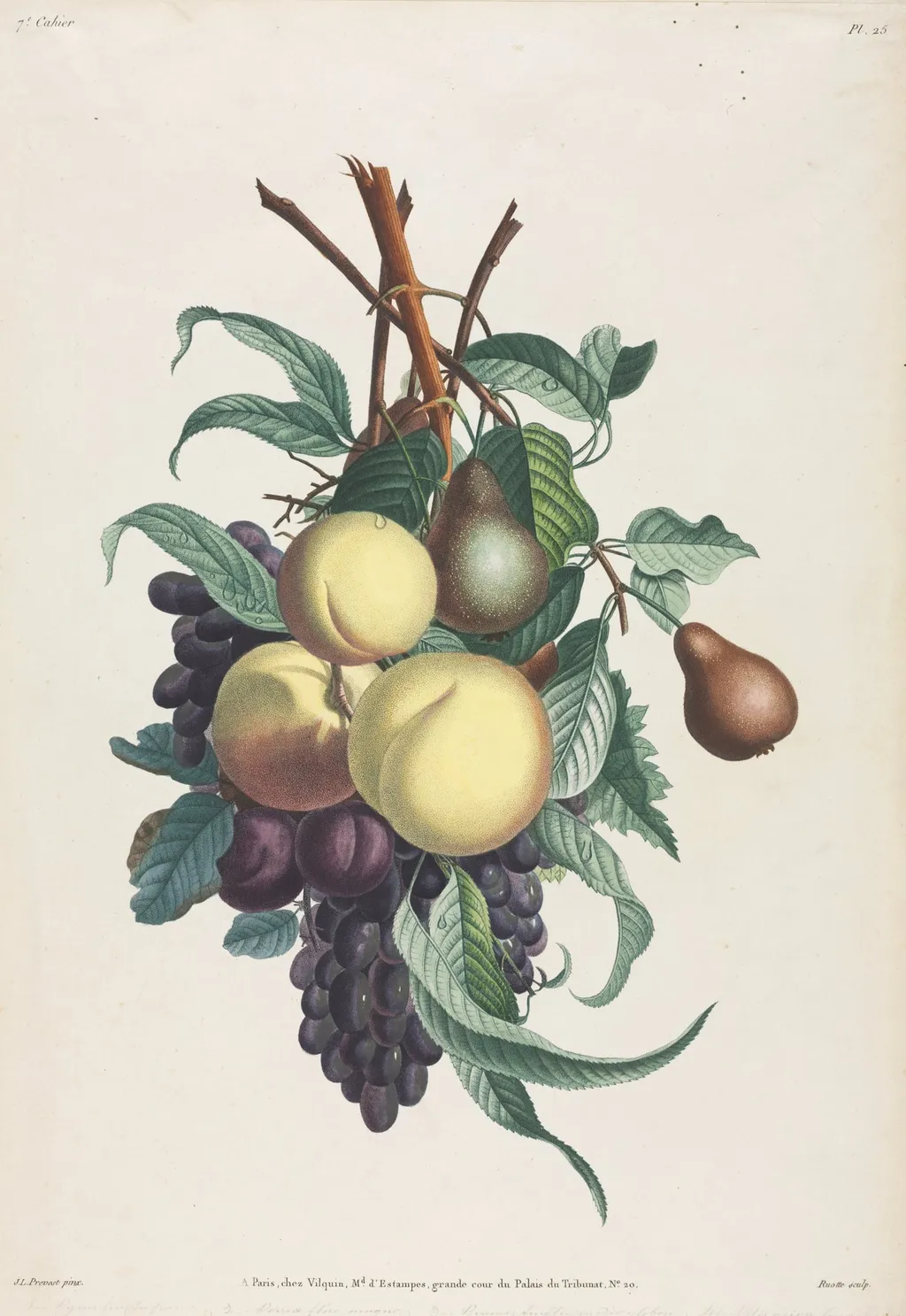
Collection des fleurs et des fruits: Branches de rousselet, pêche, prune et raisin is a print by the Romanticist artist Jean Louis Prévost. It dates from 1805 and is held in the collection of the Cleveland Museum of Art.
About this work
It's interesting because the artist, Jean Louis Prévost, painted this in 1805, and it gives us a glimpse of what fruits were popular back then.
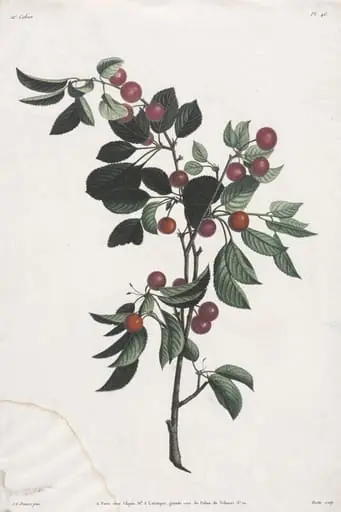
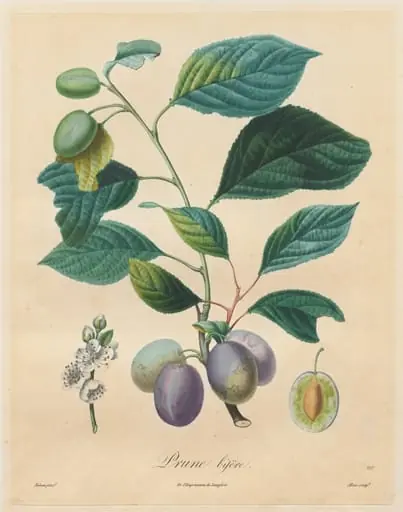
This painting shows branches of fruit like peaches, plums, and grapes.
It's interesting because the artist, Jean Louis Prévost, painted this in 1805, and it gives us a glimpse of what fruits were popular back then. The way the fruits are arranged makes it look like a still life, which was a common style of painting at that time.
You can learn more about similar styles by looking into the technique of sfumato.
Overview
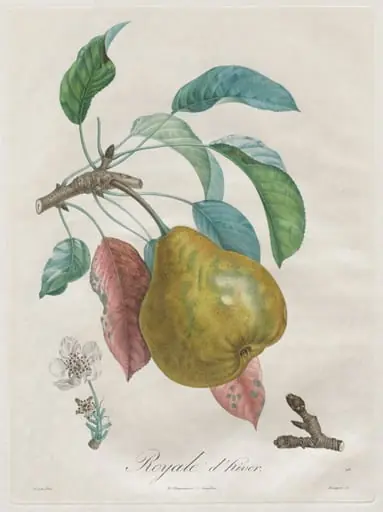
Created in 1805 by Jean Louis Prévost, this print is part of a series documenting botanical specimens. It depicts branches bearing rousselet cherries, peaches, plums, and grapes, rendered with precision and quiet detail. The work belongs to the collection of The Cleveland Museum of Art, where it serves as an example of early 19th-century naturalistic illustration.
Subject & Meaning
The composition presents cultivated fruits common in French horticulture at the time, arranged without ornamentation to emphasize their natural forms. Rather than symbolic or allegorical intent, the focus lies in documentation—recording the appearance and variety of edible plants. This reflects a broader scientific interest in cataloging botanical specimens during the post-Enlightenment era.
Technique & Style
Prévost employed fine line work and subtle tonal gradations to capture the texture of fruit skins and the delicate structure of branches. The style leans toward botanical illustration rather than decorative still life, avoiding dramatic lighting or compositional flourish. Accuracy takes precedence over aesthetic embellishment, aligning with scientific publishing conventions of the period.
History & Provenance
The print originated as part of a larger series commissioned to record fruit varieties, likely for agricultural or horticultural reference. It entered the Cleveland Museum of Art’s collection through documented acquisition, though its earlier ownership history remains unrecorded in public archives. Its preservation suggests recognition of its value as a historical record rather than an artistic novelty.
Context
In early 1800s France, systematic study of plants gained momentum through state-supported botanical projects. Prévost’s work aligns with this trend, paralleling publications like those of the Jardin des Plantes. Unlike fine art still lifes, these images served utilitarian purposes—aiding identification, cultivation, and exchange among growers and scientists across Europe.
Legacy
The print endures as a quiet testament to the intersection of science and visual representation in the pre-photographic age. While not widely known outside specialized circles, it contributes to the archive of botanical documentation that informed agricultural development. Its legacy lies in its fidelity to observation, not in artistic influence.
Artist & collection