Artwork
Untitled
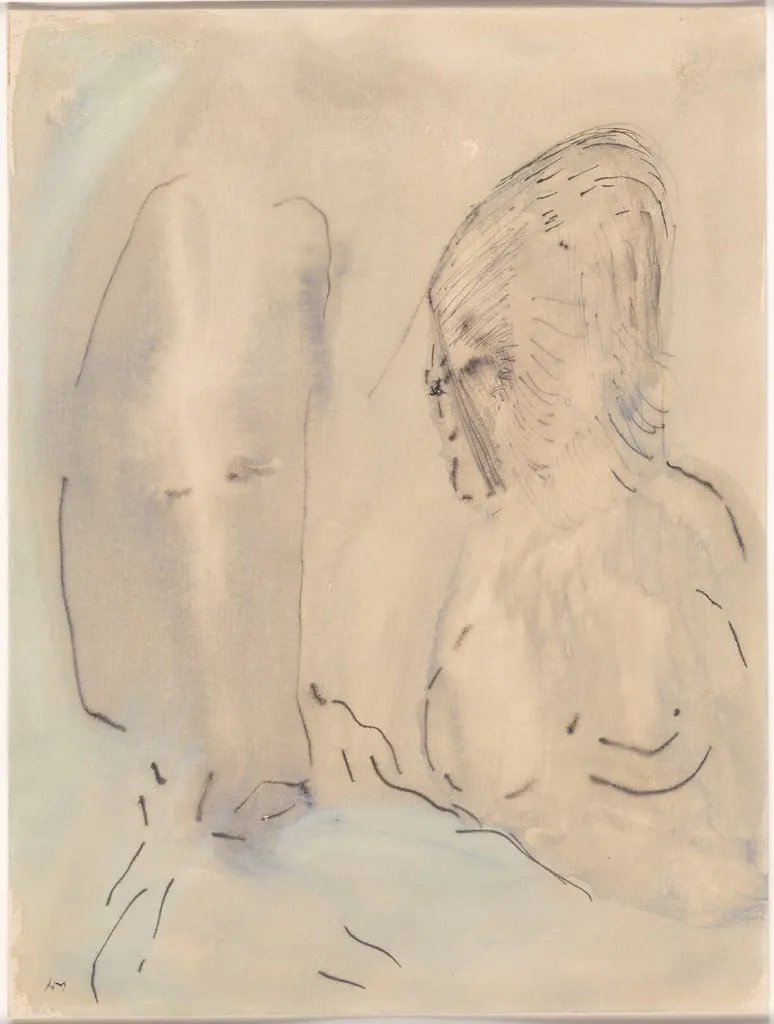
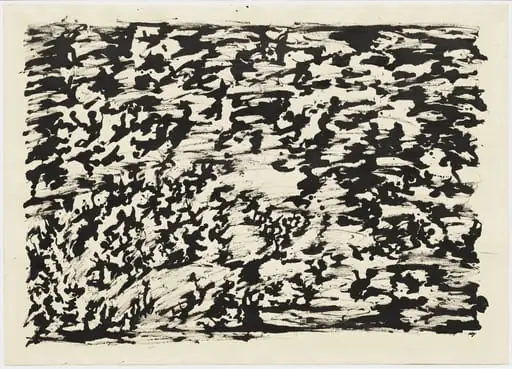
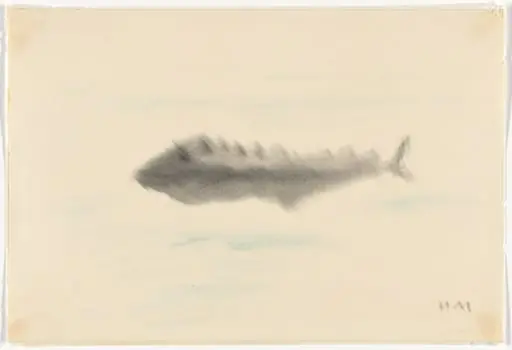
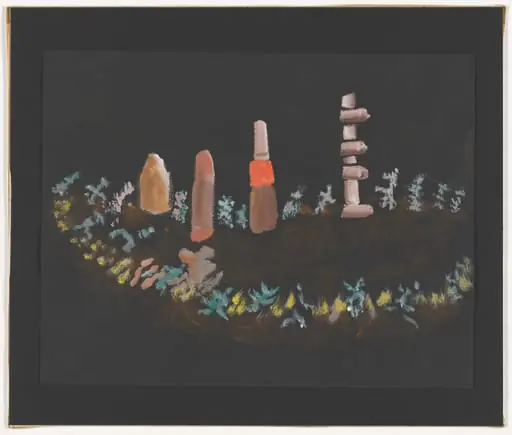
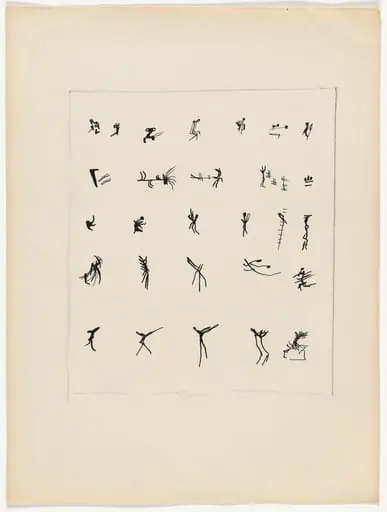
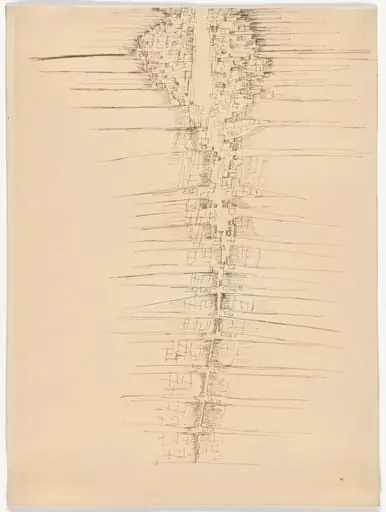
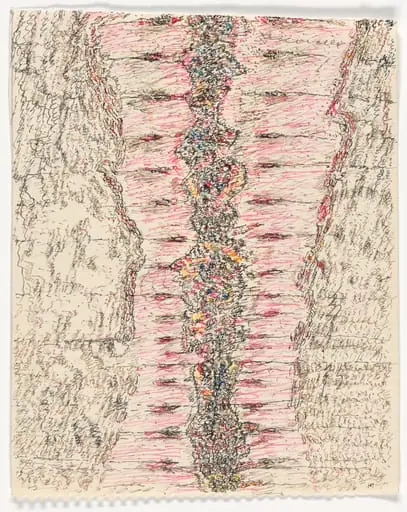
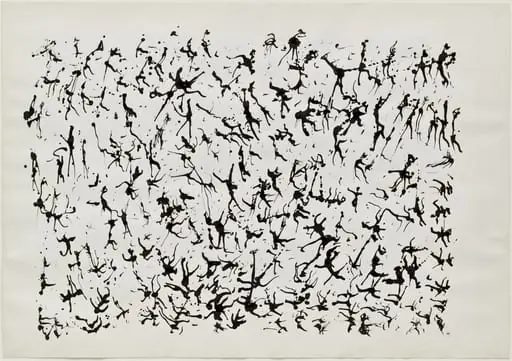
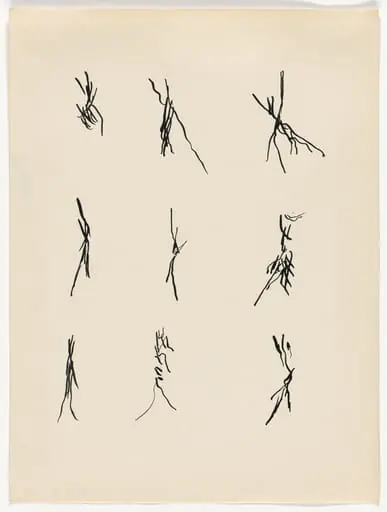
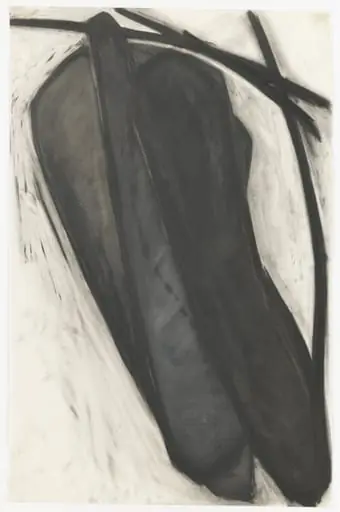
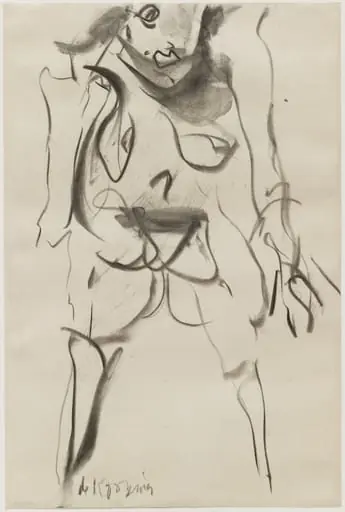
Untitled is a watercolor drawing by Henri Michaux. It dates from 1947 and is held in the collection of the Museum of Modern Art.
About this work
Overview
Its informal, spontaneous quality aligns with Michaux’s broader practice of rejecting traditional composition in favor of intuitive mark-making.
Created in 1947, this watercolor and ink drawing by Henri Michaux exemplifies his interdisciplinary approach to visual and literary expression. Executed on paper, the work captures fleeting movement and emotional resonance through minimal means. Its informal, spontaneous quality aligns with Michaux’s broader practice of rejecting traditional composition in favor of intuitive mark-making. The piece resides in The Museum of Modern Art’s collection as part of its engagement with postwar experimental art.
Subject & Meaning
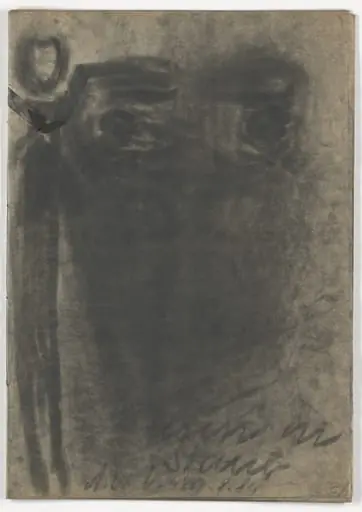
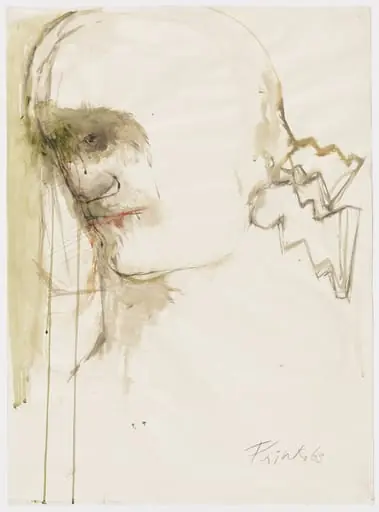
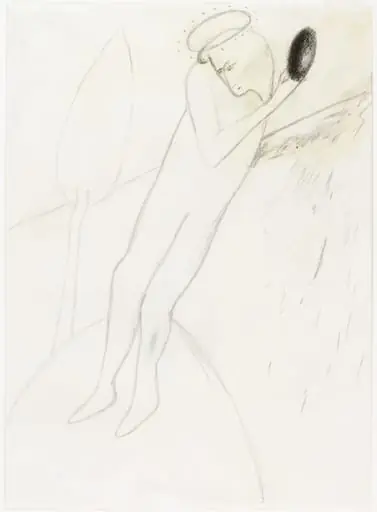
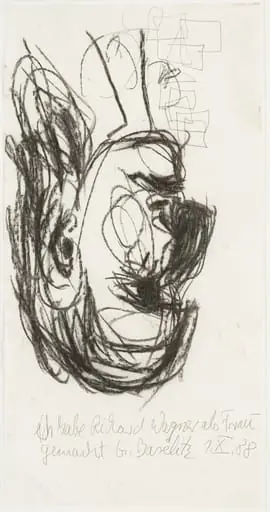
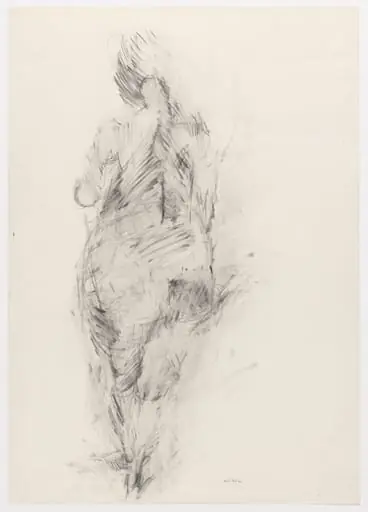
Two figures, viewed from behind, appear in motion, their forms rendered with minimal detail. Their postures suggest isolation or introspection, evoking psychological states rather than narrative. Michaux’s focus on the back rather than the face redirects attention inward, emphasizing internal experience over external identity. The ambiguity of their relationship invites interpretation as metaphors for consciousness, solitude, or the fragility of human connection.
Technique & Style
Michaux employed rapid, gestural ink lines and diluted watercolor washes that bleed into one another, allowing the paper’s texture to remain visible in places. The contrast between tightly coiled strokes suggesting hair and softly blurred contours of the body reflects a tension between control and surrender. Glazing techniques create subtle depth without opacity, reinforcing the work’s ephemeral, unfinished character consistent with his interest in spontaneity and altered states.
History & Provenance
Produced during a period of intense creative exploration following World War II, the drawing emerged from Michaux’s engagement with psychoactive substances and automatic drawing. It was acquired by The Museum of Modern Art in the mid-20th century as part of its expanding focus on European avant-garde practices. Its inclusion in the collection reflects institutional recognition of his unique fusion of poetry and visual art.
Context
In the late 1940s, Michaux was developing a visual language parallel to his literary experiments, influenced by Surrealism, Eastern calligraphy, and his own drug-induced visions. While contemporaries like Dubuffet pursued raw expression, Michaux’s work remained more restrained, privileging subtlety and inner turbulence over overt abstraction. This piece aligns with broader postwar inquiries into perception, identity, and the limits of representation.
Legacy
The drawing contributes to Michaux’s enduring influence on artists interested in the intersection of writing and image, particularly those exploring automatic processes and altered consciousness. Its understated aesthetic has resonated with later generations seeking alternatives to grand narratives in art. Though not widely exhibited, it remains a key example of his quiet, introspective approach to visual poetry.
Artist & collection
Artist
Henri Michaux (French: ; 24 May 1899 – 19 October 1984) was a Belgian-born French experimental poet, writer and painter.