Artwork
Untitled
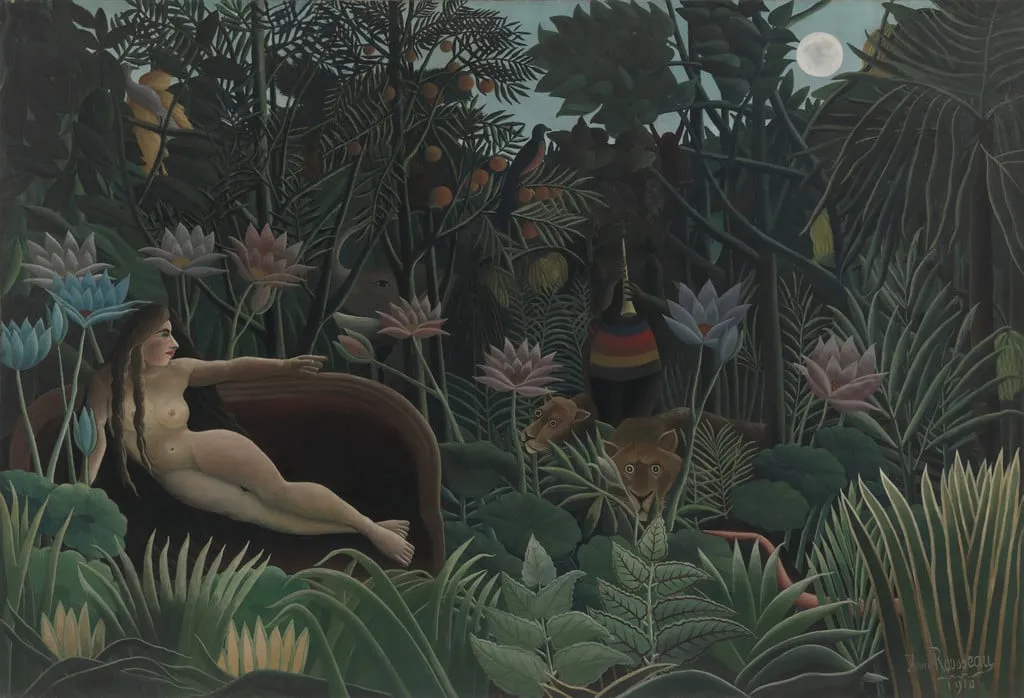
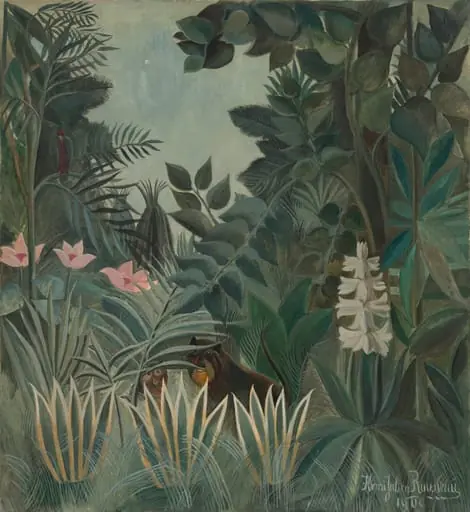
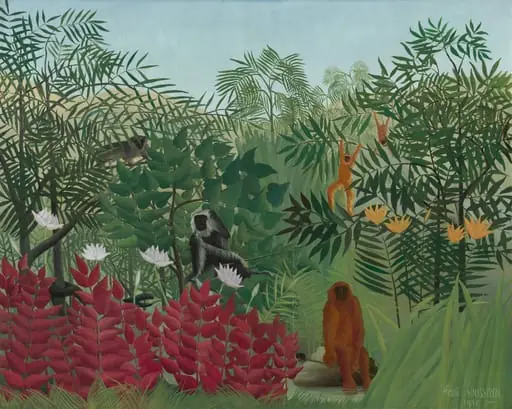
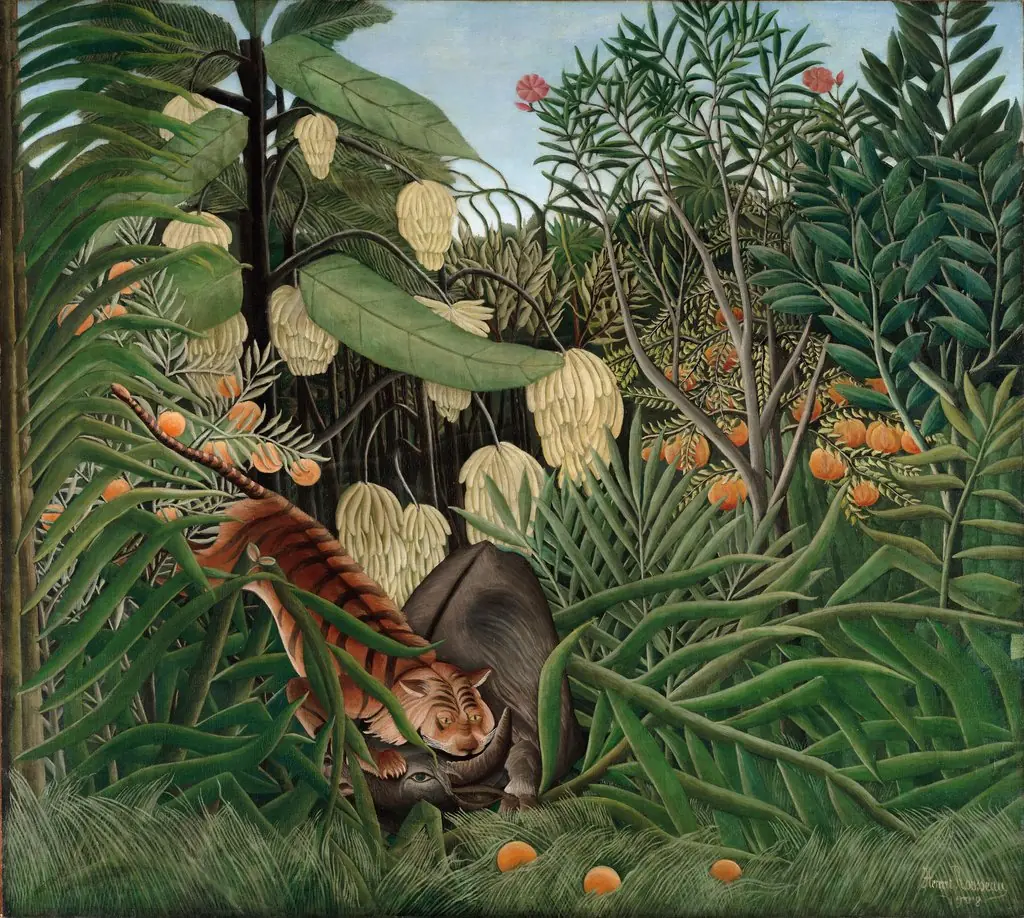
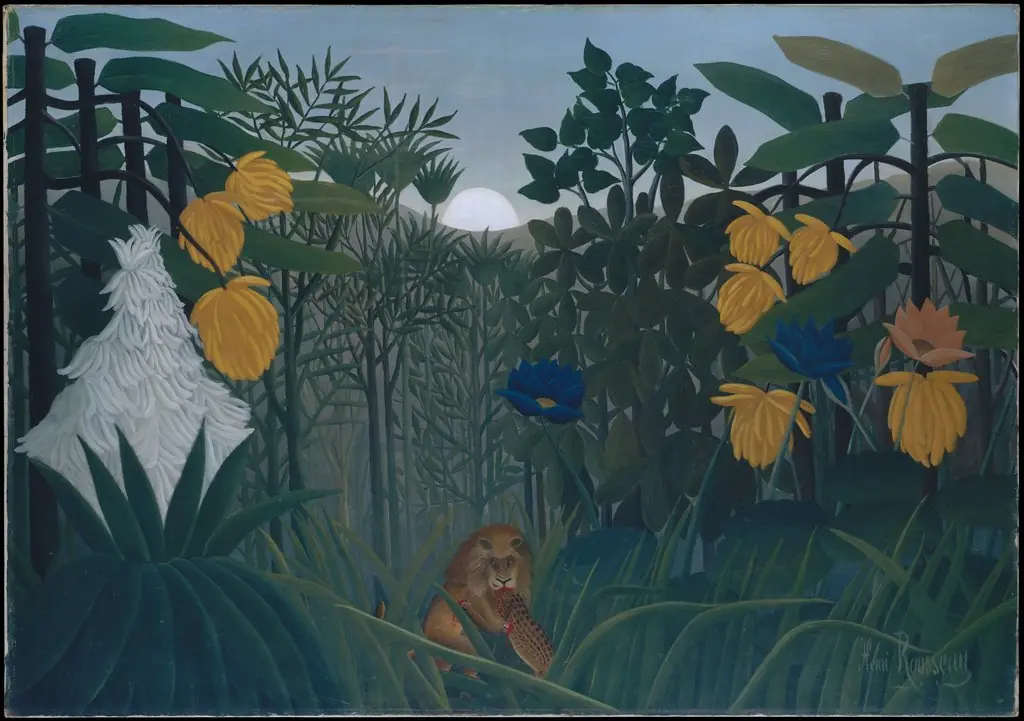
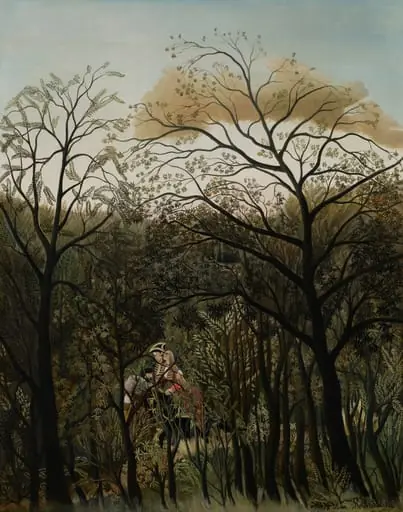
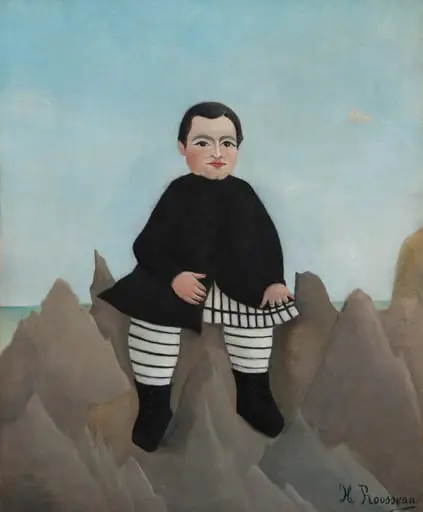
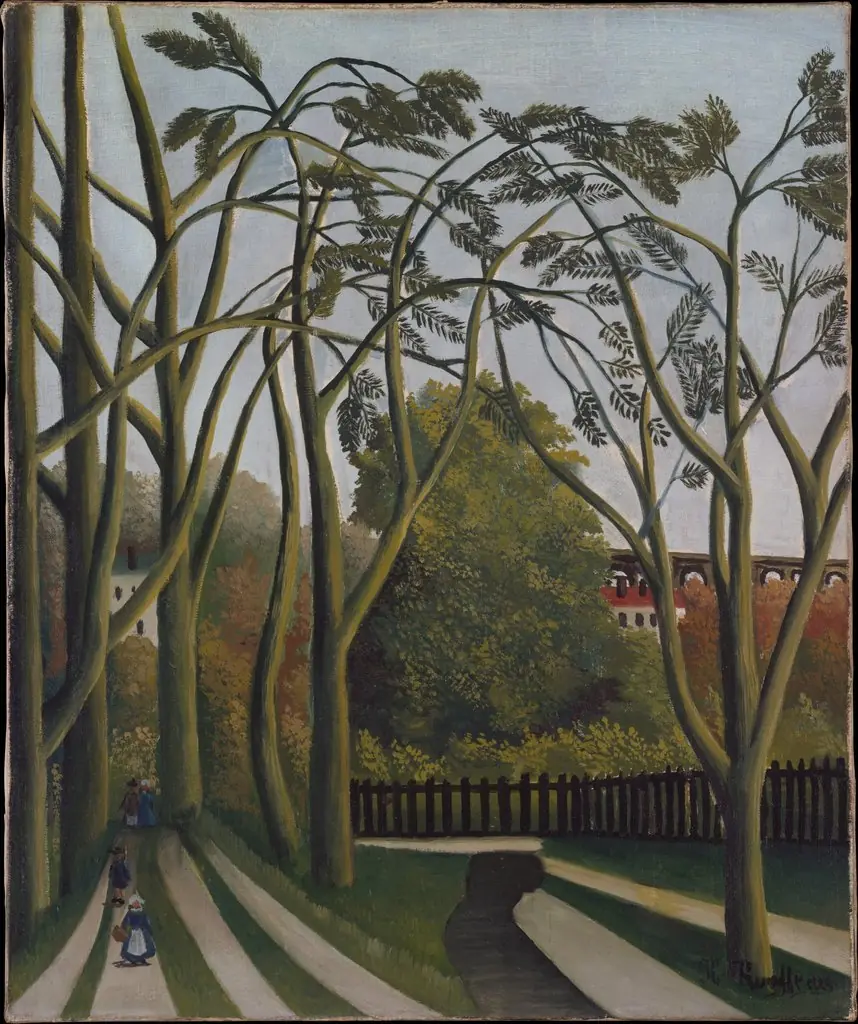
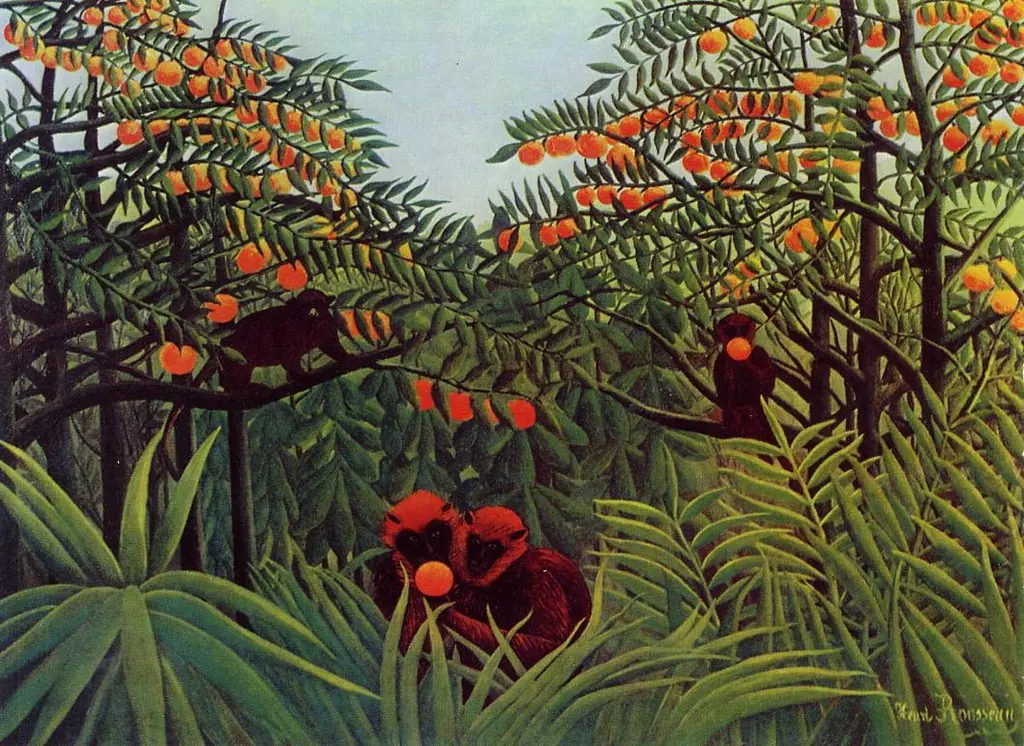
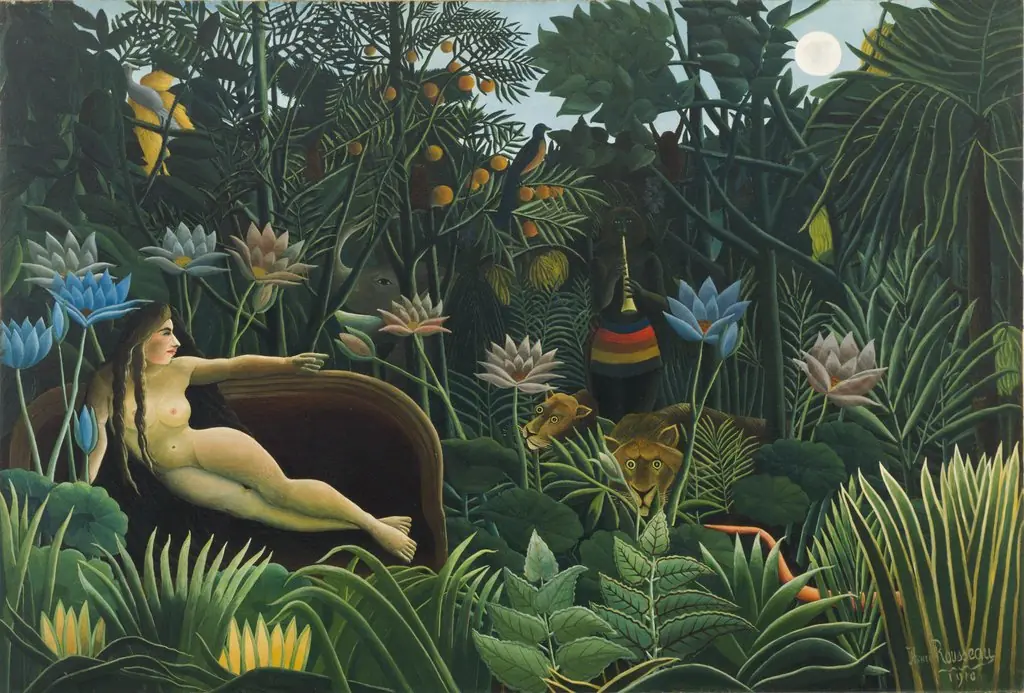
Untitled is an oil painting by the Post-Impressionist artist Henri Rousseau. It dates from 1910 and is held in the collection of the Museum of Modern Art.
About this work
Overview
Though lacking formal training, Rousseau developed a distinctive visual language marked by flattened perspectives and vivid, unnatural coloration.
Painted in 1910, this oil on canvas work by Henri Rousseau is one of several jungle-themed compositions he produced in his later years. Created after his retirement from a career as a customs officer, the piece reflects his self-taught approach to representation. Though lacking formal training, Rousseau developed a distinctive visual language marked by flattened perspectives and vivid, unnatural coloration. The painting resides in the collection of The Museum of Modern Art.
Subject & Meaning
A reclining female figure lies amid an overgrown, dreamlike jungle, surrounded by wildlife and a distant, enigmatic figure in a striped hat. The scene resists clear narrative, instead evoking a sense of quiet mystery. The presence of animals and the solitary human suggest themes of isolation or primal harmony. Rousseau’s use of symbolic elements—moon, exotic flora, and a shadowy observer—invites interpretation without prescribing it.
Technique & Style
Rousseau employed bold, flat planes of color and meticulous detail to render vegetation and figures with equal weight, rejecting traditional depth cues. Leaves and vines are exaggerated in scale and curvature, creating a rhythmic, almost decorative surface. The dark blue sky and luminous moon contrast sharply with the dense greens and purples of the foliage, enhancing the otherworldly atmosphere. His method, often termed naïve, deliberately avoided academic conventions of perspective and anatomy.
History & Provenance
Rousseau completed this work near the end of his life, having devoted himself fully to painting after retiring from public service in his late forties. Though ridiculed by contemporaries for his unorthodox style, he gained a small circle of admirers among avant-garde artists by the 1900s. The painting entered The Museum of Modern Art’s collection in the 20th century, where it now stands as a key example of early modern primitivism.
Context
In early 20th-century Paris, Rousseau’s work stood apart from mainstream movements like Cubism and Fauvism, yet his imaginative realism resonated with younger artists seeking alternatives to academic tradition. His jungle scenes, though rooted in botanical illustrations and Parisian botanical gardens, were entirely invented. This fusion of observation and fantasy aligned with broader interests in the exotic and the subconscious emerging in art at the time.
Legacy
Rousseau’s uncompromising vision, once dismissed as childish, came to be seen as foundational to modern art’s embrace of outsider perspectives. His influence is evident in Surrealism and later folk-inspired movements. The persistence of his imagery—dreamlike, detailed, and emotionally detached—continues to inspire artists interested in the power of untrained vision and the poetic potential of the unreal.
Artist & collection
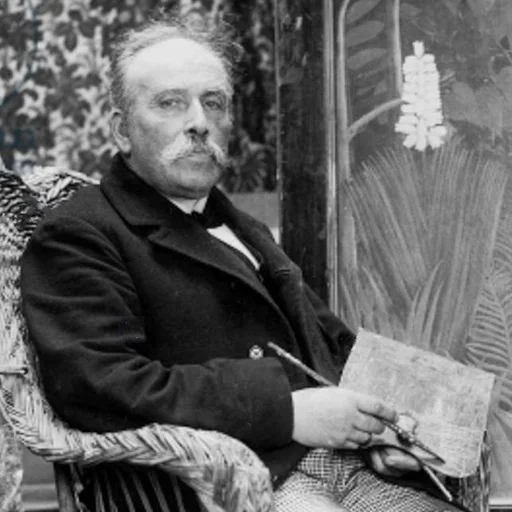
Artist
Henri Julien Félix Rousseau was born on 21 May 1844 in Laval, Mayenne, and died in Paris on 2 September 1910.