Artwork
Mrs. Pierre Bacot (Marianne Fleur Du Gue)
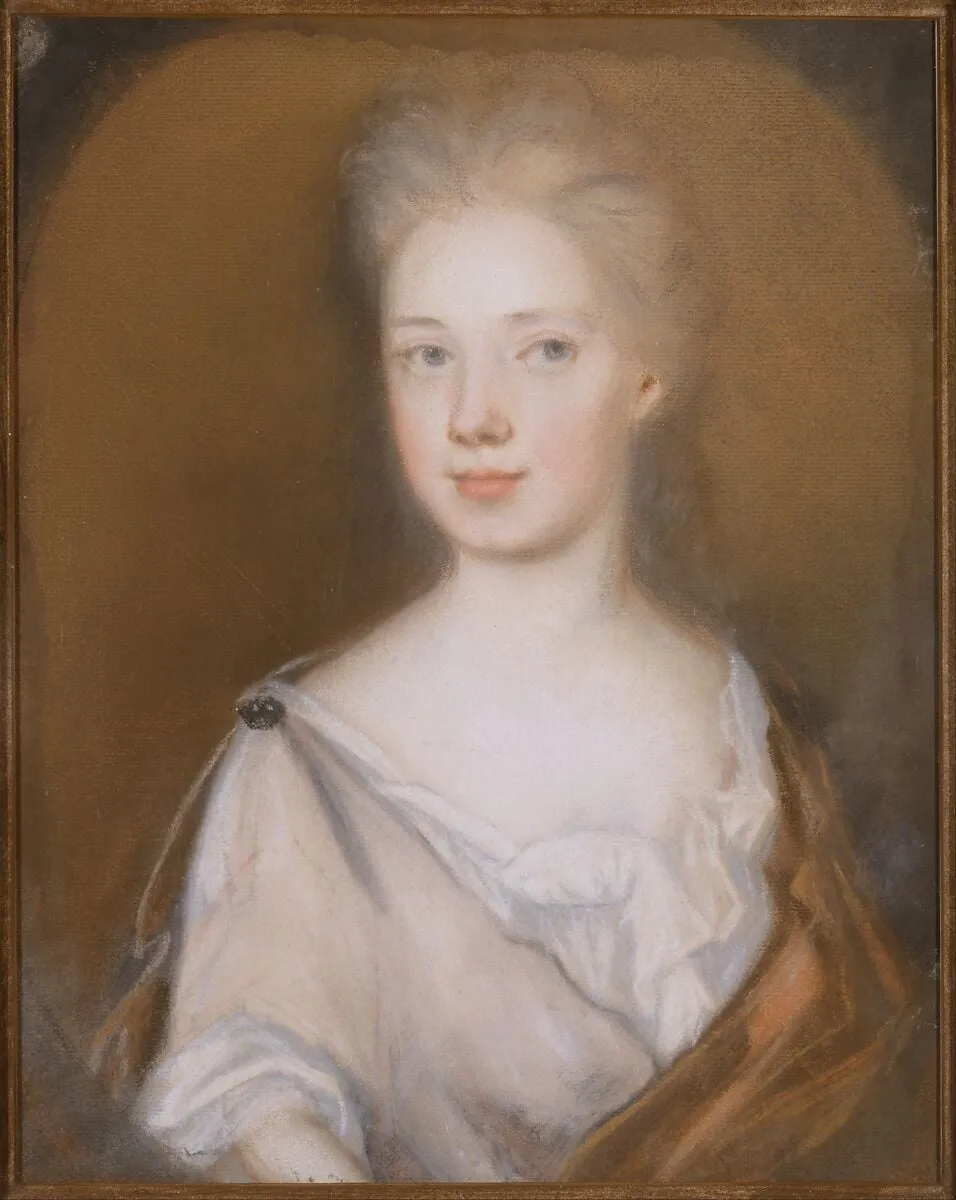
Mrs. Pierre Bacot (Marianne Fleur Du Gue) is a pastel drawing by the Baroque artist Henrietta Johnston. It dates from 1709 and is held in the collection of the Metropolitan Museum of Art. Created in 1709, Mrs.
About this work
This portrait shows a woman in a white shift and dark shawl, seated against a plain greenish background.
This portrait shows a woman in a white shift and dark shawl, seated against a plain greenish background. Her face is softly modeled in red chalk and pastel, giving her a calm, direct gaze. The artist used pastel sticks to blend skin tones right on the paper.
Johnston was one of the first women in America to make a living as a portraitist. She worked in South Carolina around 1708, when American art barely existed. The way she handled chalk and pastel on toned paper feels fresh even now.
This style of portraiture points back to earlier European work. Look up Henrietta Johnston.
Overview
Created in 1709, Mrs. Pierre Bacot (Marianne Fleur Du Gue) is a pastel portrait by Henrietta Johnston, the first professional pastelist to work in the American colonies. The work depicts the sitter, Marianne Fleur Du Gue, seated against a muted greenish background. She wears a white shift covered by a dark shawl, her posture relaxed yet dignified. Johnston executed the face with a soft modeling technique, utilizing red and black chalk alongside pastel sticks to blend skin tones directly onto the toned laid paper. This method creates a subtle, lifelike texture that avoids the harshness of line, emphasizing the sitter's calm and direct gaze. As one of the earliest surviving pastels from colonial America, the piece marks a significant moment in the introduction of the medium to the New World. Johnston, who arrived in Charleston, South Carolina, in 1706, established a successful practice painting the colonial elite. This portrait exemplifies her signature style, which combined the delicacy of French pastel traditions with the practical constraints of the colonial environment, securing her legacy as a pioneering female artist in early American art history.
Subject & Meaning
The sitter is rendered with a calm, direct gaze, her features softened by the delicate application of red chalk. The simple attire—a plain shift, shawl and modest jewelry—suggests a modest domestic identity, while the composed expression conveys a sense of quiet dignity typical of early colonial portraiture.
Technique & Style
Johnston employed pastel sticks to blend skin tones directly on the paper, a method that allows subtle transitions and a luminous quality. The use of red and black chalk for facial modeling, combined with the toned paper ground, creates a restrained palette that echoes European pastel traditions yet feels unusually fresh for early American art.
History & Provenance
Active in South Carolina circa 1708, Johnston was among the first women in the American colonies to earn a living as a portraitist. This work, produced when organized artistic activity was virtually nonexistent in the colonies, reflects her pioneering role and the limited but growing demand for personal likenesses among the colonial elite.
Context
The portrait aligns with early 18th‑century European pastel portraiture, drawing on conventions of modest dress and intimate presentation. Johnston’s adaptation of these conventions to the colonial setting illustrates the transmission of artistic practices from Europe to the New World, marking an early point in the development of an American visual culture.
Artist & collection

