Artwork
Preparatory study for a panorama of Paris from the Seine
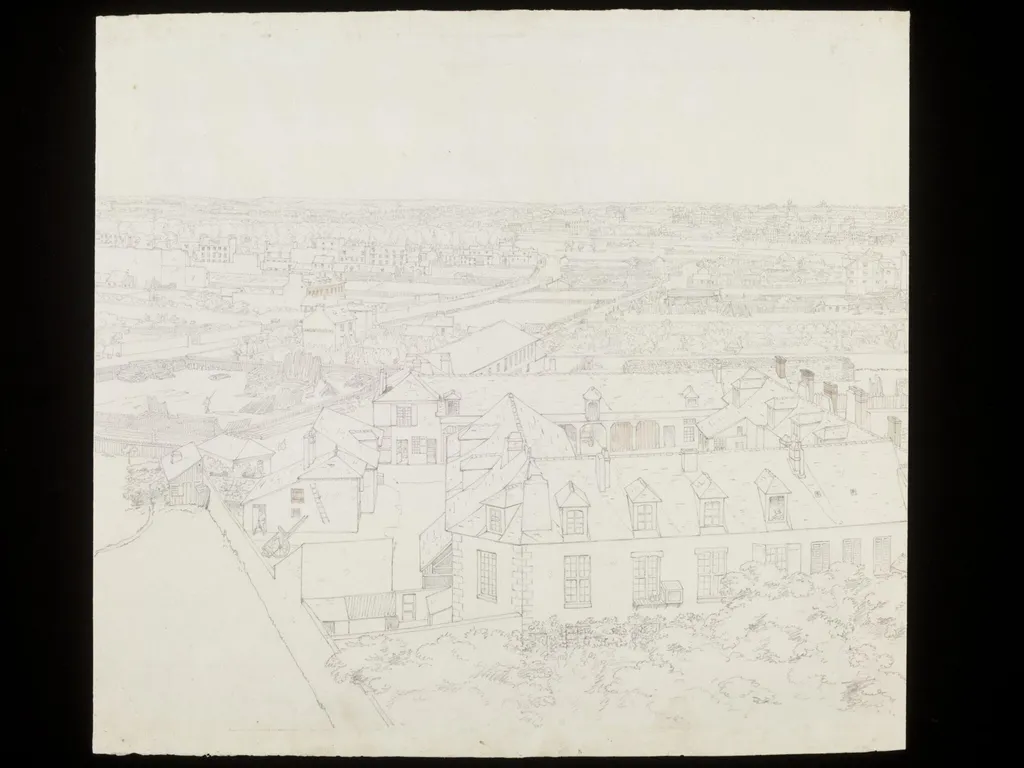
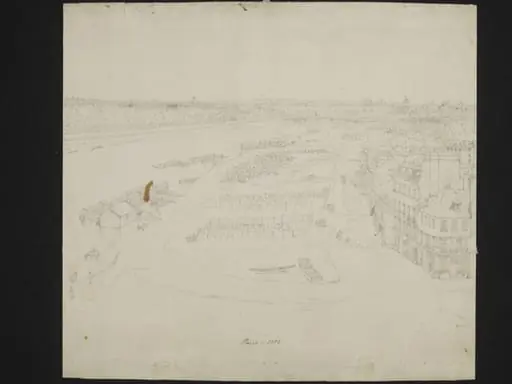
Preparatory study for a panorama of Paris from the Seine is a drawing by the Romanticist artist Henry Aston Barker. It dates from 1802 and is held in the collection of the Victoria and Albert Museum. This drawing is one of eight preparatory studies created around 1802 for a large-scale panoramic painting of Paris as seen from the Seine.
About this work
This is a drawing from around 1802. The artist used an old trick to get the scene right. He almost certainly used a camera obscura. The camera obscura projects the view onto paper so the artist can trace it.
The drawing was a practice step. It helped plan a big circular painting of Paris. That painting was shown in London a year later.
Look up Henry Aston Barker next.
Overview
This drawing is one of eight preparatory studies created around 1802 for a large-scale panoramic painting of Paris as seen from the Seine.
This drawing is one of eight preparatory studies created around 1802 for a large-scale panoramic painting of Paris as seen from the Seine. Commissioned for exhibition in London, the final work was displayed between 1803 and 1805. The studies served as technical blueprints, allowing the artist to refine composition and perspective before executing the full panorama, a format prized for its immersive, 360-degree presentation.
Subject & Meaning
The drawing captures a detailed view of Paris from the riverbank, emphasizing architectural landmarks and urban layout. Its purpose was not artistic expression but accurate topographical recording. The image functioned as a visual record meant to transport viewers to the French capital during a time of political upheaval, offering a controlled, observable version of a city otherwise inaccessible to many British audiences.
Technique & Style
The artist likely employed a camera obscura to project the scene onto the paper, enabling precise tracing of buildings, bridges, and river contours. This optical aid ensured geometric accuracy over expressive interpretation. The drawing’s linear clarity and measured proportions reflect a methodical, almost scientific approach, prioritizing fidelity to the observed landscape over stylistic flourish.
History & Provenance
Created by Henry Aston Barker, the drawing formed part of a series used to construct a panoramic exhibition in London. The final panorama, completed in 1803, was exhibited in a purpose-built rotunda and drew significant public attention. These preparatory sheets remained in the artist’s possession and later entered institutional collections, preserving evidence of early 19th-century visual technology and exhibition practices.
Context
The late 18th and early 19th centuries saw a surge in panoramic exhibitions as public entertainment and educational tools. Paris, as a symbol of revolutionary change and cultural prestige, was a compelling subject. Barker’s work tapped into this trend, using emerging optical technologies to satisfy public curiosity about foreign cities during a period of war and limited travel.
Legacy
These preparatory drawings illustrate the intersection of art, science, and spectacle in the early modern era. They document how optical instruments reshaped artistic practice, shifting emphasis from imagination to observation. Though the full panorama is now lost, the studies remain vital artifacts of how visual media evolved to mediate distant places for mass audiences.
Artist & collection
Artist
Henry Aston Barker (1774 – 19 July 1856) was a Scottish landscape and panorama painter and exhibitor, the son of Robert Barker whose business he continued.

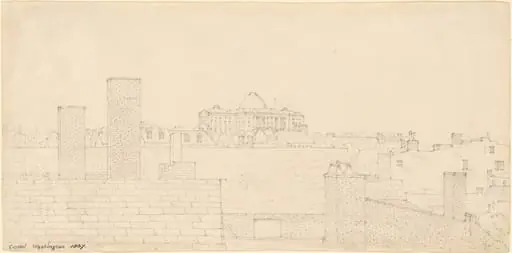 Capitol, Washington
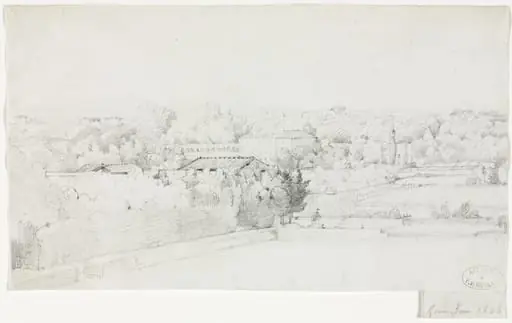 View of the Villa Borghese and its Orangerie from the Villa Medici
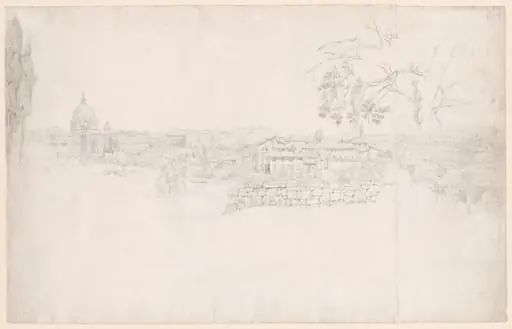 Fantasy Panorama of Rome from St. Peter's to the Castel San Angelo
 Rue de la Sauvenière, Spa
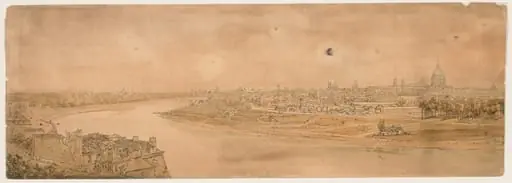 A Selection of Twenty of the Most Picturesque Views in Paris: A General View of Paris, taken from Chaillot
 Hampstead Heath, Evening Light
 Constantinople
 Preparatory study for a drawing of Peterborough House and Westminster Abbey
![Chatsworth [recto], by David Cox](https://artifactworldgallery.com/img/david-cox--chatsworth-recto--3f4d97adb21a8333-w320.webp) Chatsworth [recto]
Chatsworth [recto] Street scene
 Near Hope Gate, Quebec
 Preparatory drawing for a Panorama of Paris from the Seine