Artwork
A Forest Cascade at Hiram, Maine
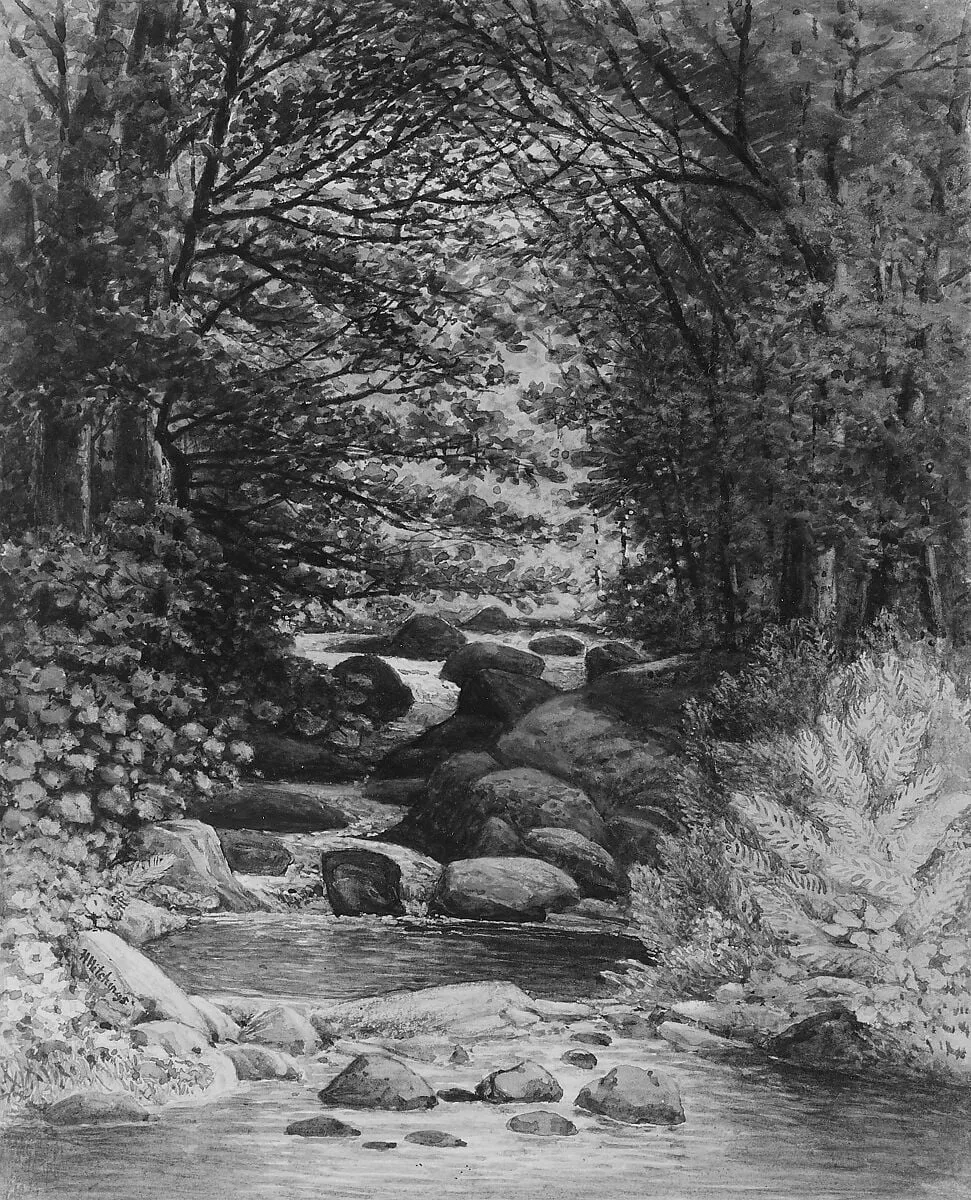
A Forest Cascade at Hiram, Maine is a watercolor work on paper by the American Impressionist artist Henry Hitchings. It dates from 1859 and is held in the collection of the Metropolitan Museum of Art.
About this work
He chose a corner of Maine instead—no grand mountains, just the everyday woods behind his house.
You see a quiet forest stream tumbling over mossy rocks, sunlight filtering through tall pines.
Hitchings painted this in 1859, when most artists were still sketching Europe. He chose a corner of Maine instead—no grand mountains, just the everyday woods behind his house. The watercolor lets light glow through the paper, making the leaves feel wet and alive.
If you like this, look up watercolor. It’s how he made the greens shimmer without heavy paint.
Overview
A Forest Cascade at Hiram, Maine, executed in 1859 by Henry Hitchings, is a watercolor, gouache, and graphite work on off-white Bristol board depicting a secluded woodland scene. The composition centers on a stream tumbling over moss-covered rocks, illuminated by sunlight filtering through a canopy of tall pines. Painted in Hiram, Maine, the work reflects Hitchings' commitment to local American landscapes during a period when many of his contemporaries focused on European subjects. Rather than pursuing grandiose mountain vistas, the artist captures an intimate, everyday corner of the New England woods, likely situated near his residence. The medium allows for a delicate rendering of light and texture, emphasizing the quiet atmosphere of the forest floor and the movement of the water. This piece stands as a representative example of Hitchings' mid-career output, demonstrating his ability to find aesthetic value in the immediate natural surroundings of his home state rather than relying on exotic or imported imagery.
Subject & Meaning
The image presents a tranquil woodland waterway, where clear water rushes over rounded rocks while dappled sunlight filters through tall pines. The limited scale of the setting—no dramatic peaks or distant vistas—emphasizes the quiet, everyday beauty of the local forest, suggesting a personal connection to the artist’s immediate environment.
Technique & Style
Hitchings employs the translucency of watercolor to convey the play of light on foliage and water, allowing the paper’s whiteness to illuminate the scene. Gouache adds richer, opaque greens that suggest wet leaves, while graphite outlines define the rocks and tree trunks. The combined media create a layered surface that balances delicate washes with more solid accents.
History & Provenance
The work was executed at a time when many American painters were still traveling to Europe for study. Hitchings, however, remained in his native New England, documenting the local landscape. The piece entered the museum’s collection through a mid‑20th‑century donation, where it has been conserved and displayed as part of the American Wing’s representation of 19th‑century regional art.
Context
In the mid‑19th century, American art began to turn toward native scenery, moving away from European subjects. Hitchings’s choice of a modest Maine forest reflects this shift, aligning with contemporaneous interests in portraying the nation’s own natural environments. The work also illustrates the growing popularity of watercolor as a medium for field studies among American artists.
Artist & collection

