Artwork
Woods Scene
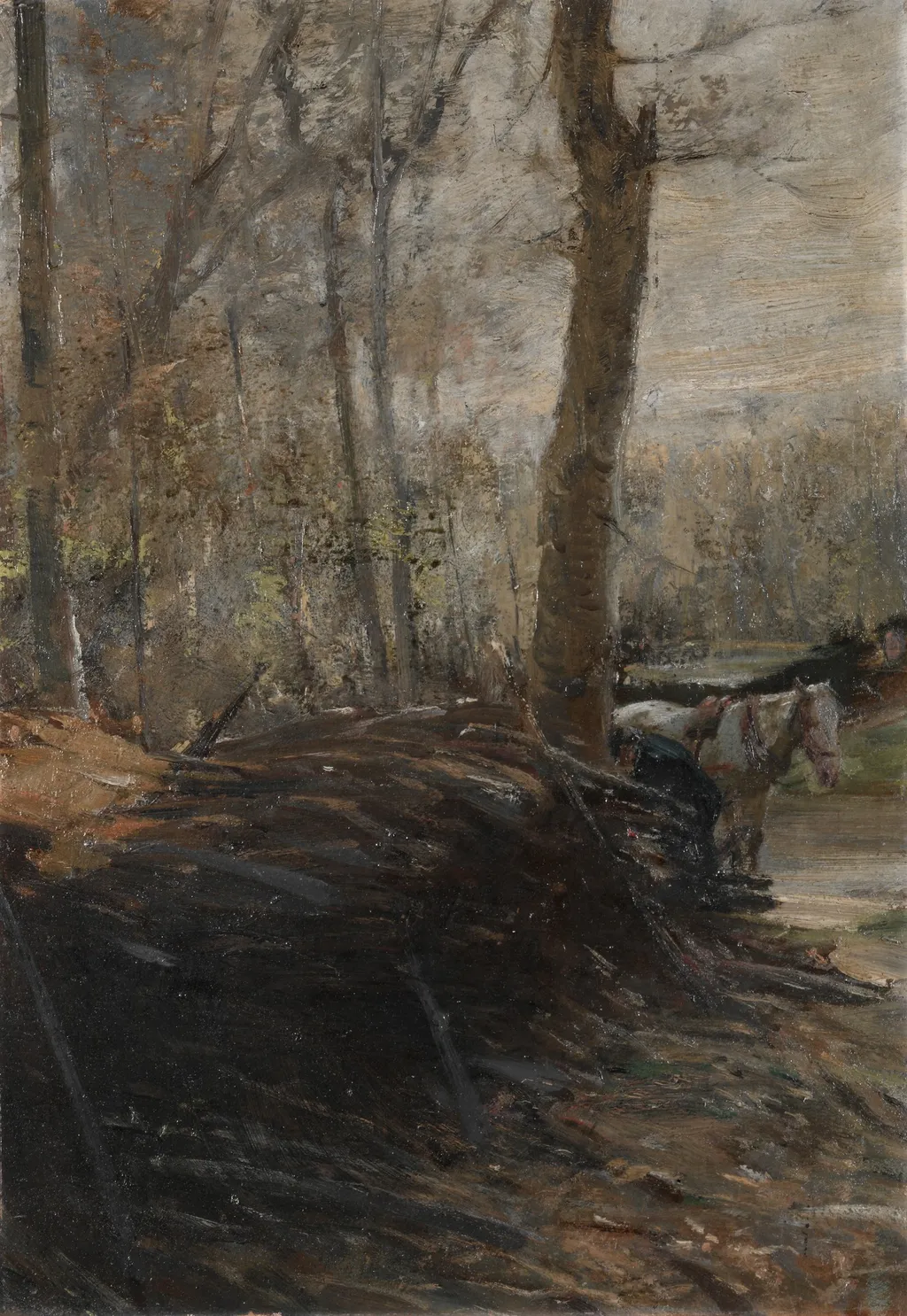
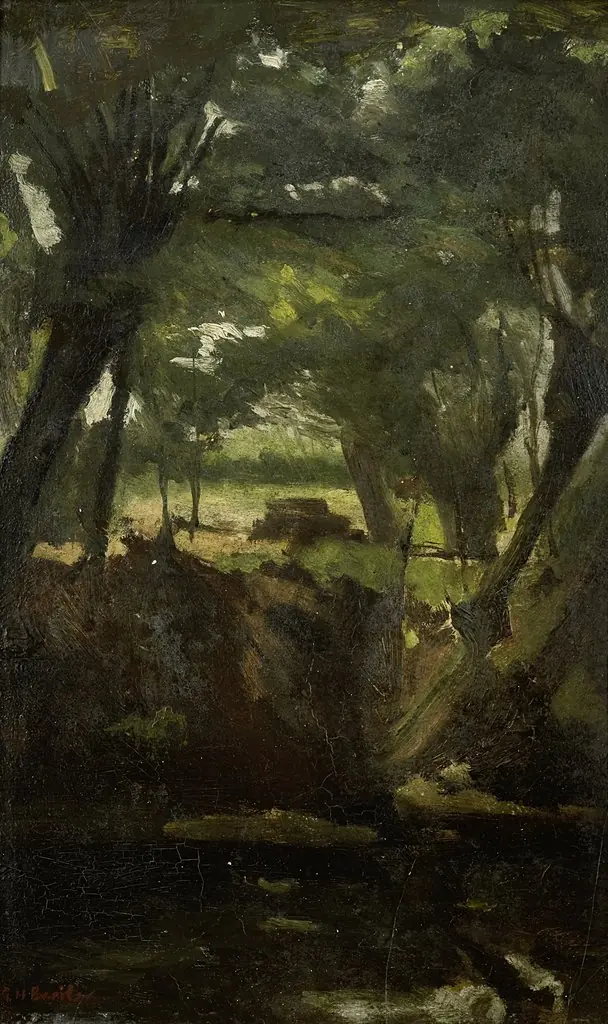
Woods Scene is an oil painting by the American Impressionist artist Henry Keller. It dates from 1901 and is held in the collection of the Cleveland Museum of Art.
About this work
Overview
Created in 1901, *Woods Scene* is an oil painting by Henry Keller that exemplifies the American Impressionist approach to landscape. The work presents a densely wooded area rendered with a focus on atmospheric effects, employing a palette and handling that convey the play of light within a shadow‑filled forest.
Subject & Meaning
The composition centers on a tangled stand of trees whose gnarled trunks rise into a dark canopy, while the forest floor is a mixture of muddy browns, deep blacks, and faint green highlights where limited light penetrates. The stark, almost foreboding setting invites contemplation of nature’s raw, untamed character.
Technique & Style
Keller applied the paint with vigorous, uneven brushstrokes that verge on impasto, leaving a textured surface that emphasizes the physicality of the medium. The colors are presented in a raw, unblended manner, reinforcing the sense of immediacy and the Impressionist interest in capturing fleeting atmospheric conditions.
History & Provenance
Born in Germany and raised in the United States, Keller emerged as a leading figure of Ohio’s Cleveland School, where he advanced watercolor practice and mentored artists such as Charles Burchfield and Paul Travis. *Woods Scene* reflects his early 20th‑century output, produced during a period when he was actively shaping regional artistic circles.
Context
At the turn of the century, American Impressionism adapted European ideas about light and color to local subjects. Keller’s forest study aligns with this trend, translating the movement’s emphasis on atmospheric perception to a distinctly American woodland environment.
Artist & collection
Artist
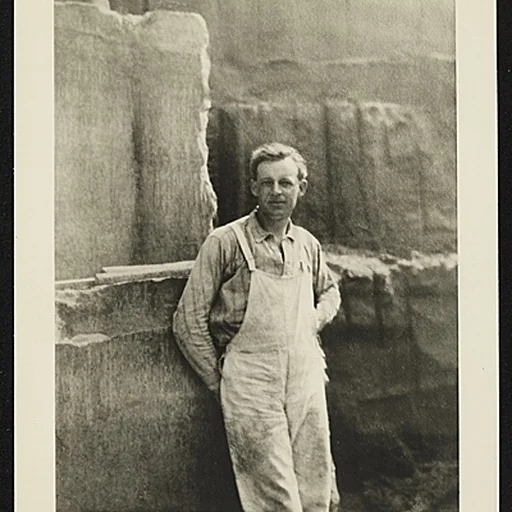
Henry George Keller (April 3, 1869 – August 3, 1949) was an American artist who led a generation of Ohio watercolor painters of the Cleveland School.