Artwork
Stone Pine
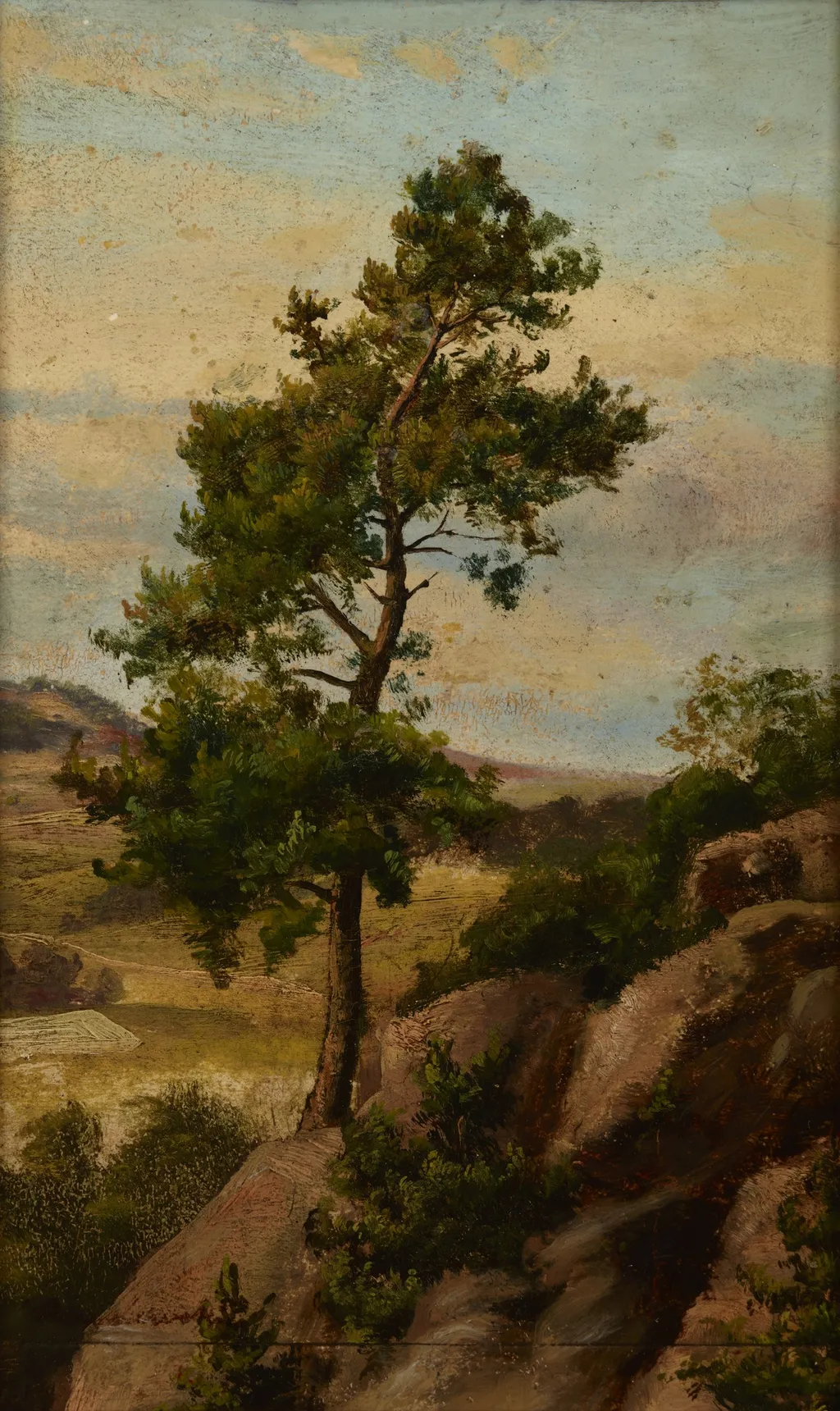
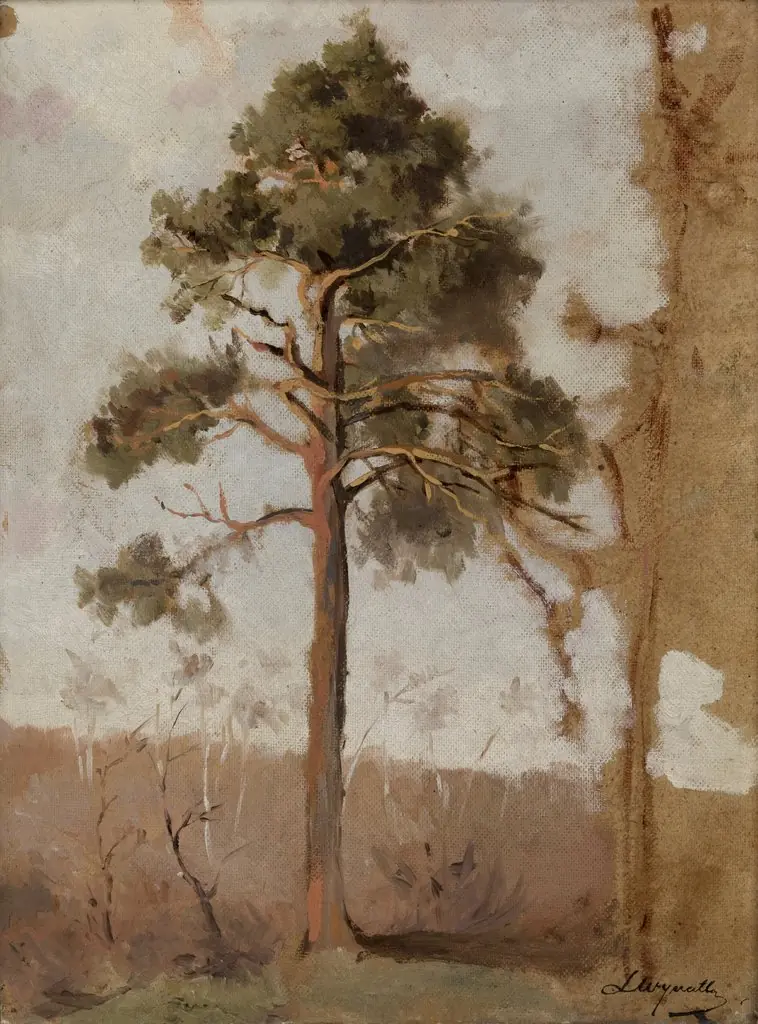
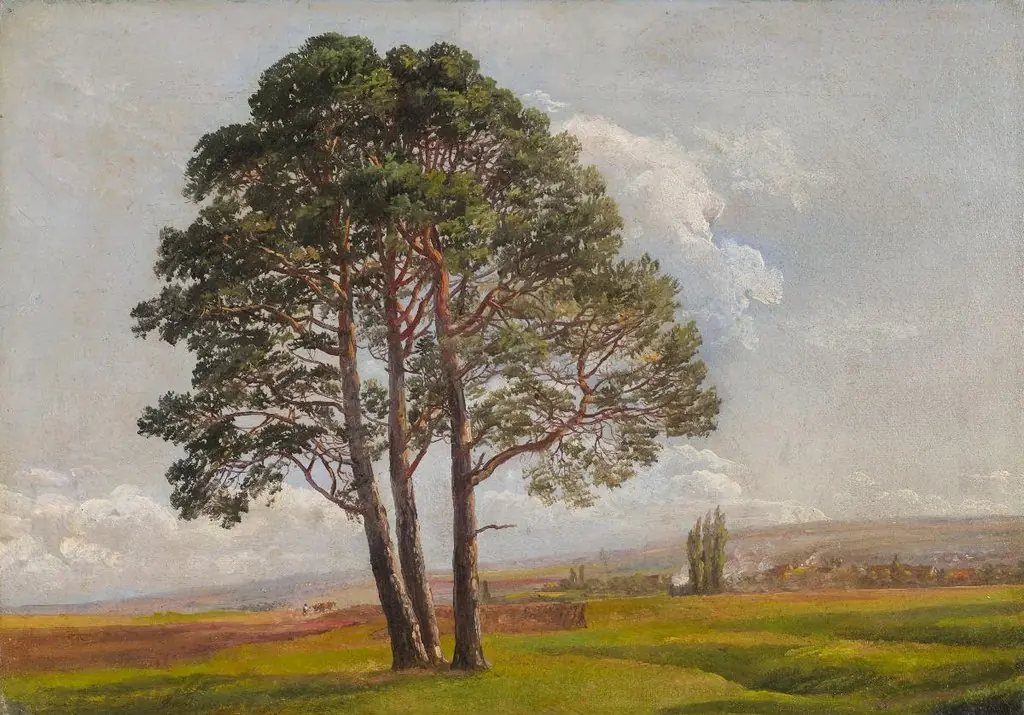
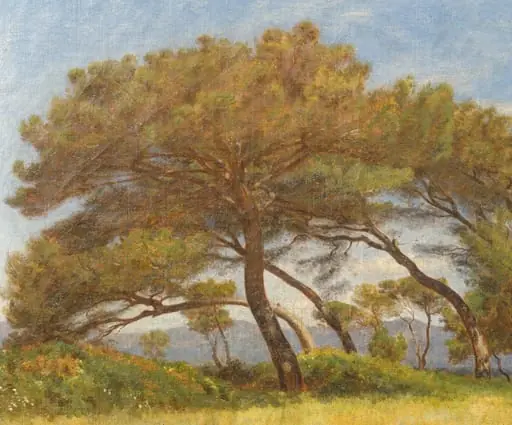
Stone Pine is an unspecified painting by Henryk Grabiński. It dates from 1883 and is held in the collection of the National Museum in Kraków.
About this work
Overview
The painting is part of the collection at the National Museum in Kraków, where it has been held since its acquisition.
Painted around 1883 by Henryk Grabiński, Stone Pine is a landscape work that captures a quiet rural scene in Poland. The painting is part of the collection at the National Museum in Kraków, where it has been held since its acquisition. Its composition centers on a solitary stone pine, framed against open fields and a soft sky, reflecting the artist’s interest in natural forms and atmospheric calm.
Subject & Meaning
The stone pine dominates the foreground, its upright form suggesting endurance and stillness. Surrounding fields and distant hills evoke a sense of rural serenity, free from human activity. The tree, neither symbolic nor allegorical, is presented as a quiet witness to the land. The painting’s emotional tone arises from its restraint—no drama, no narrative—only the presence of nature in its ordinary, undisturbed state.
Technique & Style
Grabiński employed fine brushwork to render the pine’s textured bark and the delicate gradations of light on its foliage. The sky and landscape are rendered with loose, atmospheric strokes, creating a sense of depth without sharp definition. Colors remain muted except for the vivid green of the needles, which anchors the composition. The style aligns with late 19th-century Polish realism, emphasizing observation over idealization.
History & Provenance
The painting was completed in the early 1880s and entered the National Museum in Kraków’s collection shortly thereafter. It remained in the museum’s holdings throughout the 20th century, with no documented changes in ownership. Its consistent presence in the institution reflects its recognition as a representative work of Polish landscape painting from the period.
Context
Created during a time when Polish artists were redefining national identity through depictions of the homeland, Stone Pine aligns with a broader movement toward rural realism. While not overtly political, its focus on native flora and unaltered terrain resonated with cultural efforts to affirm local heritage under foreign partition. Grabiński’s work contributed to a visual language rooted in the Polish countryside.
Legacy
Stone Pine endures as a modest but enduring example of Polish landscape painting from the late 19th century. It has not attracted widespread international attention but remains a reference point in studies of regional realism. Its quiet composition continues to be valued for its sincerity and technical restraint, offering a contemplative view of nature unmediated by sentimentality.
Artist & collection