Artwork
A Camel Caravan
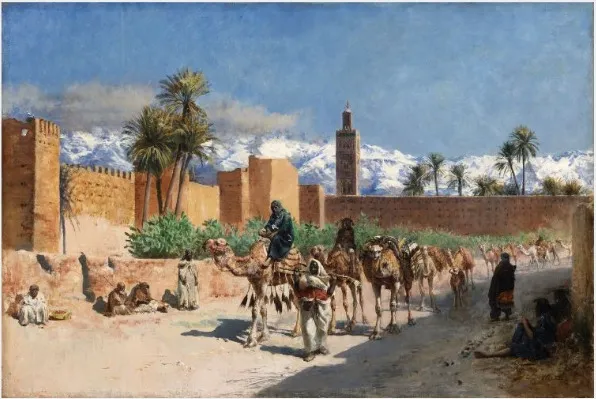
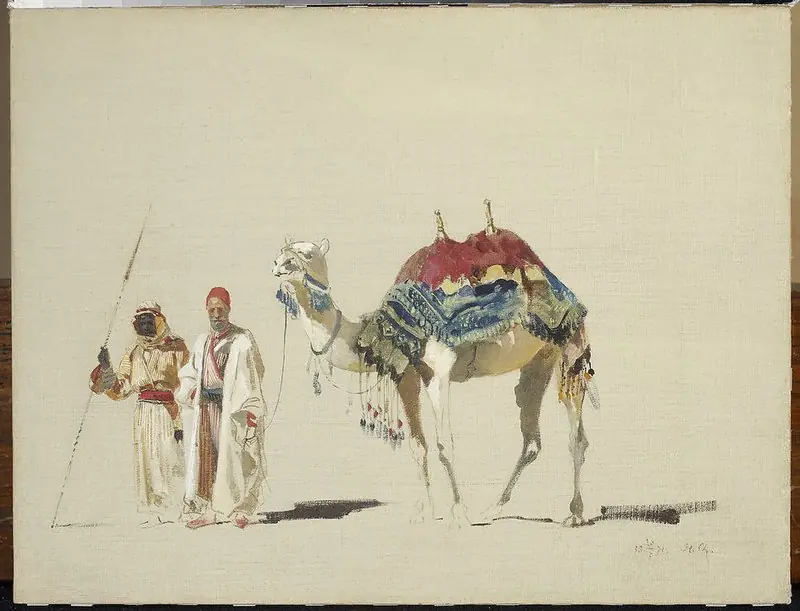
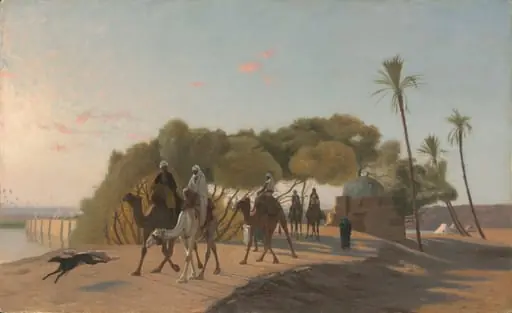
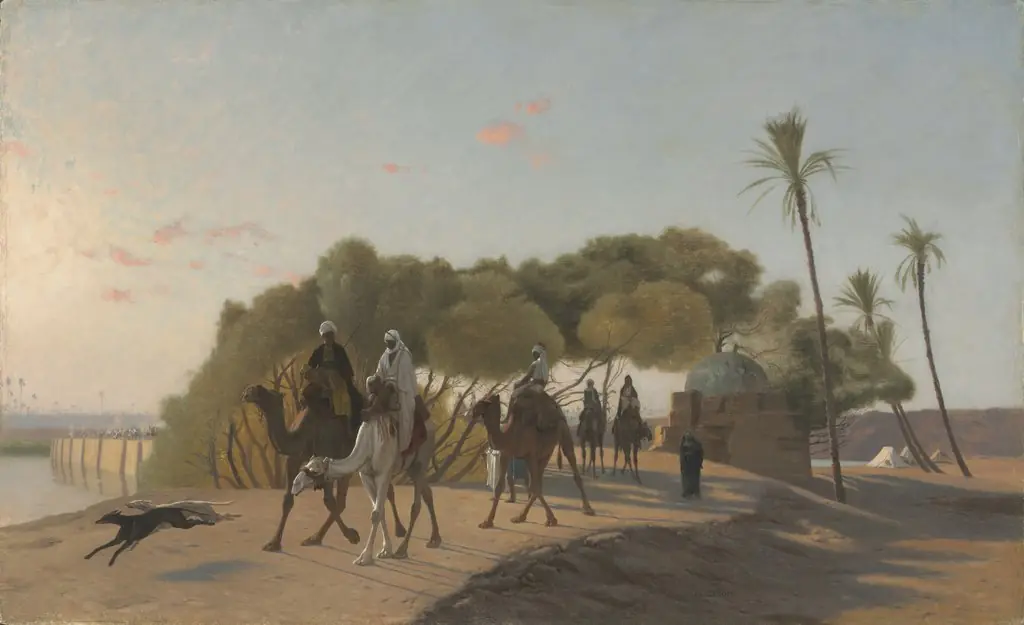
A Camel Caravan is an oil painting by the Orientalist artist Herbert William Weekes. It dates from 1883 and is held in the collection of the National Gallery of Ireland.
About this work
Overview
A Camel Caravan is an oil painting created by Herbert William Weekes around 1883, characterized by a serene desert scene featuring a camel caravan, set against a backdrop of buildings, palm trees, and distant snow-capped mountains.
Subject & Meaning
The painting depicts a moment of tranquil travel in a North African or Middle Eastern setting, blending human and animal subjects. While Weekes often incorporated humor and anthropomorphism in his work, this piece emphasizes calm and naturalistic observation.
Technique & Style
Weekes employed a mix of warm (earth tones for sand and structures) and cool colors (pale blue for mountains), leveraging light and shadow to create depth. The work aligns with Orientalist painting traditions, though its serene tone distinguishes it.
History & Provenance
Created circa 1883 during the Victorian Neoclassical period, A Camel Caravan is now part of the National Gallery of Ireland's collection.
Context
Part of the broader Orientalist movement, the painting reflects 19th-century European fascination with North African and Middle Eastern landscapes and cultures, often romanticized in art.
Legacy
While not individually renowned as a landmark piece, A Camel Caravan contributes to the understanding of Orientalist art's reach and the eclectic output of Herbert William Weekes.
Artist & collection
Artist
Herbert William Weekes (8 May 1841 – 21 November 1914) was a well-known English genre and animal painter of the Victorian Neoclassical period who specialized in portraying animals in humorous, human-like situations.