Artwork
Der Wasserfall der Ilse auf dem Brocken im Harzgebirge
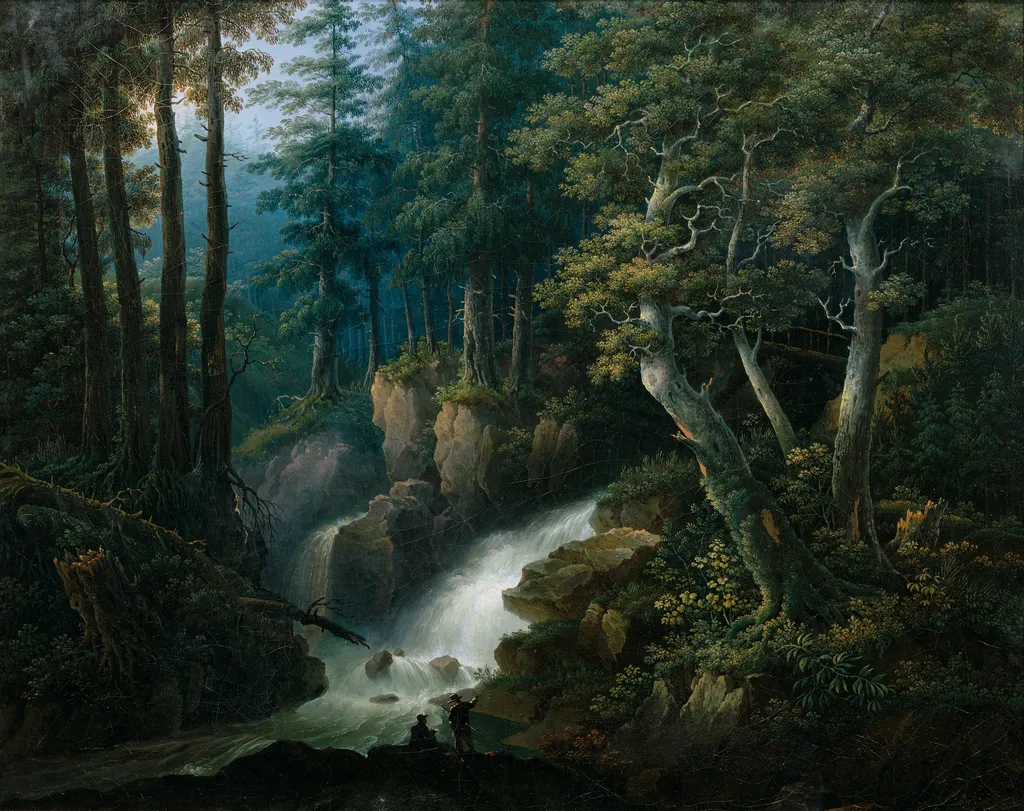
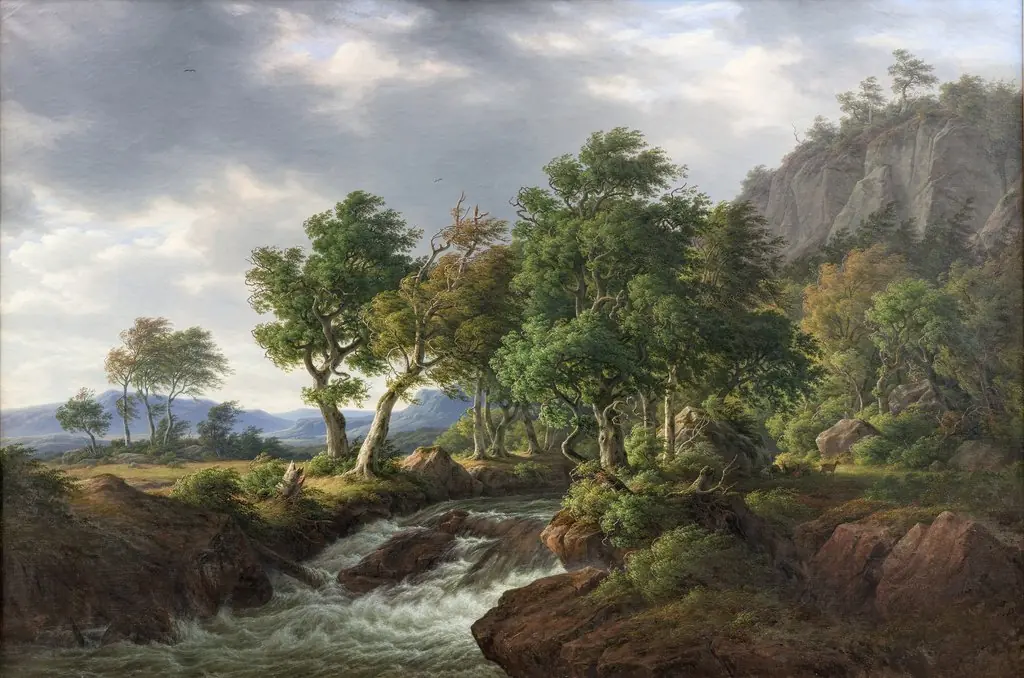
Der Wasserfall der Ilse auf dem Brocken im Harzgebirge is an oil painting by the Biedermeier artist Hermann Joseph Neefe. It dates from 1830 and is held in the collection of the Kunsthistorisches Museum.
About this work
Overview
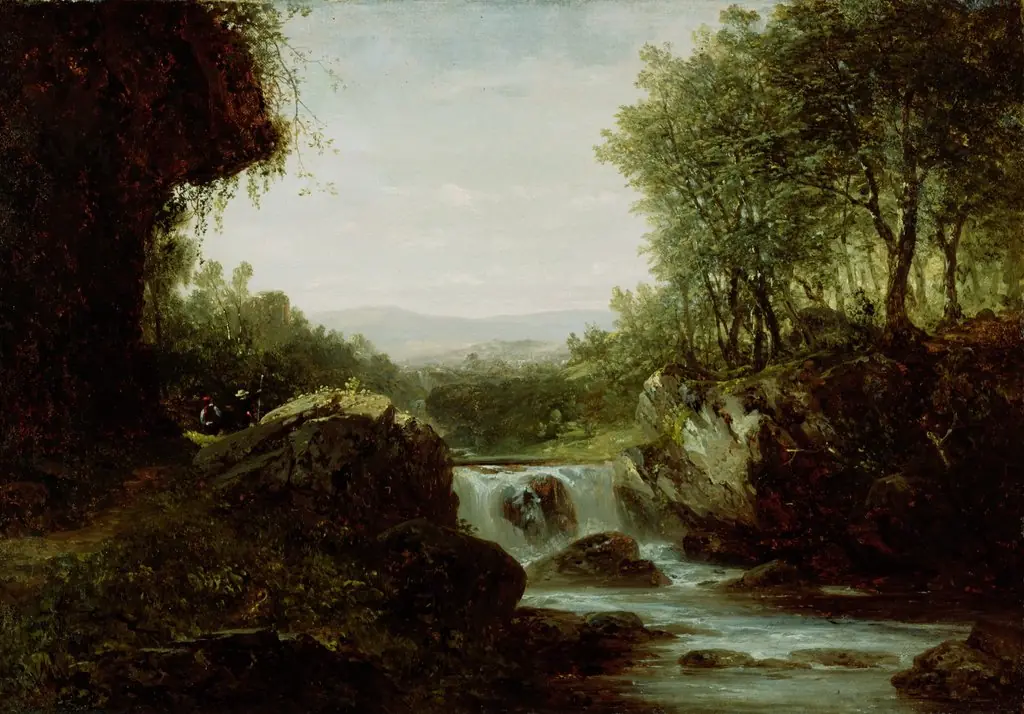
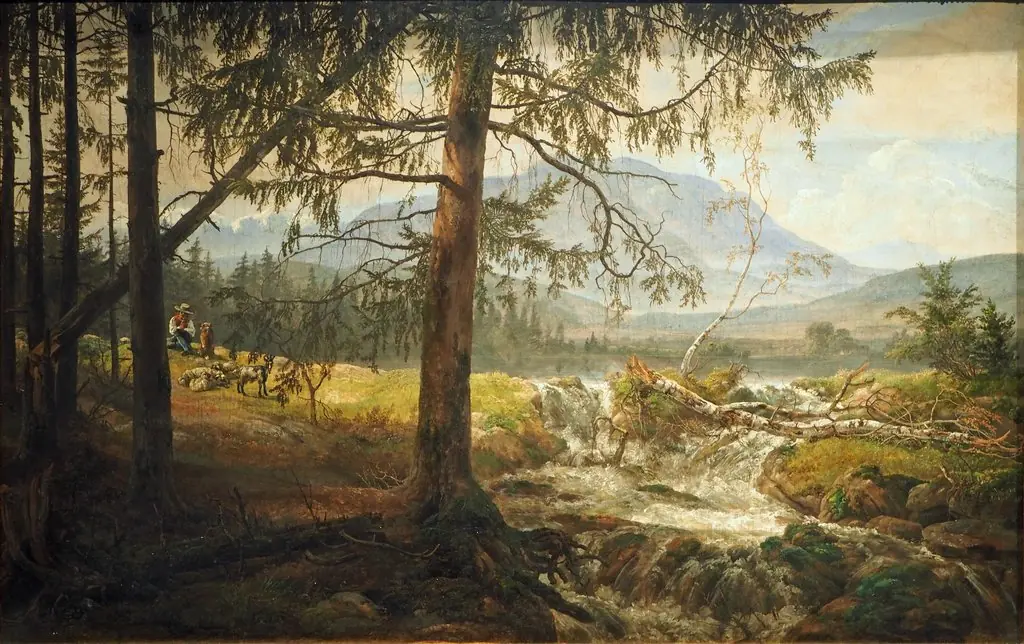
Hermann Joseph Neefe’s 1830 oil on canvas, titled *Der Wasserfall der Ilse auf dem Brocken im Harzgebirge*, presents a natural landscape centered on the Ilse waterfall descending the Brocken’s rocky flank. Executed in the early nineteenth century, the work is part of the collection of Vienna’s Kunsthistorisches Museum and exemplifies the period’s interest in Romantic depictions of wilderness.
Subject & Meaning
The composition captures a tranquil forest setting where a cascade tumbles over a steep slope, framed by verdant trees that hint at seasonal change through subtle autumnal tones. Two solitary figures occupy a foreground ledge, their stance suggesting contemplation of nature’s grandeur, a motif common in Romantic art that emphasizes the human relationship to the sublime landscape.
Technique & Style
Neefe employs a pronounced contrast of light and shadow to model the terrain, creating a palpable sense of depth that draws the eye toward the waterfall’s mist. The brushwork is assertive, with textured strokes that convey the ruggedness of rock and the vitality of foliage, while the overall palette balances cool greens with warm highlights.
History & Provenance
Painted in 1830, the canvas entered the holdings of the Kunsthistorisches Museum, where it remains on display. Its acquisition reflects the museum’s 19th‑century efforts to assemble representative works of German Romantic landscape painting, situating Neefe alongside his contemporaries.
Context
During the early 1800s, the Harz Mountains, and especially the Brocken, became emblematic of German Romanticism, inspiring poets, musicians, and painters. Neefe’s depiction aligns with this cultural fascination, portraying the Ilse waterfall not merely as a geographic feature but as a symbol of the era’s reverence for untamed nature.
Own this work as a print
Artist & collection